Skip to Content, Navigation, or Footer.
The Cornell Daily Sun
Thursday, Dec. 4, 2025

Science
anscfarm.jpeg

Cornell’s $30 Million Agricultural Investment Signals a Lasting Shift Toward High-Tech Farming Leadership

·

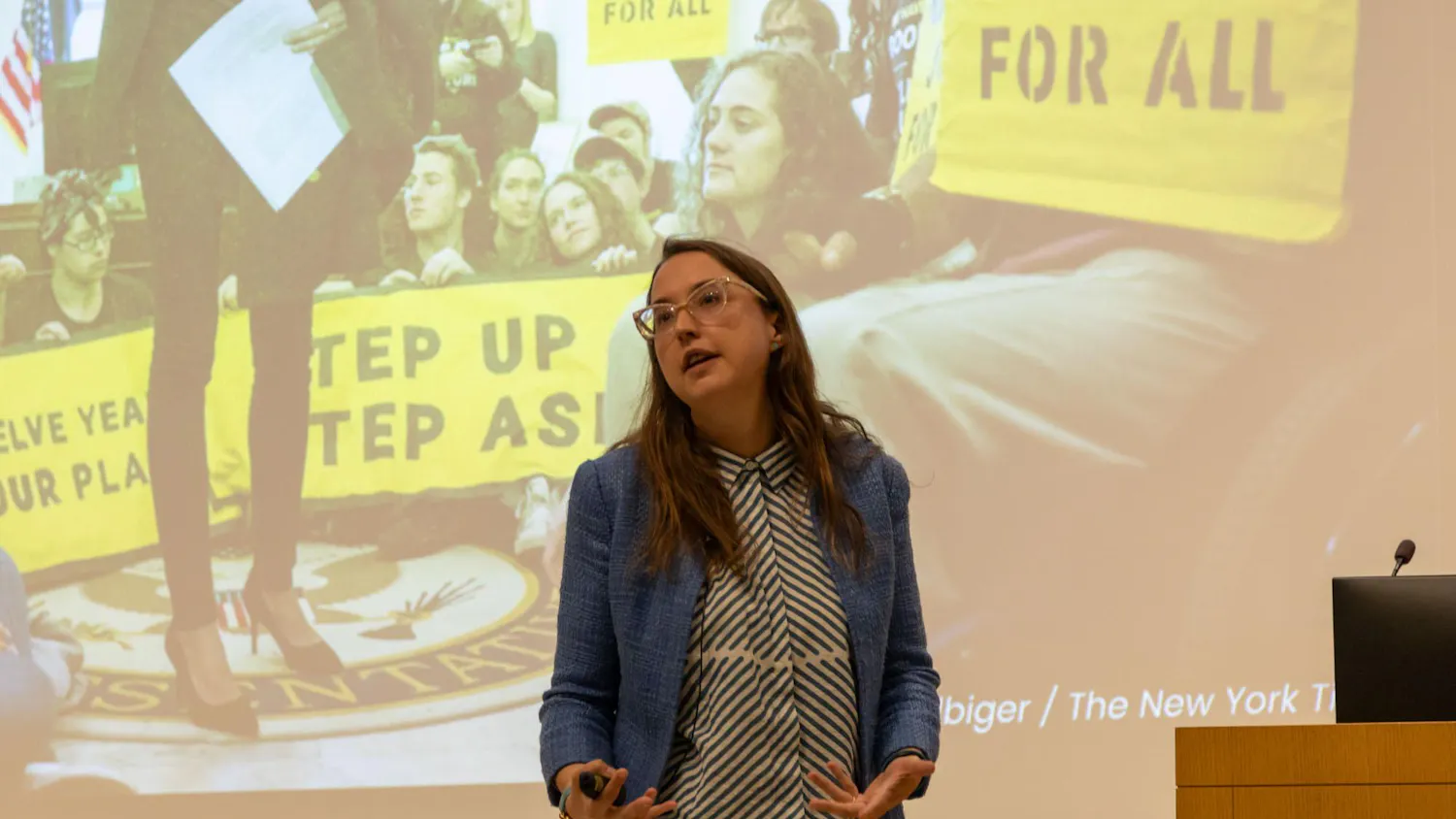
Cornell's recent settlement with the Trump administration to restore roughly $250 million in frozen federal research funding involves agreeing to invest $30 million in agricultural research that integrates AI and robotics over the next three years. The deal ends months of widespread disruption across campus labs and academic programs, though students and researchers say the freeze has left lasting damage.


Geoff Coates 484r463(c)CGeoffrey W. Coates  Geoffrey W. Coates  hristopherMichel1152025.jpg

Designing a Better World, One Polymer at a Time: The Journey Behind Prof. Coates’s Franklin Award

·

Prof. Geoffrey Coates’s Franklin Award recognizes not only his pioneering work in sustainable polymer design but also the decades of collaborative innovation driven by the students, postdocs and colleagues who built that science alongside him. Together, their collective creativity and persistence have transformed visionary molecular ideas into real-world materials that advance environmental sustainability.


ntres.2.jpeg

Learning Brought to Life: Transformative Experiences in Introductory Field Biology

·

Cornell’s Introductory Field Biology course, NTRES 2100, transforms ecological learning through immersive, place-based experiences led by longtime instructor Prof. Marc Goebel. Blending hands-on fieldwork, interdisciplinary training, and collaborative research, the course equips students with the skills and perspective to understand and engage with the natural world far beyond the classroom.


sciencenter.png.jpeg

Psychology in the Spotlight: PSYCH 4500 Brings the Mind to Life at the Sciencenter

·

Students in PSYCH 4500 are transforming concepts from psychology and cognitive science into playful, hands-on exhibits for children at Ithaca’s Sciencenter. By blending research on science communication with engaging design and community engagement, the course equips students to make abstract mental processes tangible, interactive and accessible for young learners.


takebacktap.jpeg

Reviving Take Back the Tap: Reducing the Waste of Single-Use Plastic Water Bottles at Cornell University

·

Revived by new student leadership, Cornell’s Take Back the Tap campaign works to counter widespread misconceptions about tap water and the environmental costs of bottled water. The initiative promotes water sustainability through class outreach, educational materials and student ambassador efforts that highlight Cornell’s clean, high-quality tap water.


Cornell Joins 11 Other Universities In Lawsuit Against Department of Defense’s Plan To Slash Indirect Research Grant Costs

Cornell University Receives $5.1 million Autism Research Grant

·

Cornell researchers received a $5.1 million NIH grant to establish the Autism Replication, Validation, and Reproducibility (AR²) Center, which will enhance transparency and reliability in autism research through data reanalysis, model validation, and open scientific collaboration.


spacewarefare.jpeg

Strategic Orbit: Cornell PhD Student’s Perspective on the Rise of Space Warfare in U.S. Defense Policy

·

Once science fiction fantasy, “space warfare” has entered the realm of U.S. defense strategy with satellites, logistics, and orbital dominance now central to national security. Cornell Ph.D. candidate Avishai Melamed explores how technological competition with China, private-sector partnerships, and sustainability concerns are reshaping the geopolitics of space.


Pumpkin_Dogs.jpg

More Than a Jack-O’-Lantern: The Science Behind Pumpkins

·

Neither purely pie nor porch prop, the pumpkin haunts the boundary between science and superstition — a gourd so undefinable that even botanists can’t pin it down. From “zumpkins” born in backyard compost to hybrids bred for spooky perfection, the modern pumpkin’s true essence lies not in taxonomy, but in tradition.


honduras2025.jpeg

Building Clean Water Futures: Cornell AguaClara’s Mission to Engineer Global Change

·

AguaClara, a Cornell-born initiative founded in 2005, harnesses the power of gravity to deliver sustainable, electricity-free drinking water treatment to communities worldwide. Designed and researched by Cornell students, its innovative systems now serve over 100,000 people across Honduras, Nicaragua, and India — advancing both engineering innovation and global health equity.