

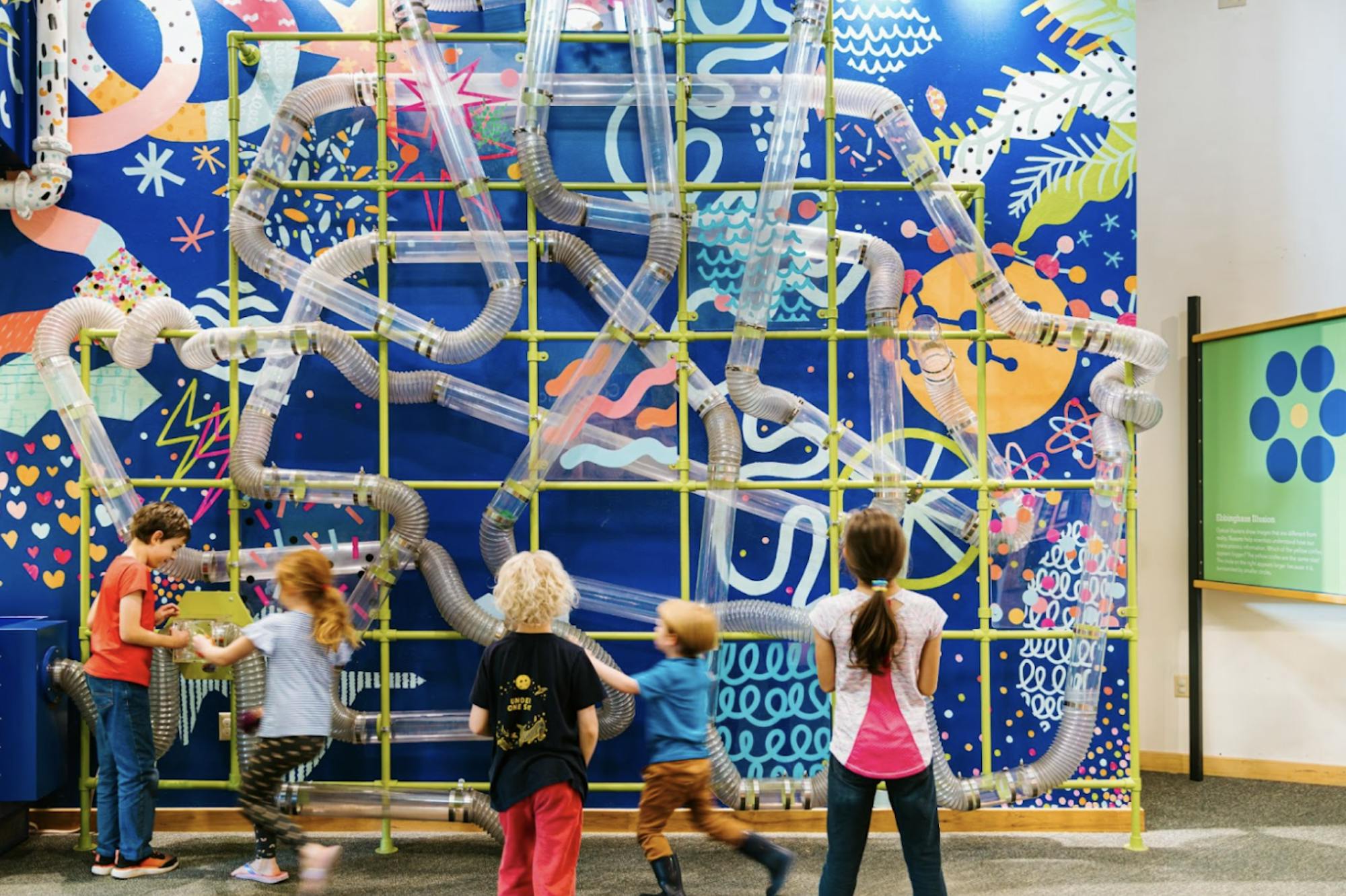
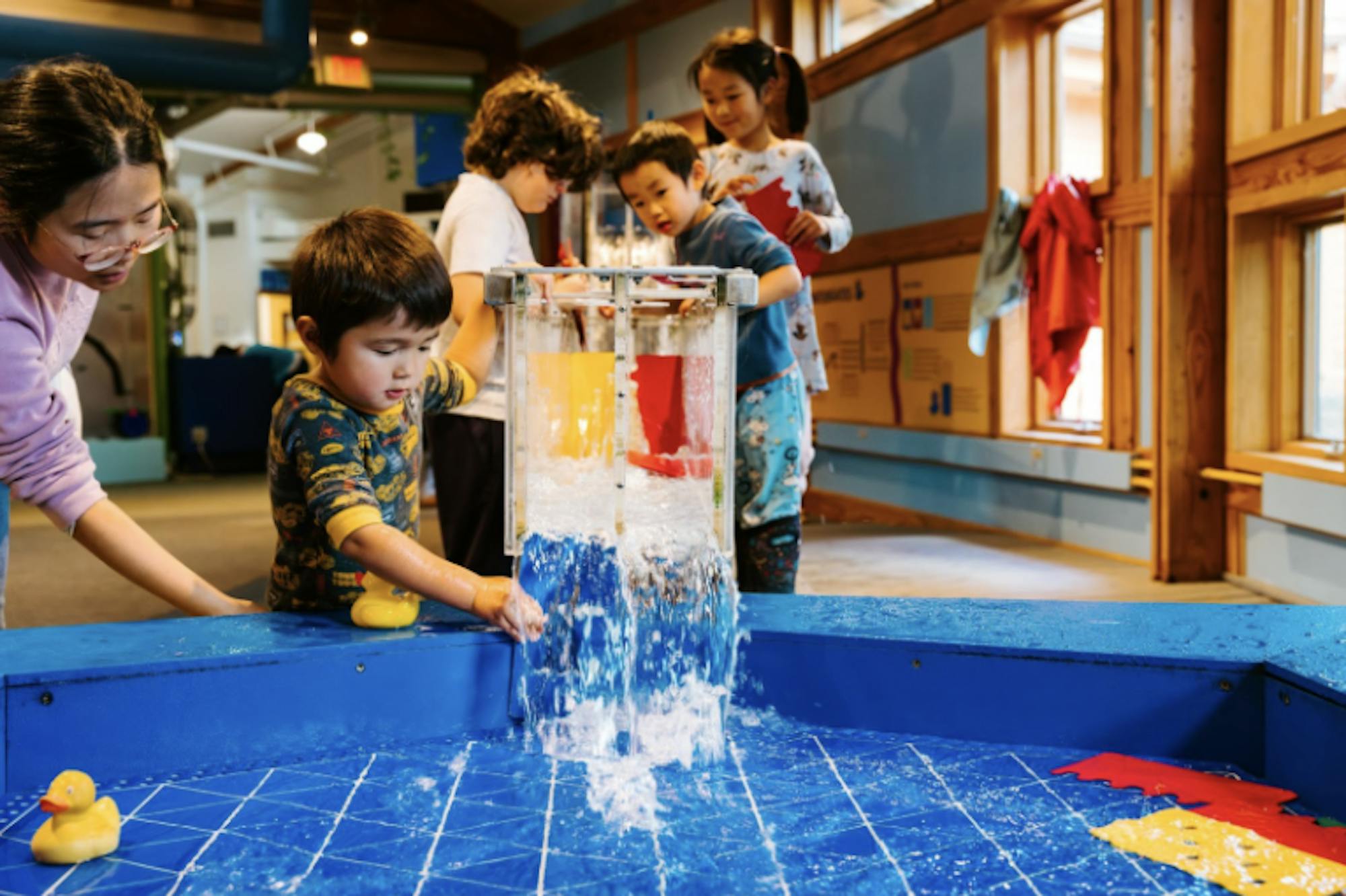
Inside the Sciencenter, the expected signals of modern life are strangely absent. There are no screens plastered to hands or no silent lines of passive observers. Instead, the air is filled with the clink and clank of a two-story kinetic ball machine and bursts of surprise and laughter. Hands reach — not for phones — but for rubber ducks, pipes and, if the visitor is brave enough, the soft, smooth scales of a rainbow boa.
Here, learning emerges not through instruction, but through interaction.
Sierra Coathup, the Sciencenter’s volunteer program manager, recalls a moment she witnessed recently in the Saltonstall Animal Room, a vivarium housing amphibians, reptiles and fish from diverse bioclimates around the world.
“I overheard a child tell their parents, ‘See, I told you it was real!’” Coathup said, recounting how she watched the child race toward the axolotl tank. “And the mom went, ‘Okay, you’re so right.’ It was funny to watch them learn together — but this time, the kid was the teacher.”
Moments like this are carefully constructed. For decades, the Sciencenter has designed its exhibition to follow its founding mission, to “cultivate an engaged community of curious, collaborative, critical thinkers,” according to its website.
Spaces that allow curiosity to unfold through hands-on exploration are becoming increasingly rare. As students move through formal education, science often shifts from exploration to memorization.
“Until the end of middle school, science is, on average, everybody’s favorite subject,” said Prof. Chris Schaffer, biomedical engineering.
Curiosity is a natural human trait, Schaffer explained, but traditional secondary school classrooms often stifle that spark, reframing science as a collection of static facts to be memorized.
For Schaffer, this loss of interest underscores the importance of interactive environments that sustain curiosity through active exploration.
When asked about why the Sciencenter’s approach is salient and effective, Schaffer responded with, “It really is an exploratory process for discovery that keeps them [the visitors] engaged in science.”
Long-term research supports his point. A 33-year study that followed a national sample of Generation X individuals from middle school to their 40s found that early life experiences, particularly hands-on activities such as science laboratory work, had a powerful influence in shaping participants’ lifelong interests and engagement with science.
Creating those moments requires far more than putting colorful exhibits on the floor. At the Sciencenter, curiosity is “engineered” through years of audience research, prototyping and repeated testing.
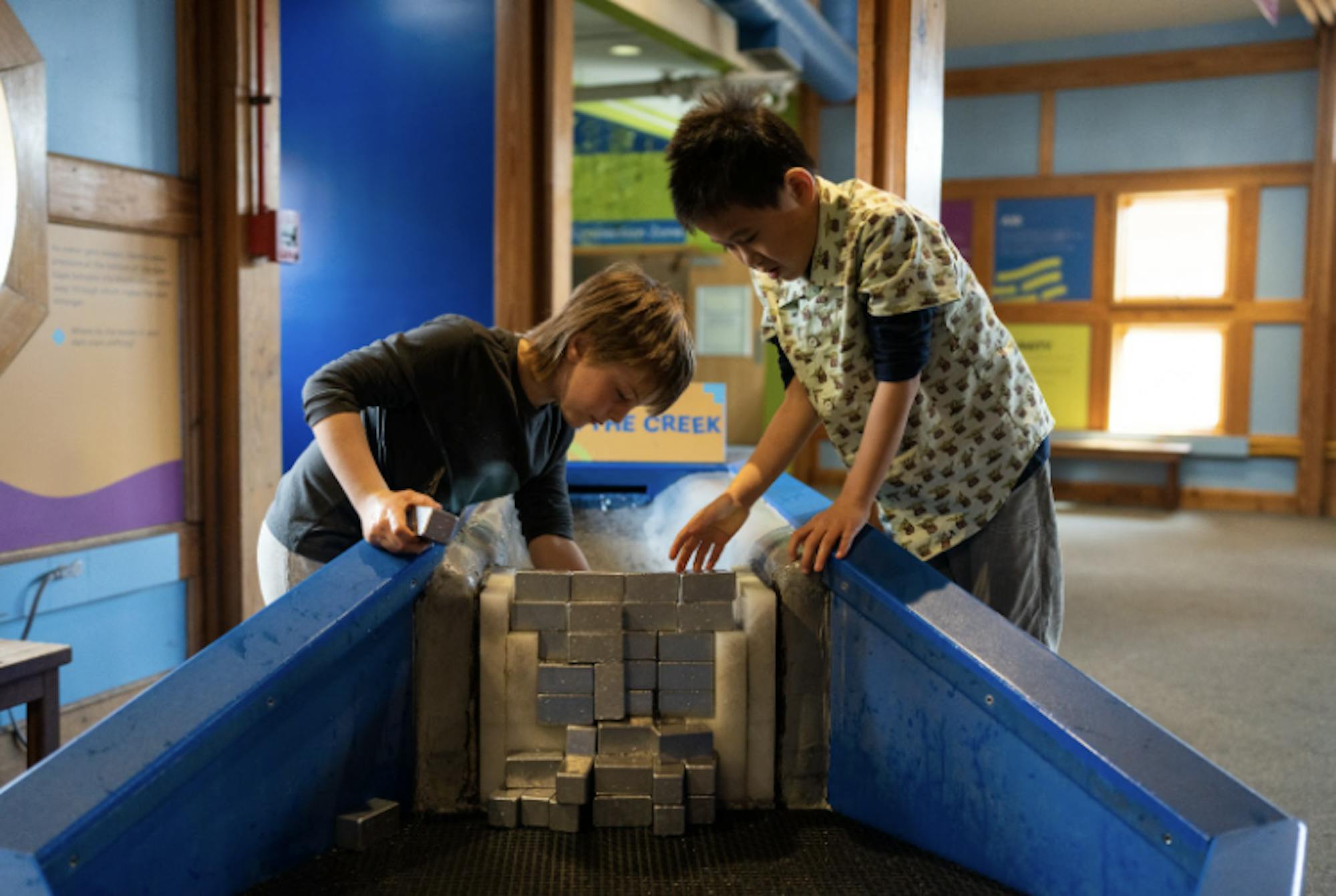
While an exhibit might only grasp a visitor’s attention for a few seconds, it represents the culmination of a meticulous five-year cycle of evaluating, surveying, prototyping and refining. This rigorous process is visible in the development of Bridges to Bioengineering, a collaborative project involving faculty and students from Cornell’s Meinig School of Biomedical Engineering, including Schaffer, and the spectRUM Discovery Area in Missoula, Montana.
Now in its third year, this 1,500-square-foot bilingual traveling exhibition available in both Spanish and English is designed to bridge the gap between complex biomedical engineering lab work and public understanding. The process began with what Adrienne Testa, director of exhibitions, calls “front-end evaluation.”
“We start to figure out what we want this exhibition to be about,” Testa explains. “We think of all the questions, such as: what do people already know about biomedical engineering? What do they think it is? What are the controversies?”
The first phase involved interviews with professionals, students and parents across middle schools in Tompkins County to Groton, N.Y.. By year two, the team moved into ‘proof of concept’ prototyping, testing their and the respondent’s concepts with essential questions such as whether the exhibit captured attention, communicated its scientific message clearly and could be realistically built and sustained within budget.
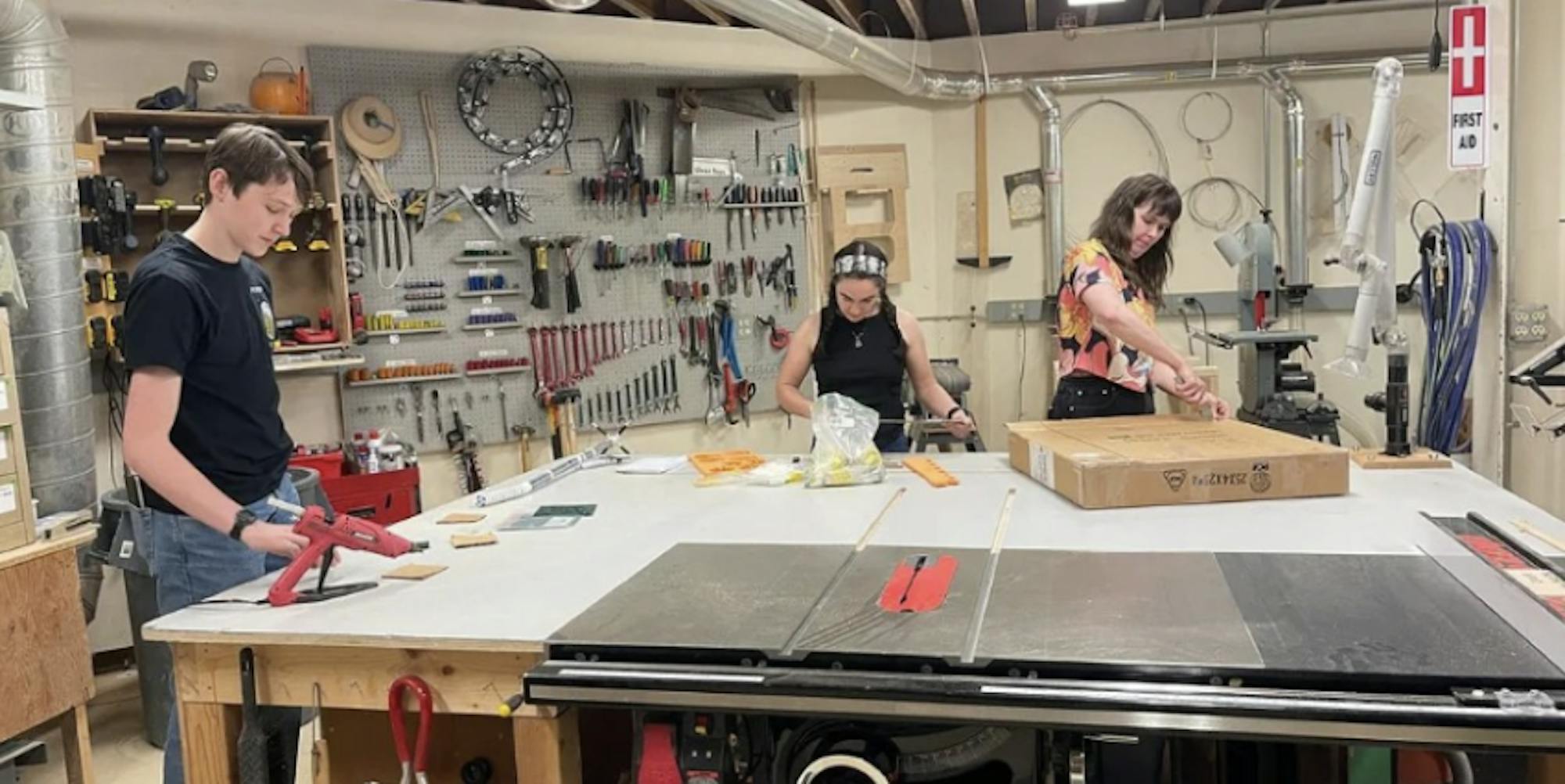
In a workshop tucked away in the Sciencenter’s basement, phase three is now underway. Here, the exhibition is being built and broken, dynamically adjusted based on observations from the first round of public prototyping.
“We’re monitoring and evaluating, how did [the children] interact? Did they seem to have fun? And we ask them afterwards, what was the knowledge they took away, what were the attitude changes,” Schaffer explained. “And then based on that prototyping, we would then have a final design and construction phase.”
Over the next two years, the project teams will meticulously refine the design, chasing a simple goal: to create an experience that invites visitors not just to observe science, but to participate in it — to stay long enough to play, question and seek answers for themselves — and to have some fun.
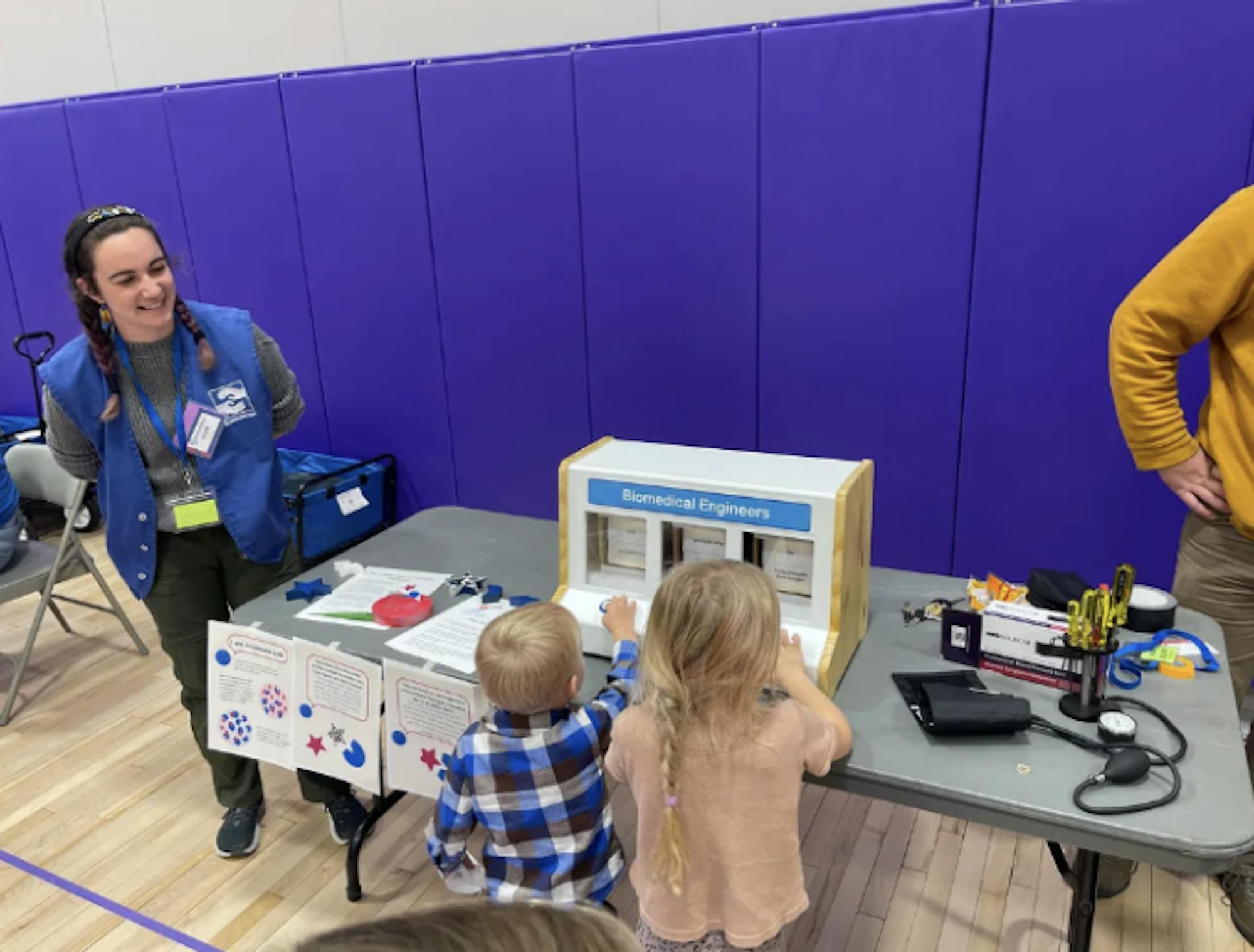
The same careful engineering that shapes the over 250 interactive exhibits in Ithaca also allows the Sciencenter’s work to reach far beyond its walls. In 2025 alone, the Sciencenter’s 11 completed traveling exhibitions reached 14 states and two Canadian provinces, piquing curiosity in hundreds of thousands of people.
Testa noted that there are even plans for an exhibition to travel to a children’s science museum in Chengdu, China in the future, extending this model of discovery across cultural and geographic boundaries.
At the Sciencenter, curiosity is treated not as something that fades with age, but as something worth preserving. Through the work of staff, researchers and thousands of volunteers, the Sciencenter ensures that discovery remains tangible, hands-on and fun. All that careful effort culminates in simple moments like a child, standing in front of an aquarium tank, turning to their parents and confidently enunciating, “See? I told you it was real!”


