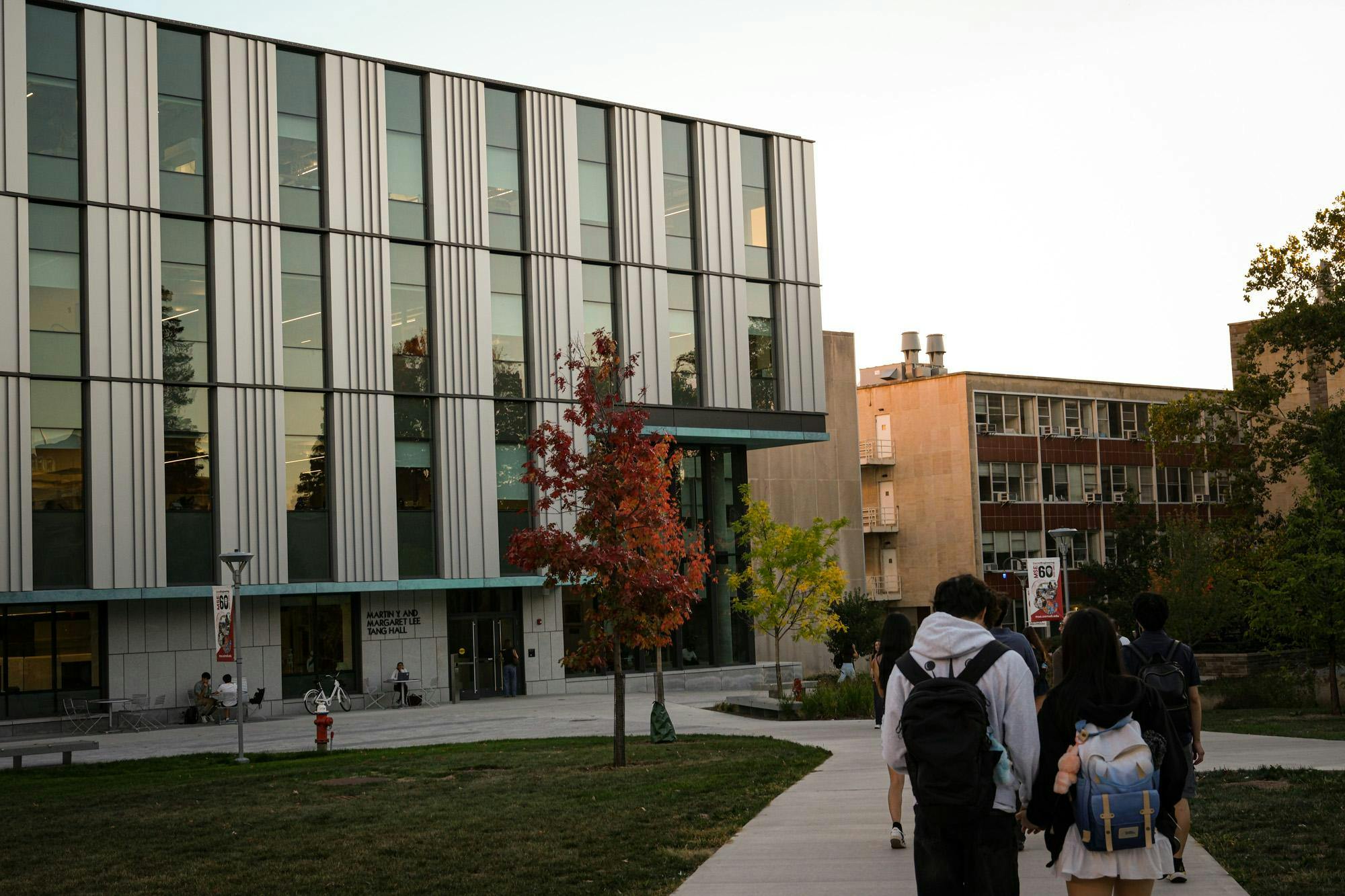
In the Cornell Custom Silicon Systems project team, undergraduates get the opportunity to design and test computer chips — work typically reserved for fourth-year doctoral students or seasoned industry professionals.
C2S2 is one of the only undergraduate-led chip design teams in the country, according to Daniel Kaminski ’27, the team lead. Founded through the Shen Fund for Social Impact, the team aims to democratize chip design education by giving students hands-on experience with the complete semiconductor development process.
"The main goal is to educate undergraduates," Kaminski said. "That kind of freedom, that kind of ability to stretch yourself to your limits and to work with tools and processes and other people that you wouldn't have access to otherwise, that's really beneficial."
The team emerged from a push by Google and Efabless to make chip design accessible through open-source, publicly available design kits. Before these tools became available, designing chips required signing restrictive non-disclosure agreements with major manufacturers — barriers that effectively locked out hands-on design opportunities for undergraduate students.
Caden Xu ’27, the team's analog sub-team lead, said the educational benefits of C2S2 extend far beyond the classroom. One critical lesson involves manufacturability — understanding how a chip will actually perform once produced, not just how it functions in theory.
"In a classroom, maybe you're designing something, but you're not having in mind how if this chip was actually manufactured, how it would be turned out," Xu said. "Whereas if you're actually having a goal to have this chip be produced, you're thinking a little differently."
The team's scope of work would challenge even experienced professionals. Kaminski and Xu, along with a few other members, designed an entire analog-to-digital converter, which transforms physical signals into digital data — a task that would occupy even a full industry team for up to a year, according to Kaminski.
C2S2 is currently partnering with the Cornell Lab of Ornithology to develop a prototype chip system that classifies bird calls, targeting the Florida scrub jay. The team's application-specific chip can run for approximately two months on a coin cell battery, Kaminski said, because it only includes the hardware needed for this specific task.
Beyond technical skills, the team emphasizes professional development. Members present to corporate sponsors including AMD, Sandia National Laboratories and Cadence.
“When we first joined, our subteam leaders would drill into us that we have to make our presentations look a certain way,” Xu said.
Kaminski applied that training during his summer internship. “When I worked at a company this past summer, I used the same way to present the data,” he said. “It draws people’s attention to the important things … it’s a clear way of communicating.”
Most team members pursue careers in chip design after graduation, with many alumni now working in the semiconductor industry. But both leads said the skills transfer beyond the field.
“It teaches you to collaborate," Kaminski said. "It teaches you to think about things much more deeply than classes will teach you.”
Correction, Feb. 5, 2:40 p.m.: This article has been updated to include the correct link to The Shen Fund.