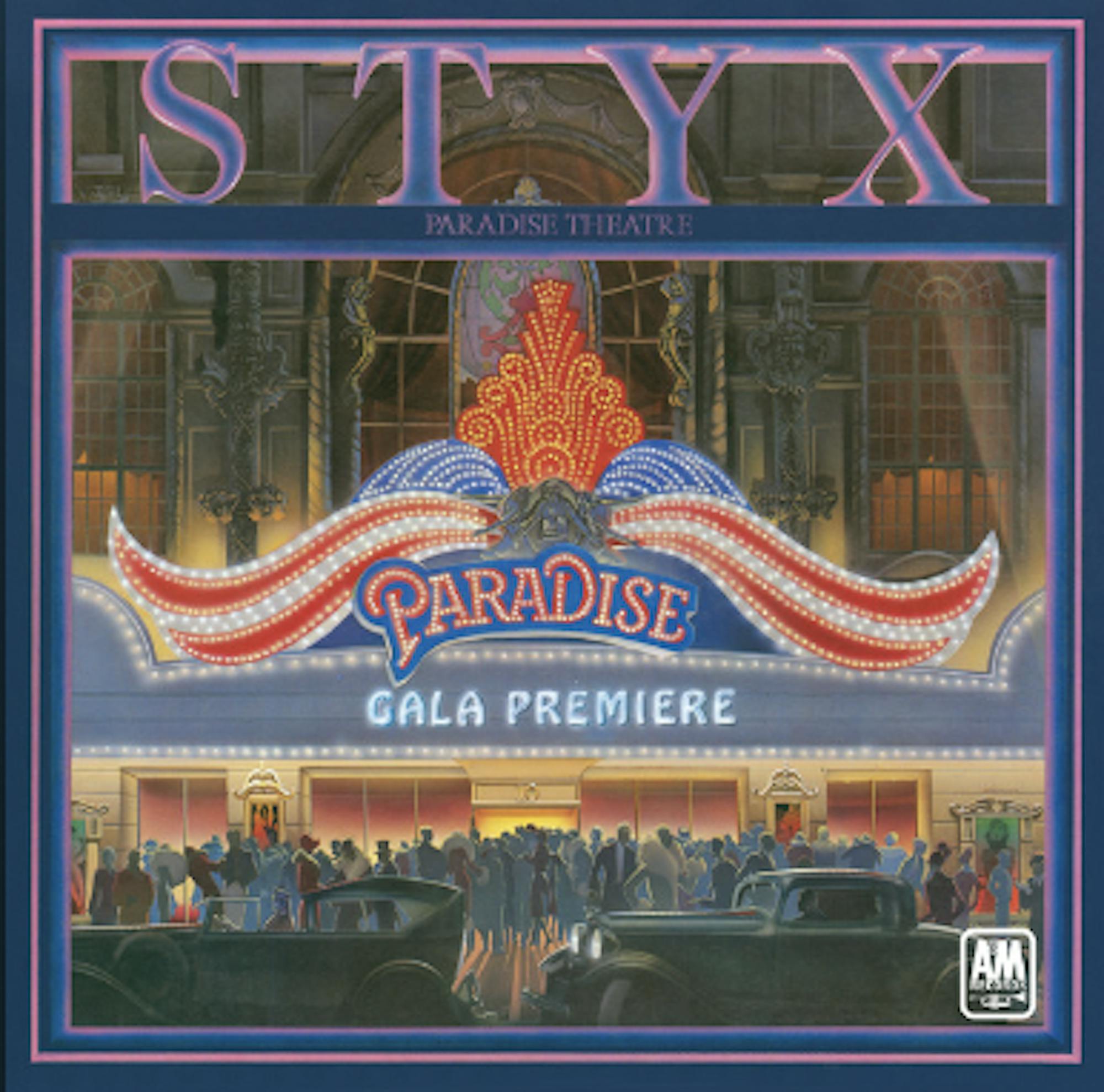
According to That ’70s Show, Styx was the Nickelback of the ’70s — walk with me here. In the ninth episode of season seven — entitled “You Can’t Always Get What You Want” à la The Rolling Stones — Eric Forman (Topher Grace) decides to buy tickets to see Styx in concert on Thanksgiving. His friends tell him Styx is lame, only for Michael Kelso (Ashton Kutcher) and Fez (Wilmer Valderrama) to be outed as Styx fans themselves. When I first watched this show, I failed to understand why the characters were so embarrassed to listen to such a talented group. Are you embarrassed to have good taste? To add a little bit of theatricality to your life? Needless to say, I have continued to be bewildered by this to this day, so I decided to do some research. The answers I found were murky, to say the least. Some listeners call Styx “corporate sellouts,” while others think the “lush, orchestral sound” that Eric cites in That ’70s Show is just code for pop, and they have no business being categorized as a rock band. I couldn’t help but be reminded of the discourse surrounding Nickelback, widely (and perhaps unfairly) considered to be the sellout of the rock genre. But I’m not here to defend Nickelback. Styx’s rock is dramatic and funky, and only became more theatrical as time went on, contrary to the claims that their music became more commercial. If selling out means selling out arenas, then Styx is guilty as charged. But being successful does not always mean selling out, and Styx’s commitment to histrionics — something that might not suit everybody, as we see in That ’70s Show, and thereby might not be as commercially viable — only increased as time went on. A product of that was the 1981 record Paradise Theatre, an intricate concept album that I would’ve loved to watch the characters of the show experience. Instead, you can experience it with me.
Paradise Theatre centers around the rise and fall of the Paradise Theatre in Chicago, so it only makes sense that the album opens with “A.D. 1928,” the year of the theater’s construction. “A.D. 1928” orients the listener both lyrically and sonically; it’s infused with hope for the theater’s future while simultaneously foreshadowing its untenability. Dennis DeYoung sings “Tonight’s the night we’ll make history / As sure as dogs can fly,” thereby presenting a world of possibility and immediately shutting it down. For Styx’s more frequent listeners, something might also sound awfully familiar about the tune, but we’ll get to that later. “A.D. 1928” blends seamlessly into “Rockin’ The Paradise,” a plucky, more classic rock track than most other Styx songs that links the Paradise with the broader American landscape. You never truly forget that this is a Styx song, though, with the iconic three-way harmonies of DeYoung, Tommy Shaw and James Young coming in at just the right time.
“Too Much Time On My Hands” is one of my all-time favorite Styx songs and sees Shaw on lead vocals telling the story of an unemployed man searching for meaning. He appeals directly to the listener with his questions, asking, “Is it any wonder I’m not a criminal? / Is it any wonder I’m not in jail? / Is it any wonder I’ve got too much time on my hands?” “Nothing Ever Goes As Planned” alludes to Paradise’s doomed future, and draws from Murphy’s law according to DeYoung. It’s a peppy encasing for the sobering message that you can’t plan for everything. The opening notes of “The Best Of Times” strike a different chord (ha!) when listening to the album in full. It starts the same way as “A.D. 1928,” but reflects the beginning of the end for the Paradise. The protagonist has his best moments with his significant other while the theater is failing. Next is “Lonely People,” which leans into the band’s theatricality. The narrator is saying goodbye to the Paradise just before it’s torn down: “The rain was hot, the streets were empty / As downtown closed her eyes / The movie house stood in silence as I said my last goodbyes.”
“She Cares” returns to Shaw as the lead in a lighter, softer track than its predecessor. The song pulls the narrative away from the theater for a few minutes and further humanizes it. Meanwhile, the lead vocals on “Snowblind” alternate between the frantic Shaw and lethargic Young as they consider the illusion created by cocaine: “Harmless and innocent, you devil in white / You stole my will without a fight / You filled me with confidence, but you blinded my eyes / You tricked me with visions of paradise.” This makes it all the more jarring when you hit the final full-length lyrical track, “Half Penny Two Penny,” a commentary on capitalism. Just when you think you can catch your breath at around the two-minute mark, Styx lands one last blow, and you can hear the sound of the Paradise Theatre being torn down in the background. “A.D. 1958” is a return to the sound of “The Best Of Times,” but this time, the Paradise is gone: “And so, my friends, we’ll say goodnight / For time has claimed his prize / But tonight can always last / As long as we keep alive / The memories of the Paradise,” he croons. Paradise Theatre closes with “State Street Sadie,” an instrumental track that leaves you wondering: What do we do now?
If Paradise Theatre leaves you with one takeaway, it’s that Styx can make you think. They’re not just theatrical because it’s fun — they’re trying to tell us something. And even through all the noise about selling out and fidelity to genre, we can still hear it. When That ’70s Show ended in 2006, it squandered any real chance of seeing the main characters exist past the turn of the decade. But oh, to see the characters break down Paradise Theatre during one of their circle sessions … a girl can dream.
Test Spins is a fortnightly throwback column reviewing and recommending classic and underrated albums from the past. It runs every other Friday.
Sydney Levinton is a member of the Class of 2027 in the College of Arts and Sciences. She is a senior editor specializing in music and was the arts and culture editor on the 142nd and 143rd Editorial Boards. She can be reached at slevinton@cornellsun.com.