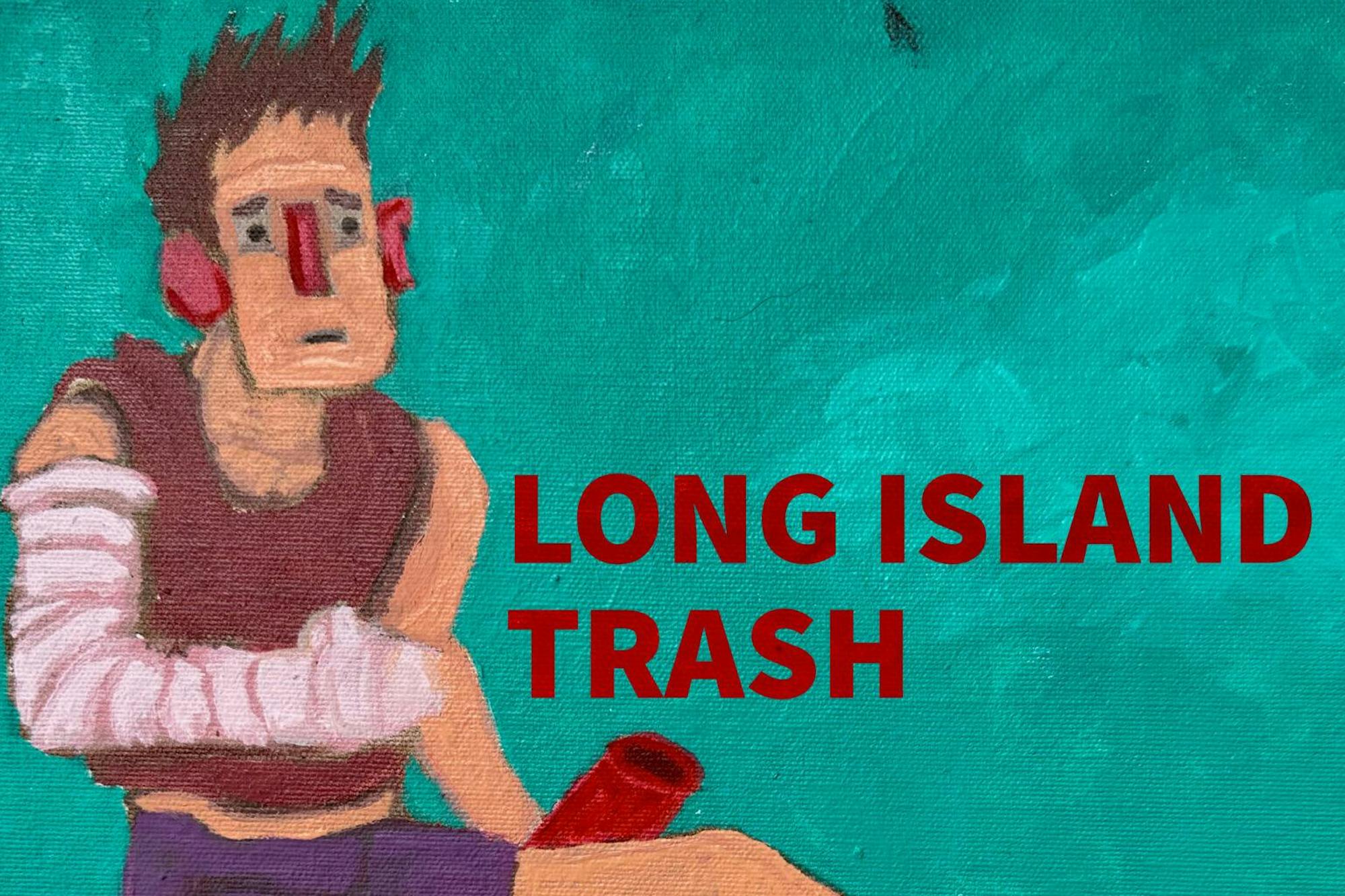
Graduation is always a bittersweet celebration — a reward for years of diligence but also the end of a chapter. It’s not my graduation, though, it’s Michael Morgan ’26 who is leaving Cornell with his MFA and a portfolio of absolutely stunning paintings. I’ve had the privilege of both interviewing Morgan and visiting his expertly-curated galleries before. His thesis exhibition, entitled “Long Island Trash,” is the culmination of years of hard work and creativity, and the blood, sweat and tears poured into each painting are evidenced by just how captivating they are.
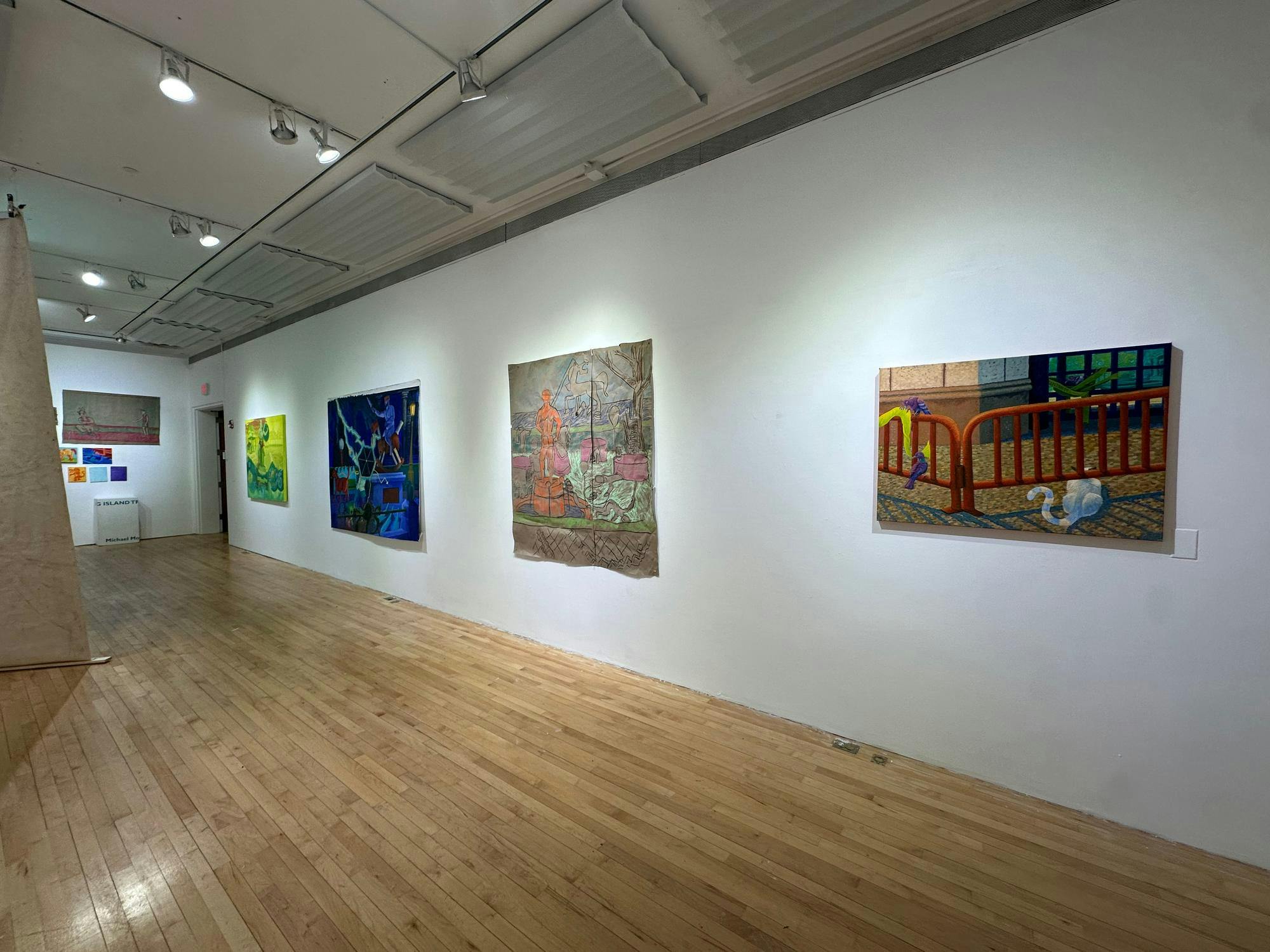
Morgan has always had an undeniable grasp on color and brushwork, but with his thesis show, he’s branching out into different styles of figuration. “I’ve always been interested in creating works that oscillate between cartoon realism and more rendered figuration,” he shared. Even with that experimentation, Morgan identified a strong throughline in all his work: “Present in all my works are theater or set-esque backdrops that … convey social dynamics or theatricalities.” Still, every piece is different. Some of them I’d seen before, some were completely new to me, all exuded that signature Morgan mastery. From our first meeting last year, I’ve been enraptured by Morgan’s ability to construct engaging compositions with a heartbreakingly minute degree of detail (tiny blades of grass or tufts of fur, individually painted!). Now, as he works in a looser and more expressive style, I get to admire more abstract, painterly elements that give the piece an expressive quality that is equally alluring. “The work lately is like, trying to get lost in the act of painting itself,” Morgan said, on his stylistic shift.
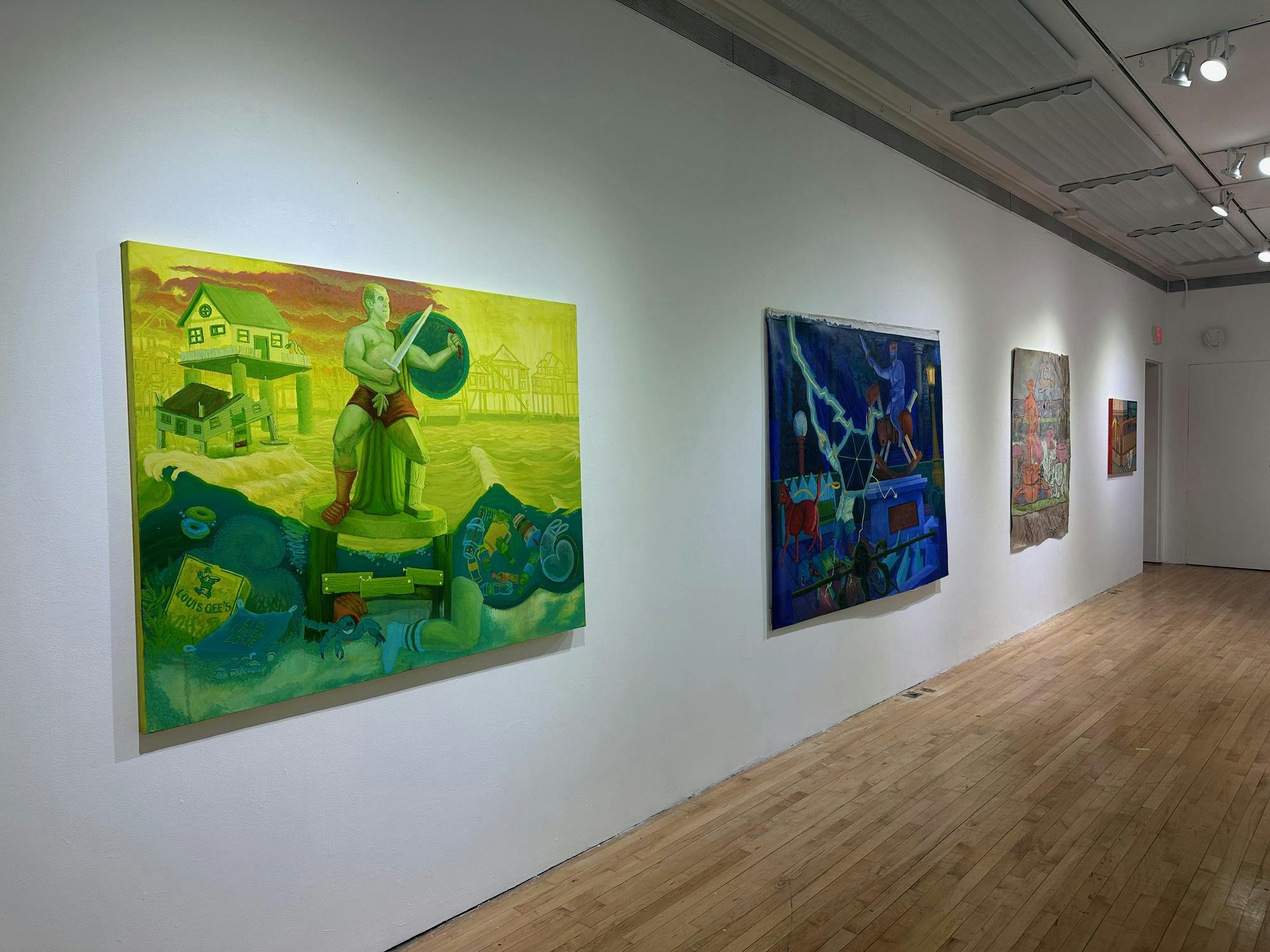
The works in his thesis exhibition cover a range of themes, from critiquing consumerism to apocalyptic decay to the pejorative term ‘navel-gazing’ to the paradox between adulthood and childhood. All of it is deeply resonant. It feels like the human experience given a pure, artistic form, full of bursting life and vibrant color like the heightened saturation of childhood memories.
One of the most admirable aspects of Morgan’s creative process, in my opinion, is his commitment to self-exploration and understanding. He identified the art movement New Queer Intimism as another of the undercurrents of his thesis. However, instead of focusing on strictly pretty aesthetics, Morgan was interested in delving further into authentic representation. To him, that started with body diversity and honesty. “It’s okay to paint the sights when you’re not feeling your prettiest,” Morgan asserted. “That’s what queer intimacy and vulnerability is as well. No one [wants to] paint themselves when they’re in a vulnerable moment, but vulnerability is a part of intimacy. There’s a lot of work that only portrays things in these perfect lenses or angles.” That commitment to authenticity, combined with Morgan’s experience growing up queer in a conservative corner of Long Island, encouraged him to put brush to canvas and contribute his own body of work to New Queer Intimism. He’s radically honest in his work, unafraid to make broader sociopolitical critiques, and he does it all with a level of mastery that draws you right up to the artwork to see every deliberate brushstroke.
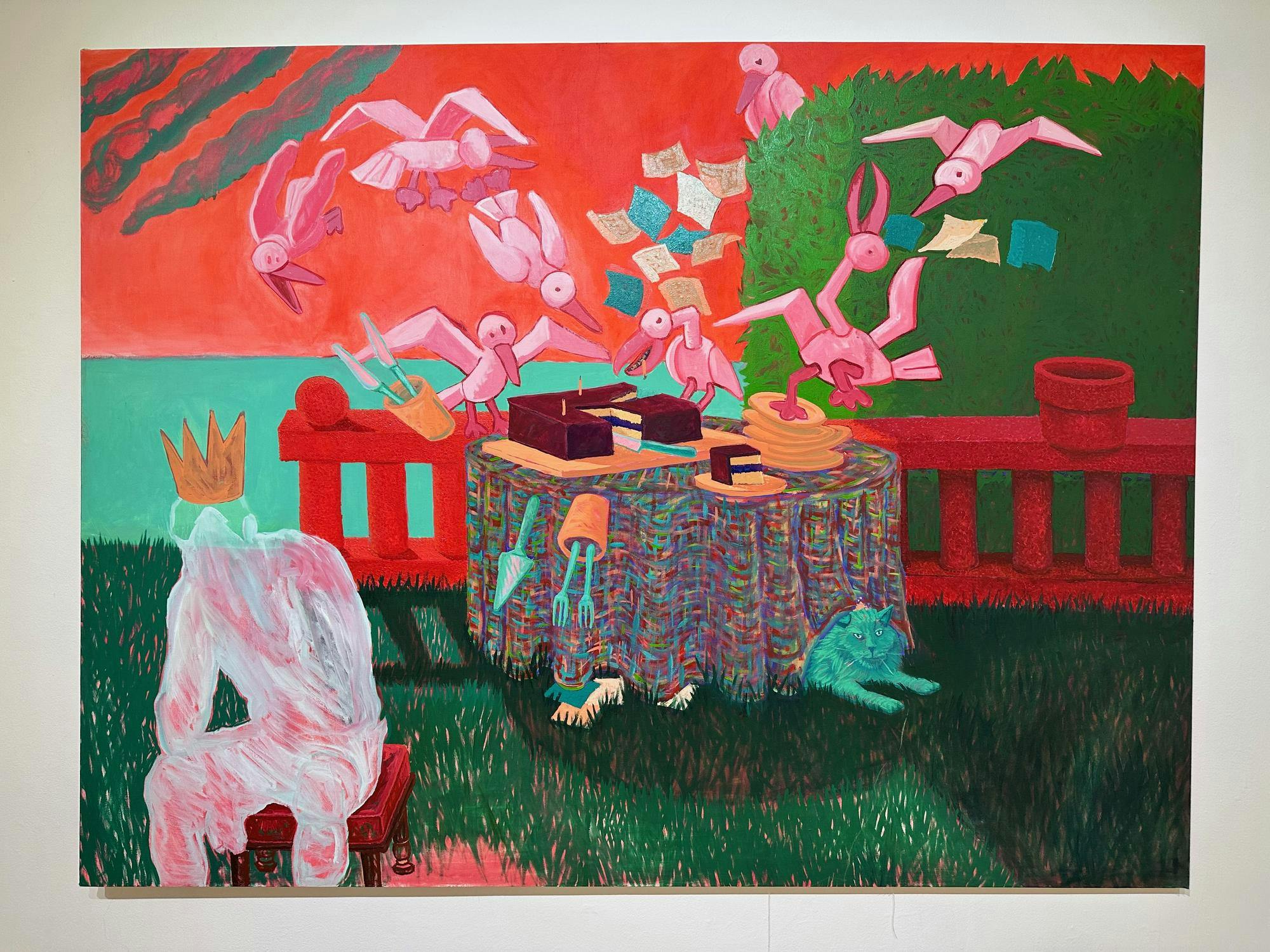
The formal investigation driving Morgan’s thesis is centered around the idea of three roles: “the teacher’s pet, the jester and the widower.” Each represents one aspect of Morgan’s artistic journey that held him back. The teacher’s pet symbolizes perfectionism. The jester symbolizes a tendency to hide vulnerability with humor. The widower simply “doesn’t go.” Each of these propensities was a hurdle Morgan had to overcome to truly embrace art as his life’s path. Cornell — and the art world — are all the better for the fact that he did. Looking at your own inhibitions is a difficult process. But, like a true creative, Morgan faces them head on and turns them into something beautiful.
While I’m sad to see him go (meaning I’ll no longer get to view his stunning art on campus), I know that Morgan is going to do great things out in the big, wide world. Undoubtedly, Cornell will always be a large influence on his practice going forward. “One of the main philosophies of Cornell's MFA program is that their zeitgeist is more focused on community than becoming the leader of the pack,” Morgan said. “I feel like I’m leaving Cornell more uplifted because of that. … [The community] will help me for the rest of my life.” In our first interview, Morgan shared with me that a sense of community was one of the things he most hoped to find here at Cornell. Now, at the close of his experience here, he has more than achieved that fulfillment.
Morgan’s work will be on display in Tjaden Hall’s Olive Tjaden Gallery until April 17, and I highly recommend stopping by to see a lifetime of effort and experience displayed in paint. Morgan can also be contacted at mjm764@cornell.edu or @mikemorganart on Instagram.

Melissa Moon is a member of the Class of 2028 in the College of Arts and Sciences. She is the arts & culture editor for the 144th Editorial Board and was an assistant arts editor for the 143rd Editorial Board. She can be reached at mmoon@cornellsun.com.