Sound is invasive; we intake and process a constant stream of indiscriminate audio all day, zeroing in on that which is most pertinent to us and paying little care to the rest. “The World According to Sound” entirely reverses that mindset. This immersive audio performance removes audience members from their inner world to pay homage to the spirit of “academic inquiry” through a series of artistic, sonic arrangements inspired by academic research, ranging from the footsteps of ants to the sound of pencil on paper. Produced by former Cornell artists-in-residence Chris Hoff ’02 and Sam Harnett, the 80-minute show played in Sage Chapel on March 23 to a sold-out audience of more than 300 students, faculty and community members with the golden objective of focusing the mind and fine tuning perception.
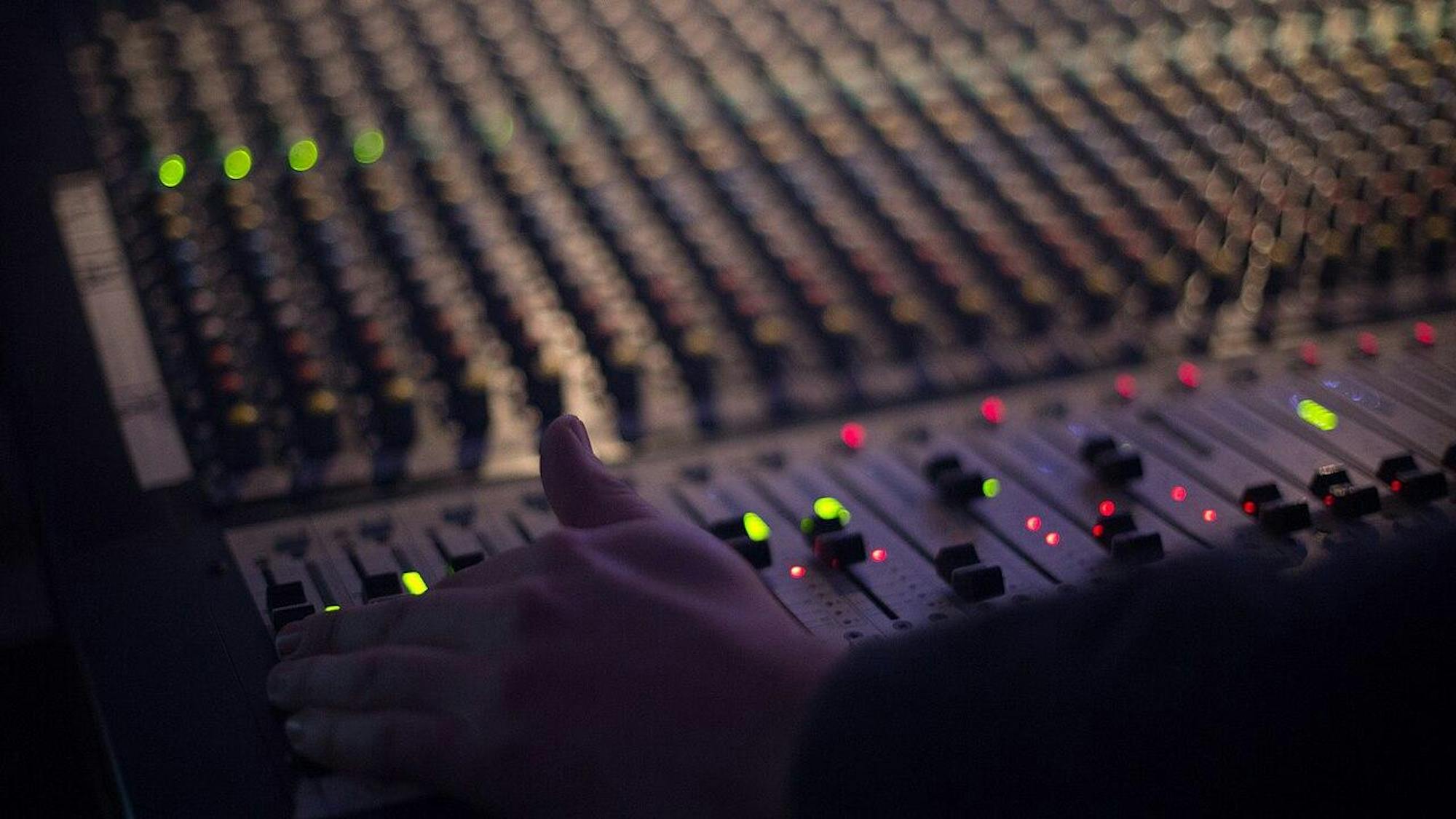
As the performance began, idle chatter about work and life faded away, and audience members donned eye masks, falling into a reverent hush. Sound flooded the space from eight speakers encircling the pews, ricocheting noise from wall to wall in a 3D sonic blanket. The first element of the performance was a recording of Hoff and Harnett setting up their speaker system in the space, rolling carts down the aisles and taping down sound cords with the highest possible level of auditory precision. At first it was jarring to hear action on all sides of me, and I had to tamp down the instinct to turn my head as if to scout out the source. Harnett noted at the beginning of the performance that sound is meant to be experienced holistically, without selectivity, and although we rely on these instincts to contextualize the world around us, it is vital to step back and merely allow ourselves to experience the full scale of our surroundings.
Following Hoff and Harnett’s introduction was a series of worldly sounds: the footsteps of ants underground, the embodied rumble of an earthquake in the ocean and even the idle simmering of the Salton Sea mud pots in California. This was by no means a musical performance, but each recording had a sense of musicality, emphasizing the dynamic tonality of the natural world. Slowly, these earthly contemplations were eclipsed by the clicking keys of a keyboard. What started as a duel between two typewriters turned into a cascade, drowning out the ambient sounds of the chapel and saturating the air with the furious clacking of dozens of fingers on keys. The sound washed over me, rising and falling as if with my own breath, making my head heavy and my body weary. Just as I thought I might fall asleep, the cascade was permeated by the piercing cry of a bull elk and all fell silent. In a seamless transition, we were transported, and a vibrant image unfolded behind my eyelids: an intricate panorama of Wyoming’s Grand Tetons. A cacophony of sounds visualized dusk in the summertime, complete with a chorus of crickets and owls in my periphery. A pair of grizzly bears traipsed around me, each crackling footstep and heavy grunt reverberating through the floor. I could almost smell the sun-warmed grass and feel the light breeze on my skin. When this scene began to fade, shifting into the next phase of the performance, I had to stop myself from reaching out as if to catch the image and hold on to it a little longer.
Hoff and Harnett are masters of visual imagery, manipulating sounds to induce in their audience whichever mental image they so desire. I overheard one audience member expressing her awe at the skillful display: “It gave me a visual that wasn’t a visual. I can still see it in my head. That was unexpected.” Yet, the performance was not intended entirely for mental transportation. At one point, the chapel was filled with a tuneless, swelling sound with no clear pattern or discernable language, which a narrator revealed was the recording of a man’s voice, played and recorded on an external device over and over again until the words were entirely lost and all that remained was the tonal foundation. Here, there was no opportunity for visual imagery, we were merely subjected to the oppressive audio, letting it swirl around our heads and sit heavy in our chests. The purpose of this audio clip was to show how duplication blurs specificity, which the narrator capitalized on with the concept of AI drawing information from other AI, blurring creative lines and reiterating the same mistakes until there is nothing remotely human in its output.
Indeed, this performance emphasized that which is intrinsically humanistic, exploring the religious devotion of a church choir singing in the Hagia Sophia to the heartwrenching loneliness laced through the final song of the now-extinct Kauaʻi ʻōʻō bird, calling out to a partner that will never respond. The website for “The World According to Sound” describes the mission of the show as an effort to “rethink the world through your ears instead of your eyes,” redirecting a sporadic mind to a controlled, focused point. This is a valuable skill for college audiences and beyond as we are inundated with more stimuli in our day-to-day lives than we can reasonably juggle. So, Cornell students, I encourage you to take out your earbuds and take a moment of silence, even close your eyes if you can, and experience the unfiltered, authentic noise of your environment. Allow yourself to stop multitasking and reconnect with the idle beauty of sound. It is tempting to develop tunnel vision on that which only impacts us directly, but the world around us — even the most mundane aspects — has a wealth of stories to tell.

Gia Lish is a member of the Class of 2029 in the College of Arts and Sciences. She is a staff writer for the Arts & Culture department and can be reached at glish@cornellsun.com.