


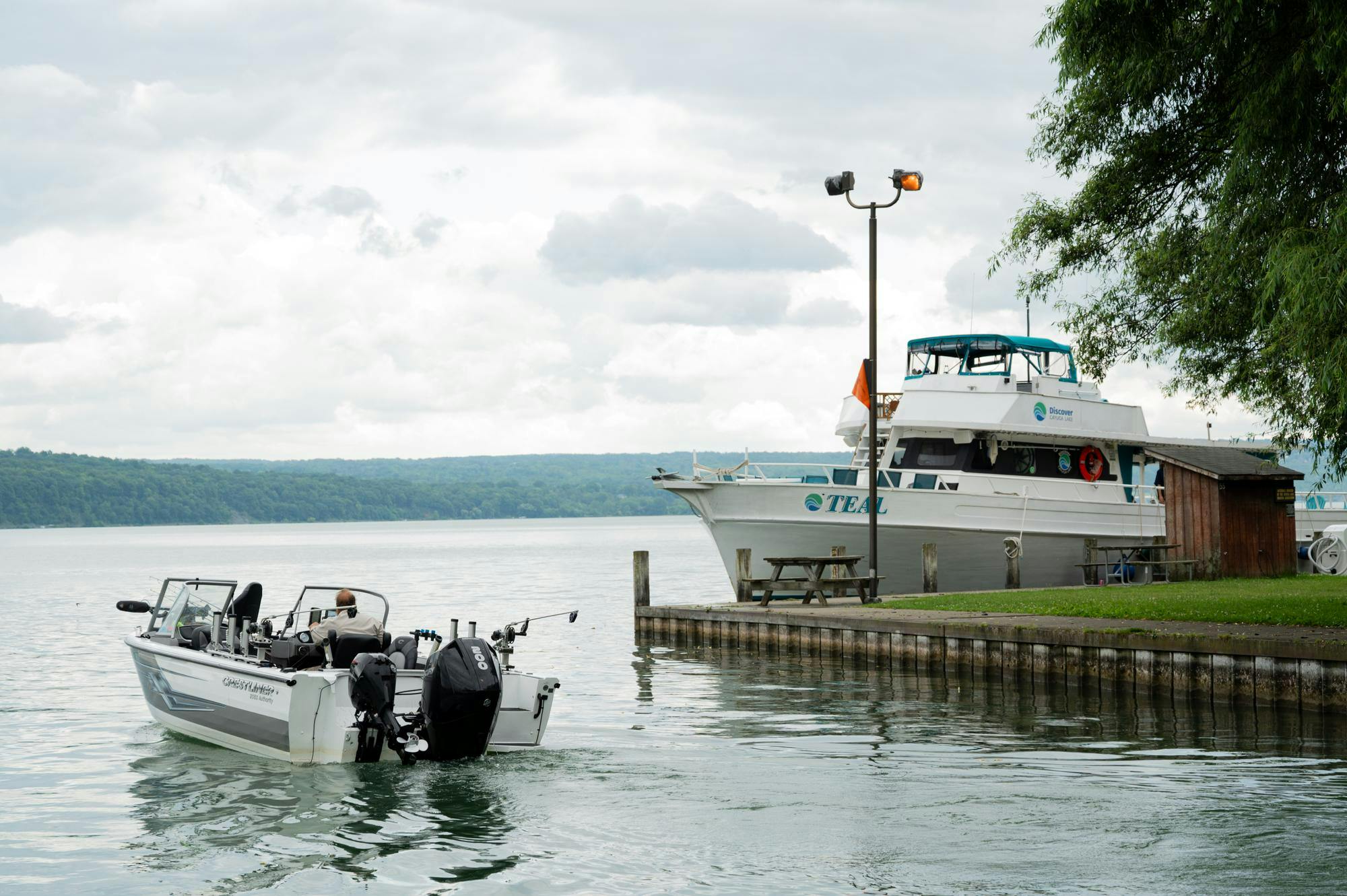
The Tompkins County Legislature passed a Jan. 20 resolution requesting the New York State Department of Environmental Conservation to reject the TeraWulf data center's request to draw over one million gallons of water per day from Cayuga Lake.
TeraWulf is a company with plans to transform the former Milliken Power Plant into a 400-megawatt data center. The company has filed for a state permit to withdraw over one million gallons of water daily from Cayuga Lake, for an unspecified future use as stated in a 2021 permit.
The proposed data center has drawn mixed reviews from the community, as locals have voiced concerns that the data center will utilize a water-based cooling system, which would detrimentally affect the lake ecosystem. The data center proposed would help process and store information for online platforms and artificial intelligence systems. While potentially generating jobs and financial flow into the town, it may also increase energy costs and raise environmental concerns.
The resolution was passed 14 to one, with Legislator Michael Sigler (Eighth District) casting the only dissenting vote and Legislator Dan Wakeman (10th District) recusing himself due to his employment as a networking engineer for TeraWulf.
To Vice Chair and resolution sponsor, Legislator Deborah Dawson (Seventh District), this resolution is a means to “push the DEC to do what they are supposed to do and do it properly.”
At the meeting, Legislator Irene Weiser (13th District) discussed how the original permit dates back to 1955 and has been periodically renewed since.
“Given the age of the permit, the absence of modern monitoring requirements, the lack of reliable historical withdrawal data, and the material change in use, there is no regulatory or environmental justification for treating this as a mere modification,” Weiser said during the meeting.
This resolution urges the DEC to conduct a review of TeraWulf’s plan and either reject or reprocess the permit as a new application needing approval.
The meeting was attended by over two dozen residents who spoke about concerns regarding health, rising utility rates and the environment during the public comment portion of the meeting. They also spoke of a general distrust of TeraWulf’s claims about adhering to a closed-loop cooling system, which would not draw from lake water.
Sam Poole ‘28, a member of Sunrise Ithaca and the Ithaca Democratic Socialists of America, spoke at the meeting, expressing a lack of trust over TeraWulf’s claims that they would not draw from lake water for this project, emphasizing the need for a closer review of the permit.
Sigler argued at the meeting that he thought the current permit was sufficient, believing that with the permit in place right now, water withdrawals would not be permitted to cool the data center.
He added that it was his “understanding that the permit that is in place right now is limited to power generation, whether that be coal, natural gas, nuclear or deep earth ground source.” Sigler also mentioned TeraWulf’s transparency throughout the process, which he “appreciated.”
The passing of this resolution is the most recent development in several controversies.
In December, the Lansing Board withdrew a moratorium that would have stalled the data center project. TeraWulf has also threatened litigation against Town Board members.
Most recently, on Jan. 29, local environmental groups, Cayuga Lake Environmental Action Now and FLX Strong, filed a lawsuit against the Lansing Zoning Board of Appeals, TeraWulf, Cayuga Operating Company, Lake Hawkeye and Fred DelFavero, the applicant in TeraWulf’s site plans, over the TeraWulf data center.
This lawsuit followed the ZBA’s decision to interpret the data center’s plan as an allowed use under the county’s zoning code. There was some debate over whether the data center could be permitted, as the project proposal did not appear to neatly conform with the allowed uses of the site of the former coal plant under Lansing’s zoning code. FLX wrote in an email statement to the Sun that they saw it as “an alarming precedent for our community.”
“We bring this action to ensure that the valid concerns of Town residents and others who stand to be harmed by this erroneous decision are not disregarded by biased and inadequate governance processes,” FLX wrote to The Sun.
This lawsuit reflects a general trend as data center projects are being met with opposition across the country. Small-town municipal boards are struggling to figure out how the water and energy these centers need will fit into their zoning code.
The county legislature holds some zoning authority, with zoning regulated primarily by the town board. It is not within the legislature’s power to deny TeraWulf’s plans or force them to be transparent.
“It's the DEC's job to hold [TeraWulf’s] feet to the fire and make sure that whatever they're going to use this [water] for is clear and specified,” Dawson told The Sun.

Valencia Massaro is a member of the Class of 2029 in the School of Industrial and Labor Relations. She is a senior writer for the news department and can be reached at vmassaro@cornellsun.com.


