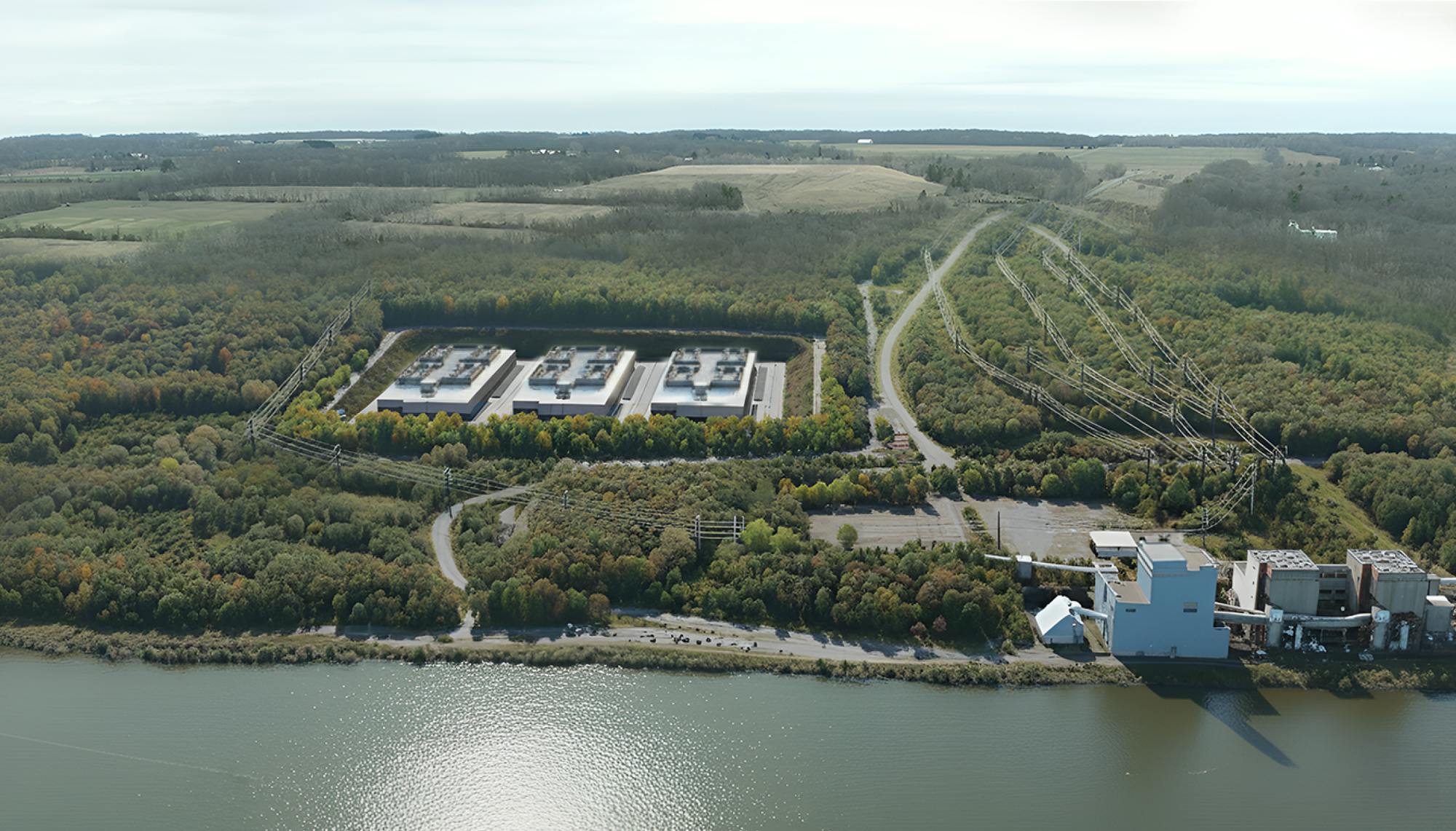
Tensions over TeraWulf’s proposed data center in Lansing, New York, continue to escalate as the company and property owner, Cayuga Operating Company, threaten legal action against the Town of Lansing over alleged violations of public meeting laws. The Lansing Town Board is also considering passing a proposal that would delay construction on the data center.
This data center has already sparked controversy as residents disagree about its environmental and economic impacts. Data centers like the one proposed store, process and manage information for online platforms and artificial intelligence systems. These servers generate jobs and financial flow into the town, but also increase energy costs and environmental concerns.
The proposed land-use moratorium would pause most large-scale development in Lansing for a year while officials rewrite the zoning code. If passed, it would pause the TeraWulf project, which was slated to start construction in 2026.
Accusations of Legal Violations
A letter published by TeraWulf, a representative of Lake Hawkeye LLC — which is a tenant of TeraWulf Data Center — stated that the Town Board members violated New York State’s Open Meeting Law, Freedom of Information Law and Lobbying Act due to their participation on the Lansing Listserv, an online platform where Lansing community members discuss everyday matters.
A following letter from the TeraWulf calls for the withdrawal of the moratorium and demands the “immediate resignation” of Town Supervisor Ruth Groff and Board member Joseph Wetmore for their participation on the Listserv and “attempting to influence” Jack Young, chair of the Zoning Board of Appeals.
On the Listserv, board members allegedly discussed and responded to questions about the data center. The company argued in the first letter that this participation doesn’t comply with the Open Meetings law as “a quorum as board members participate in discussions involving public matters,” but it doesn’t comply with requirements like open access, public notice, minutes and etc.
Access to this Listserv, according to the second letter, is “available only to those privileged to be approved for participation,” and the moderator who approves participants is Wetmore’s wife. Additionally, the second letter states that anyone who opposes the moratorium is “routinely ‘kicked off.’”
Groth denied that this constituted as illegal in an interview with Tompkins Weekly, stating, “A single board member answering a question from the public is not a deliberation and is not contrary to the Open Meetings law.”
TeraWulf declined a request for comment from The Sun.
At the Town Board’s Nov. 5 meeting, members voted 3-2 not to withdraw the moratorium and planned to vote on its passage on Nov. 19. However, in a press release from Nov. 13, the board announced that they will not be voting on the passage on Nov. 19. Instead they will be reconsidering the withdrawal of the moratorium, writing that they have “realized that we need more time to solicit and consider input from our partners in the Planning Board, Zoning Board of Appeals, and the Zoning Advisory Committee.”
If passed, the moratorium would freeze large-scale land use for a year while the town updates the zoning code. The Nov. 5 meeting was attended by those who both support and oppose the moratorium, spurring lively engagement from attendees.
Wetmore said at the Nov. 5 meeting that the moratorium is not meant to single out TeraWulf but to serve as a precautionary measure for the town’s future development.
“[The moratorium] lets us focus on how we want the community to develop instead of what’s coming before us right now,” Wetmore said. “It’s not what’s going on right now, but where do we want our community to be in five or ten years?”
Groff declined to comment and Wetmore did not immediately respond to The Sun’s request for comment.
Environmental Concerns Over Cayuga Lake
Environmental and economic impacts have become the central discussion point in the debate of whether the data center should be built, since the plans for the project were proposed in 2019, after the closure of the Milliken Power Plant.
Assemblymember Anna Kelles (D-125th District), a vocal opponent of the plant, expressed concern that the facility’s cooling system would draw water from Cayuga Lake, “both a drinking-water source and the ecological and economic heart of the region,” she wrote in a letter published in the Ithaca Times.
TeraWulf has promised to implement a closed-loop system completely independent of Cayuga Lake. However, Kelles states that the LLC structure of TeraWulf allows the company to make these promises and still draw on lake water, writing, “if the Cayuga facility withdraws significant water from the lake, but the permit is held by the private landlord, TeraWulf can publicly claim that it does not itself use lake water.”
Economic Promise and Rising Energy Costs
Meanwhile, County Legislator Mike Silger supports the project, citing potential financial benefits.
“The amount of money you would save in taxes, it's a lot of money. We're talking about $10 million that would flow into the town. So that's for your school district. That's for your town taxes and your county taxes,” he told The Sun.
Despite the promise of revenue, there are many concerns about the increase in energy prices. As the number of data centers in New York has grown, so have regional electricity rates.
In 2023, New York State Electric & Gas implemented a 62 percent rate increase over three years and recently proposed an additional 39.4 percent increase for natural gas customers and a 35 percent increase for electricity customers. This proposal was met with widespread opposition when it was discussed at a Public Statement Hearing on Oct. 9.
An Uncertain Future for Lansing
Cornell Young Democratic Socialists of America have been taking action against the data center. Aislyn Berg ’27 leads the organization’s ecosocialism committee, a group that is committed to addressing environmental concerns of the capitalist system. They have been advocating for the moratorium through campaign work, phone banking and attending board meetings.
Berg worries that the promises TeraWulf is making aren’t reliable. She said to The Sun that there is no “two-way communication” between the community and TeraWulf. She believes that there is no legislation holding TeraWulf to the promises they are making, as nothing is stopping them from promising environmentally friendly tactics, and then “year down the line, they want to switch to open source cooling … which has like really drastic ecosystem effects and contributes to harmful algal blooms.”
In response to TeraWulf’s statement that it will be creating hundreds of jobs, Berg expressed apprehension, noting, “This is an AI company. The point of it is that it is more or less unmanned.”
She added that without enforceable legislation, what TeraWulf is telling the community holds as much weight as “a pinky promise.”
On the other hand, Sigler remains optimistic about TeraWulf’s promises. Beyond economic benefits, he said “it's going to be a research facility” as opposed to “just stor[ing] data.” Sigler referenced the$20 million Cornell has invested in AI research, citing it as an “exciting opportunity” to continue expanding that research.

Valencia Massaro is a member of the Class of 2029 in the School of Industrial and Labor Relations. She is a senior writer for the news department and can be reached at vmassaro@cornellsun.com.