

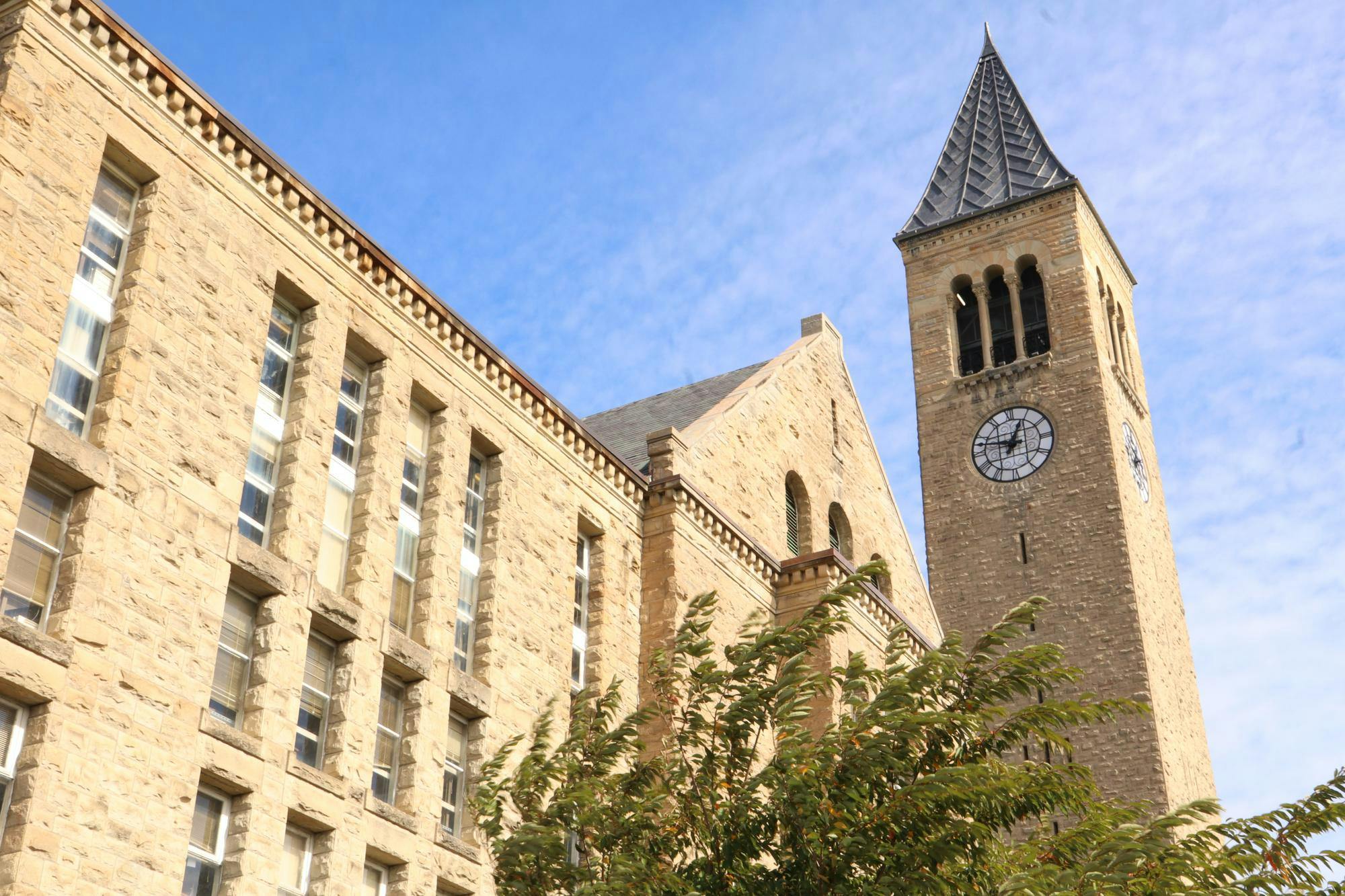
Cornell has had fewer students applying to U.S. Doctor of Medicine programs, consistent with the decline in the national average, according to data released by the Association of American Medical Colleges.
According to the data, the national average of applications to M.D. programs in the U.S. peaked in 2021-2022 with 62,443 applications. Since then, the number has dropped, with a low of 51,946 in 2024-2025, before experiencing a slight rebound in 2025-2026.
Cornell’s applications have experienced a similar decline and rebound over the past few years — 464 applications submitted in 2021-2022 was the most in the last eight years with that number dropping to a low of 379 in 2024-2025.
Cornell ranked 28th among undergraduate institutions in the number of applicants to U.S. M.D. programs during the 2025–2026 cycle, with 385 applicants, according to the data released by the AAMC. The University also has the highest number of applicants among the Ivy League.
The Sun spoke to members of the pre-medical community at Cornell to understand the decline and some of the factors associated with it.
Srijita Kommaraju ’28 is a global and public health sciences major in the College of Human Ecology and is the secretary and risk management officer of Phi Delta Epsilon, a pre-medical fraternity at Cornell. She described that being pre-med can be an “overwhelming” experience given all of the classes and extracurricular activities students are expected to be involved in.
To apply to medical school, applicants are expected to take a series of biology, chemistry, math, physics and social science courses which include at least two introductory biology classes, general and organic chemistry, physics one and two and biochemistry.
In addition to academic demands and maintaining a strong grade point average, prospective applicants to medical schools are expected to participate in extracurricular activities which can range from volunteering, research and medical career experiences.
Kommaraju said that one of the potential reasons for the drop in applicants could be students deciding to take gap years before medical school. She said that since the COVID-19 pandemic, gap years have become more widespread.
“People want to have more medical experiences, research experience or improve their GPAs before making the commitment to medical school,” Kommaraju said. “Gap years are becoming more and more normalized because people and medical schools value experiences as medical school admissions are becoming more competitive.”
Saanya Agarwal ’27, who studies global and public health sciences and is president of Phi Delta Epsilon, plans to take a gap year following graduation. She explained that she knew many people decide to continue pursuing a medical profession they picked up during their gap year.
“I know some students who have taken a gap year and decided that the job they were working was more rewarding and a better fit for them than medical school,” Agarwal said.
Kommaraju also stated that at Cornell, the pre-medical classes are very difficult, which could cause the applicants to pick other healthcare adjacent jobs including nurse practitioners or physician assistants. She said that for her, joining Phi Delta Epsilon has been “transformative” for her experience as a pre-medical student because of the support system and networking opportunities that are "built in” to the fraternity.
“Knowing people in my classes and being able to study and laugh with people who have similar career goals as me has been a great part of my experience in [Phi Delta Epsilon],” Kommaraju said. “It has been really beneficial to me in navigating my pre-med journey.”
Another potential issue she described was residence, or the intensive three to seven year training that doctors complete after medical school, typically in a hospital setting. Agarwal explained that as programs are shrinking, the number of spots available for residents is decreasing too, causing some hesitation to commit to medical school.
“Medical school in my opinion is an emotional and financial commitment," Agarwal said. “I think that one of the issues could be keeping potential doctors interested if after four years of medical school they also have to compete for a spot at a residency program.”
Shreekanya Mitra ’27, a nutritional sciences major in the College of Human Ecology and vice president of programming for Phi Delta Epsilon, explained that the rising cost of medical school could be contributing to the decrease in applicants.
“I think that people are finding other well-paying jobs that don’t require as many years of schooling,” Mitra said. “The cost of pursuing medicine can deter some people from being able to attend med[ical] school.”
Mitra is considering taking a gap year and said that taking a gap year can help students hone in on why they are deciding to become a doctor and allow them the chance to “recharge” after completing undergraduate school.
“Sometimes people need time to refocus and understand why they care about medicine in the first place,” Mitra said. “That can help prevent burnout later on.”
Zeinab Faraj is a member of the Class of 2028 in the College of Arts and Sciences. She is a senior editor for the 144th Editorial Board. She was a features editor and an assistant sports editor on the 143rd Editorial Board and can be reached at zfaraj@cornellsun.com.


