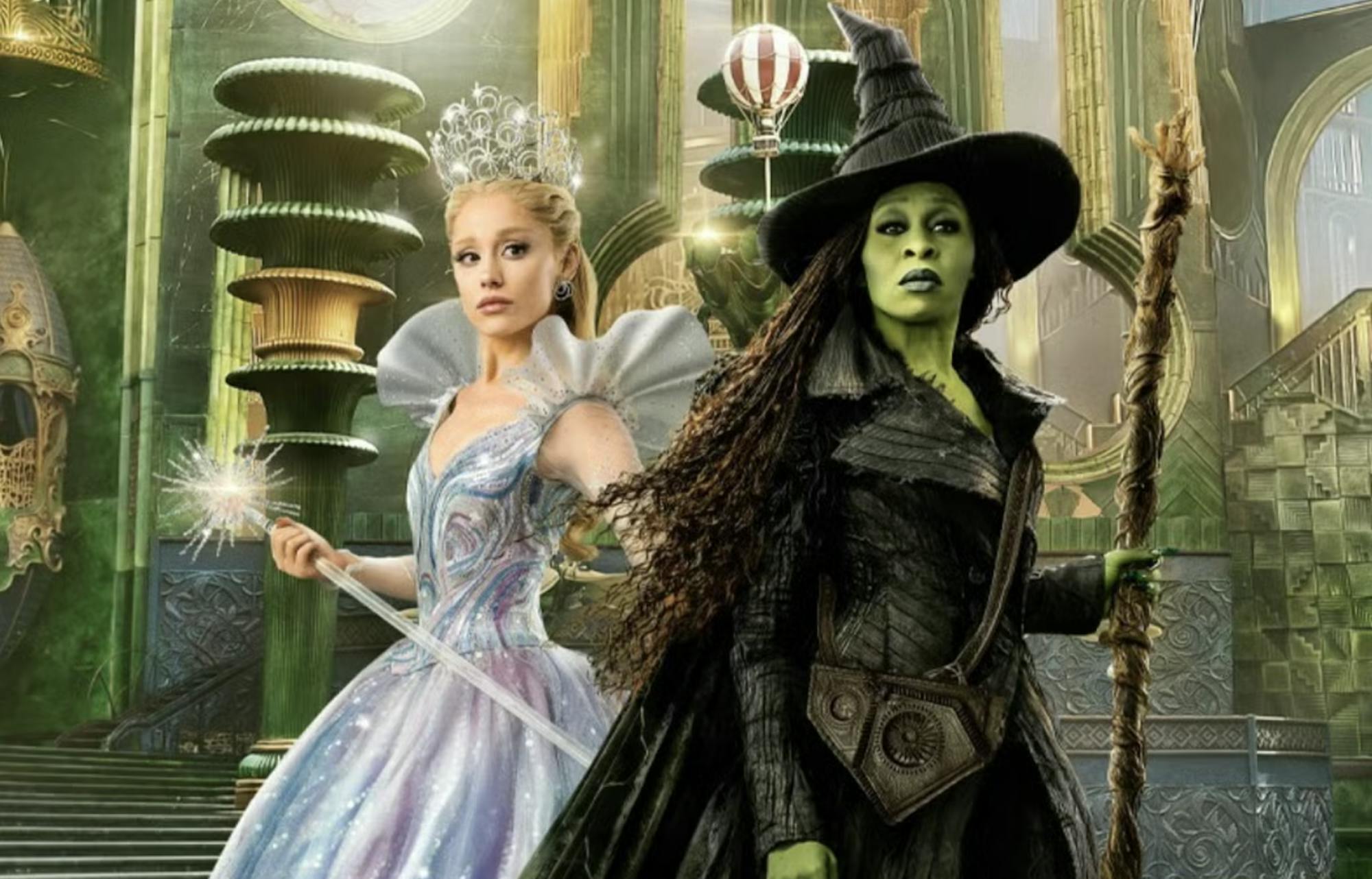
What are the implications of splitting Wicked into two movies? A savvy marketing move? A financial strategy? To encompass more detail? This storytelling choice has certainly succeeded in building tension and anticipation for what is to come in Wicked: For Good.
The original Wicked, which came out last November, certainly turned me into a fan. However, I have hesitated to fully immerse myself in the world of Wicked for fear of spoiling the story. I have seen The Wizard of Oz, read the book and listened to the Wicked soundtrack on repeat until I memorized every song, but I still feel like I haven’t experienced the story in its entirety. Perhaps I am an imposter, but, by initially holding back, I have allowed myself to build anticipation and excitement for what is to come in Wicked: For Good. And maybe that is precisely the brilliance of splitting the story into two films. By creating a narrative pause, the filmmakers have allowed fans to slowly savor the world, characters and music, making the wait for part two part of the experience itself.
The decision to split the movie into two was initially met by major criticism. OnStage Blog, a popular online publication, described the decision as “dumb” and one that “will ultimately fail.” However, the reception of the movie has confirmed a variety of reasons as to why this decision was the right one. First of all, the movie takes an incredibly deep dive into the complexity and stories of the characters. We see the relationship between Elphaba and Glinda unfold in a way that would not be possible in a more concise movie. We see the true sense of humanity in Elphaba in a way that further deepens the significance of her impending transformation into the powerful, confident “wicked witch.” Cynthia Erivo said herself, “What's wonderful about the [Broadway] show is that you get an insight into why this woman becomes the Wicked Witch of the West, but you have only three hours to do it in. With us, you have two movies.” The decision to split the story into two allows the filmmakers to gradually reveal the magic of Oz, giving audiences a richer, more immersive experience rather than rushing through the plot.
From a financial standpoint, Universal earns box office returns from two separate blockbuster movies. Perhaps a risky move, but one I believe will pay off. Beyond ticket sales, this strategy extends the commercial relevance of Wicked, as well as the amount of time the franchise can profit off of merchandising and brand deals. In an era where franchises compete for sustained attention, this move ensures that Wicked remains culturally and commercially significant for years rather than months.
Most importantly, the decision to split Wicked into two parts has succeeded in building a dedicated fan base through anticipation for what is to come. Online forums are alive with fan theories, debates over potential plot points and discussions of easter eggs from the first film. For someone like myself, who was not deeply invested in the fanbase of Wicked before, the staggered release schedule has transformed the experience into an instance of community bonding. My friends and I gather around the phone the morning of a new Wicked teaser trailer drop to watch together. We even secured our movie tickets months in advance — the moment they became available. All this is to say that splitting the story into two has not only sustained fans’ attention, but grown the fanbase and transformed viewing and speculation into a shared community experience. Since the announcement that Wicked: For Good would follow the first film, a full year later, excitement has only intensified, with fans poring over every detail, theorizing about new plotlines and celebrating the return of beloved characters.
So, while the two-part structure of Wicked is in some ways a brilliant marketing and financial strategy, it has also proved to be wonderfully successful in expanding on storytelling and sustaining a growing fanbase. By giving audiences a full year to engage with one another, debate online and bond over the story, anticipation itself has become an integral part of the Wicked experience.
Layla Copen is a sophomore in the College of Arts and Sciences. She can be reached at lmc374@cornell.edu.
Layla Copen is a member of the Class of 2028 in the College of Arts and Sciences. She is a contributor for the Arts & Culture department and can be reached at lmc374@cornell.edu.