


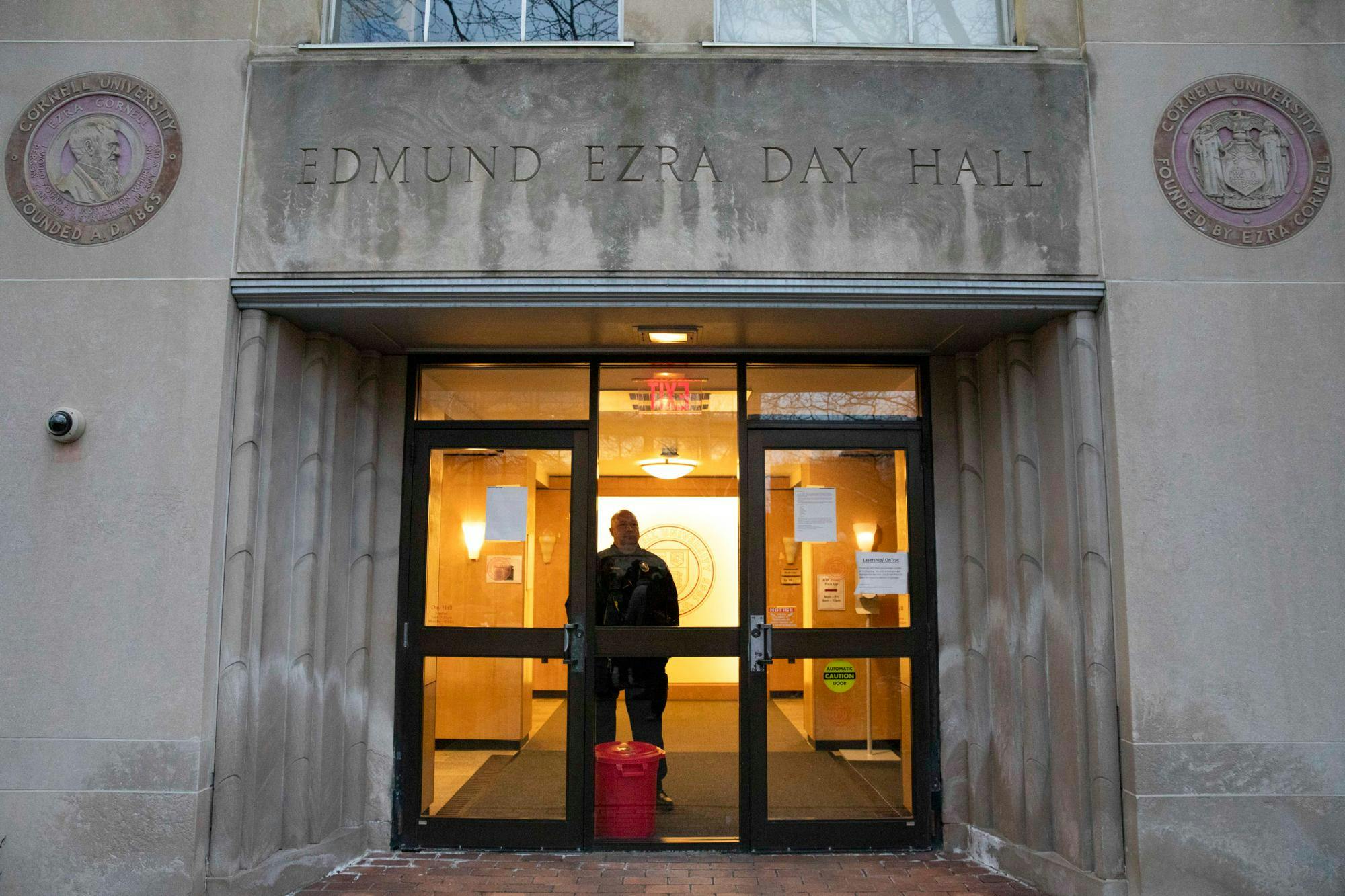
Cornell was among five universities to receive a letter from United Nations Special Rapporteurs on Oct. 14 raising “serious concern” over alleged human rights violations against international students on campus.
The letters, released to the public 60 days later, were also sent to Columbia, Georgetown, Tufts and Minnesota State University by five U.N. Special Rapporteurs — which are each independent human rights experts appointed by the U.N. Human Rights Council that investigate and report on human rights issues in the international community.
In their message to President Michael Kotlikoff, the Special Rapporteurs highlighted Momodou Taal, the international Ph.D. student who sued the Trump Administration last spring, and graduate student Amandla Thomas-Johnson. Both Taal and Thomas-Johnson were pro-Palestininan activists and international students at Cornell who fled the country over deportation concerns.
“While we do not prejudge the accuracy of these allegations, we express our serious concern over the reported human rights violations against Mr. Taal and Mr. Thomas-Johnson” the letter reads.
Taal was an F-1 visa holder and first made national news when he sued the Trump administration in March 2025 for allegedly violating his First and Fifth Amendment rights. The suit claimed that the implementation of two Trump executive orders targeted pro-Palestinian speech and dampened dissent, including his own. Soon after he launched the suit, the British and Gambian dual citizen was told to surrender himself to Immigration and Customs Enforcement custody.
Thomas-Johnson was prompted to flee the country in April 2025 after a friend tipped him off that authorities were looking for his whereabouts. His immigration status was revoked one month later.
Both Taal and Thomas-Johnson were previously suspended for their role in the September 2024 Statler Hall protest, during which over 100 pro-Palestine protesters disrupted a career fair featuring defense contractors Boeing and L3Harris.
The letter comes amid international students' feelings of unease and outlines several areas of concern including freedom of expression, assembly and the right to education and emphasizes the role of universities in contributing to these issues.
“The structural changes at universities to systematically repress expressions of solidarity with Palestine has created a climate of fear and intimidation.” the letter reads. “Students report self-censoring political expression, and particularly international students are withdrawing from activism due to deportation fears.”
The Special Rapporteurs also raised concerns that disciplinary action taken against protesting students have an outsized effect on their academic progression. Such punishment violates the rights to education found in the Universal Declaration of Human Rights and the International Covenant on Economic, Social and Cultural Rights, the letter states.
This inquiry began after two law clinics at the University of Chicago, filed a complaint with several Special Rapporteurs on June 11, alerting them to the cases of Taal, Thomas-Johnson and six other students from other universities.
Anji Parrin, director of the University of Chicago Law School’s Global Human Rights Clinic, one of the clinics involved, explained that typically U.N. Special Rapporteurs field complaints or allegations made to them, evaluate the case’s credibility, and then, if valid, send the party of interest a letter outlining the claims made against them.
In a statement to The Sun, Parrin said she was pleased that the Special Rapporteur's letter “affirmed” her clinic’s concerns and called the Oct. 14 letters, “ a devastating picture” of human rights being violated.
When asked why she included the two cases of Cornell students in her clinic's initial complaint, she focused on the University's response to protests.
“For the students and faculty at Cornell, we were concerned primarily with violations of freedoms of assembly, expression, and association including the disciplinary actions taken by the University against students exercising their freedoms of assembly, expression, and association, as well as the revocation of the visa of Mr. Taal,” Parrin wrote.
Undergraduate students overwhelmingly passed a referendum on Dec. 15, that called on Cornell to make its disciplinary system independent from the University administration among other changes.
Cornell’s disciplinary process, which is overseen by the Office of Student Code of Conduct, has recently come under fire from both Student Assembly members and Respondent Code Counselors. Both groups view OSCCS’s implementation of temporary suspensions and other disciplinary sanctions, the majority of which are levied against protestors, as excessive and unjust.
Since October 2023, Cornell has issued 81 disciplinary actions, including a dismissal and suspensions, “against students who chose to violate university policies by infringing the rights of others,” a University facts page states.
At the end of their letter, the U.N. Special Rapporteurs requested that Cornell detail to them how they would safeguard the rights of pro-Palestinian protestors like Taal and Thomas-Johnson including their right to assembly and free expression.
“Please provide detailed information how freedom of expression and freedom of assembly according to international human rights standards will be safeguarded on your university campus in the future.” the letter stated. “In particular, please indicate how you intend to prevent or revert the systematic repression of expressions of solidarity with Palestine that is protected under articles 19 and 21 of the ICCPR.”
Since receiving the letter in October no response from Cornell has been published by the Special Rapporteurs and the University did not respond to a request for comment at the time of publication.
Correction: January 20, 5:15 p.m.: This article has been updated to include the correct name for Minnesota State University.
Benjamin Leynse is a member of the Class of 2027 in the College of Arts and Sciences. He is a multimedia editor for the 144th Editorial Board and was a news editor for the 143rd Editorial Board. He can be reached at bleynse@cornellsun.com.


