

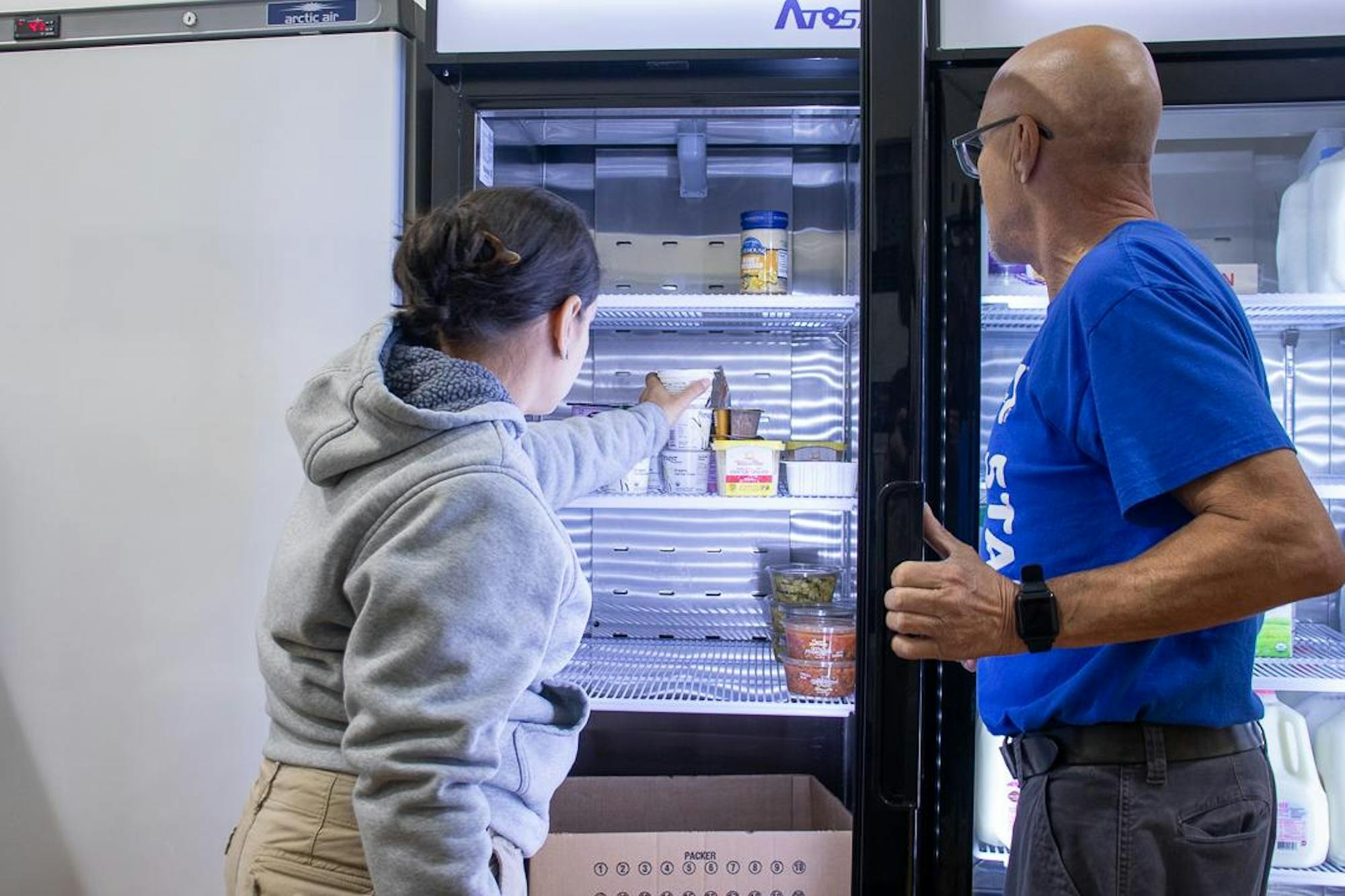
Organizations providing food aid in Tompkins County have been strained for resources ever since the Trump Administration announced that Supplemental Nutrition Assistance Program benefits would only be partially funded starting Nov. 1.
The Supreme Court on Friday temporarily sided with the Trump Administration and kept the $4 billion in SNAP funds the Administration was holding onto frozen.
Across Tompkins County, where 7,200 people receive SNAP benefits, organizations are experiencing a marked increase in demand for basic food needs. In response to the SNAP benefits freeze, the county recently pledged $50,000 in extra funds to purchase food for affected residents.
On campus, Anabel’s Grocery implemented a discount-or-donate program, where customers can self-select a 50 percent discount if experiencing “serious financial need” amid the government shutdown. Patrons also have the option to donate $1 alongside their purchase if they are not struggling to offset some of the costs of the discount.
“We encourage people to take [the discount] only if they are experiencing some kind of financial difficulty,” said Trisha Bhujle ’26, a coordinator of Anabel’s Grocery. She said that the discounts were part of “living our mission.” Bhujle also serves as a teaching assistant for the Dyson course, AEM 3385, which manages the grocery.
In the broader Tompkins community, organizations such as Mutual Aid of Tompkins County and the Salvation Army have seen increased demand, even before SNAP benefits were paused earlier this month.
Captain Dave Kelly of the Ithaca Salvation Army said that there was a “40 percent increase [in need] since June,” both due to a general increase in the cost of living and the SNAP freeze.
In the past, Kelly said the store “would run out of things, but we could get things back fairly quickly.” After benefits lapsed, he said demand “is going to put a strain on the sustainability of what we have.”
Kelly, who works closely with and rents out space to the food pantry, Ithaca Kitchen Cupboard, said that in order to meet expected demand, IKC purchased twice the amount of food than usual in anticipation of the first week without SNAP benefits.
This week, Kelly said they saw “twice as many families as most Mondays,” and that more people came to IKC this Monday than any other day on record.
Outside of traditional food banks, Mutual Aid of Tompkins County — which operates online as a place for people to ask other community members for aid regarding necessities like diapers or baby food — has been another organization feeling the strain of the SNAP freeze.
Coordinator Theresa Fulton said there is “no way” that need is being met with the SNAP freeze, and they already “were not able to fulfill needs before” Nov. 1.
Though IKC and Mutual Aid’s resources are dwindling, Kelly and Fulton said there was a silver lining: support from the Tompkins community. Both said that members of the community have “stepped up” to meet the increased demand through increased donations and volunteering efforts.
However, Fulton predicted that if the government shutdown continues for longer, she sees a “huge crisis coming because people weren’t expecting [the freeze],”
Kelly, Fulton, and Bhujle all encouraged donations to Ithaca Mutual Aid, IKC and Anabel’s Grocery.
A list of food distributors can be found here.
“A lot of state governments are putting out some amount of money,” Fulton said. “But I just don’t see how it can meet the billions of dollars of benefits [that are being withheld].”

Atticus Johnson is a member of the Class of 2028 in the College of Arts and Sciences. He is a news editor for the 144th Editorial Board and can be reached at ajohnson@cornellsun.com.


