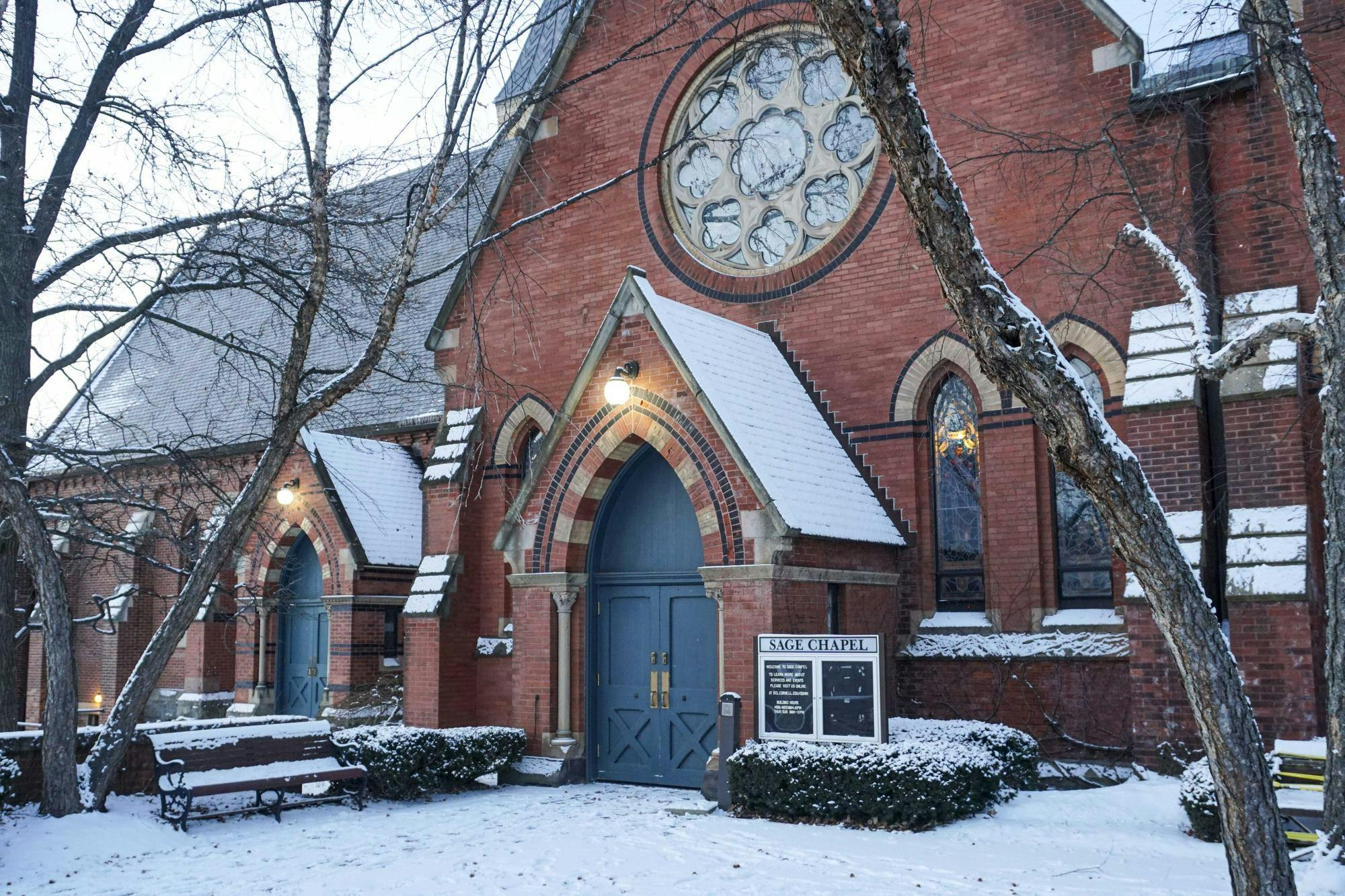
Sage Chapel, the first nonsectarian chapel at any college or university in the U.S., has celebrated higher education and served as a hub for student worship and music groups through the years.
Though now a beloved symbol of the University’s campus, Sage Chapel was commissioned during a controversial time in Cornell’s history, when the University was facing criticism from the media and the clergy for its “godlessness.”
History and Design
Ezra Cornell and Andrew Dickson White founded Cornell in 1865 as a nonreligious institution. White, who served as Cornell’s first president, described his desire to establish a university that was “‘an asylum for science … where it shall not be the main purpose of the faculty to stretch or cut science exactly to fit ‘revealed religion.’”
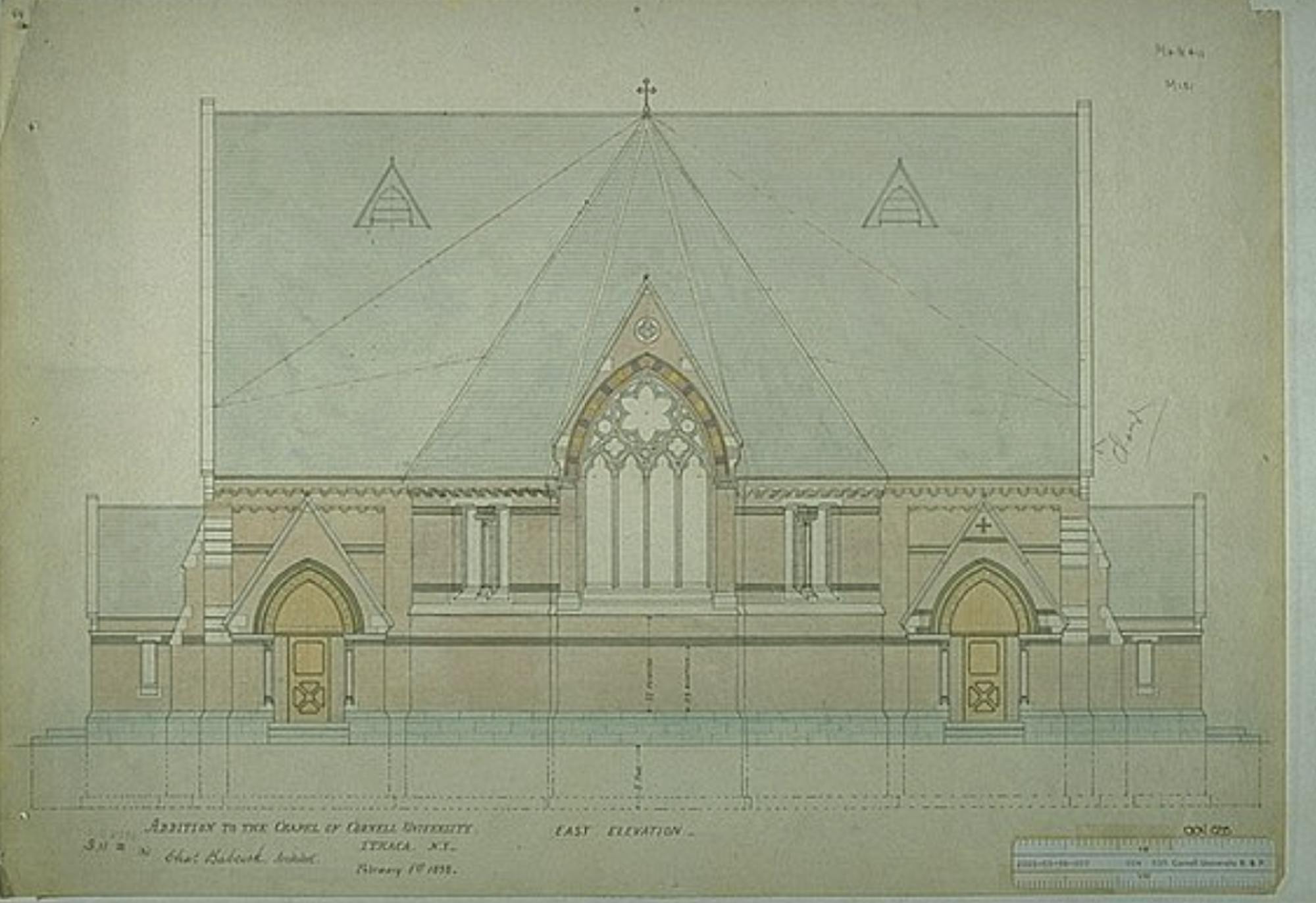
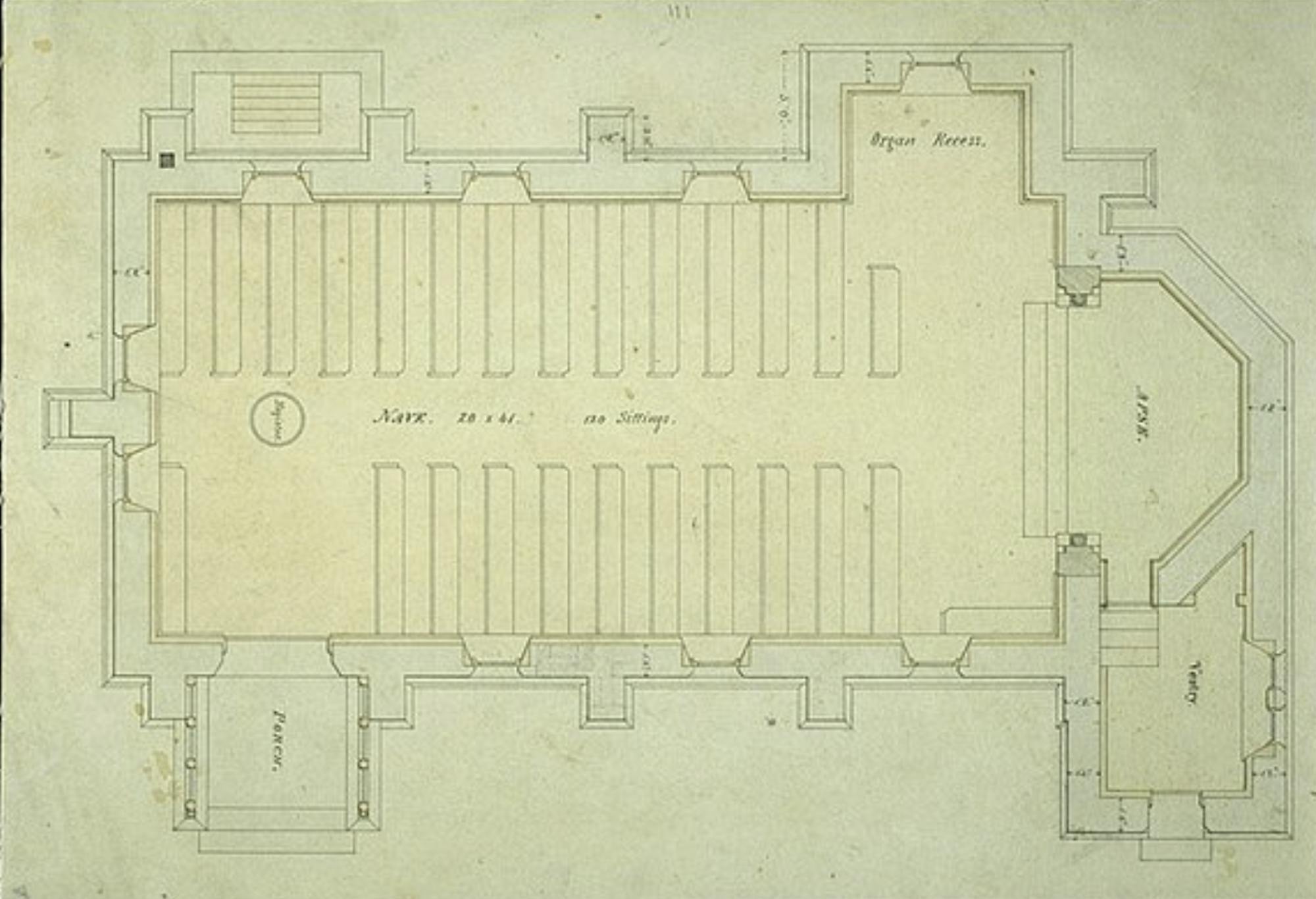
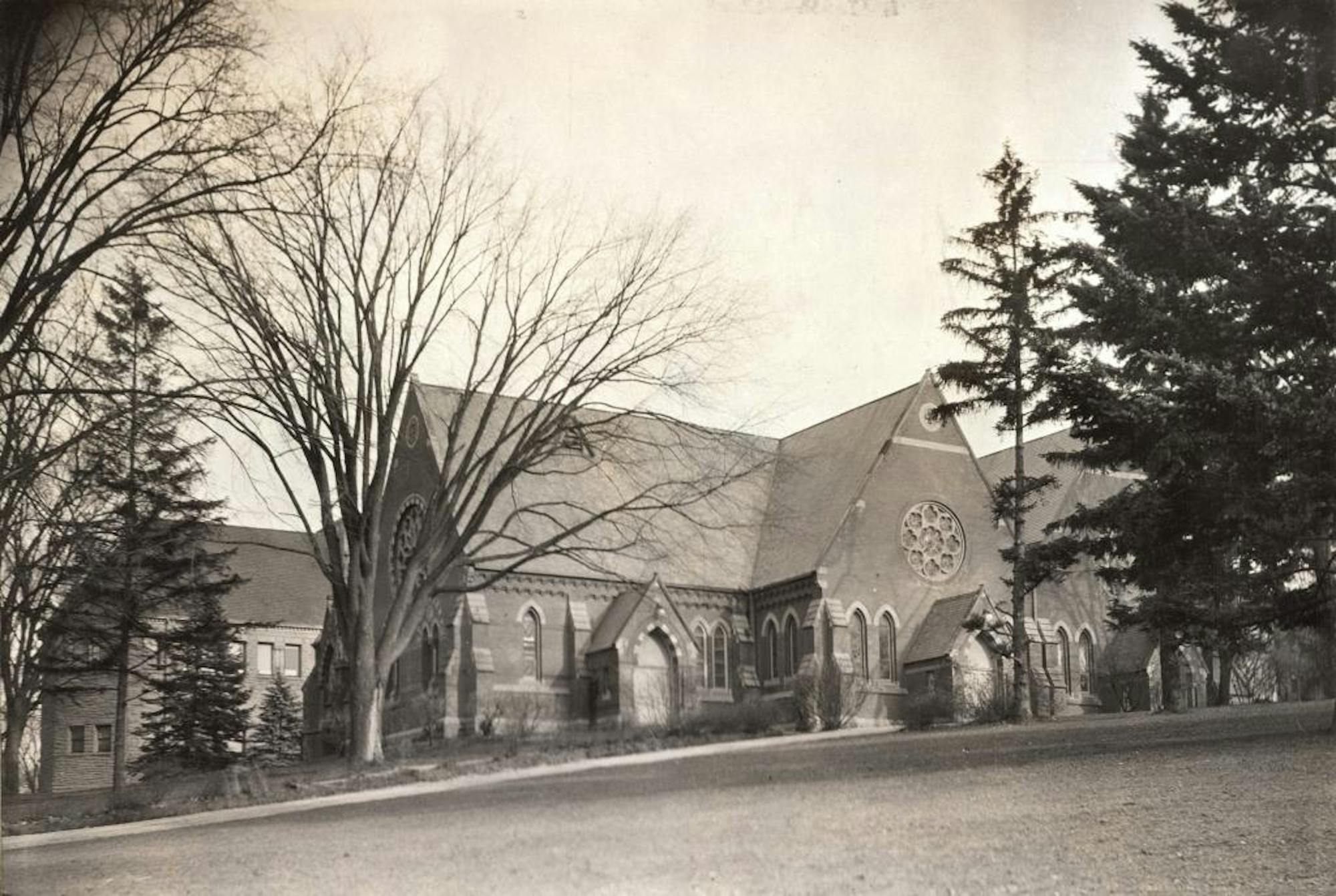
Trustee Henry W. Sage funded the Chapel’s construction four years after Cornell’s founding to assuage public criticism and to provide a space for members of any denomination to worship. Charles Babcock, Cornell’s first architecture professor, designed the chapel, and it opened on June 13, 1875.
Since 1875, Sage Chapel has welcomed speakers from around the world and across denominations, including Arrianna Huffington, Jane Goodall and Martin Luther King Jr..
Upon entering Sage Chapel is the mosaic frieze The Realm of Learning, which memorializes the Chapel’s celebration of higher education, displaying the University’s founding educational programs and commitment to coeducation.
Some windows also commemorate Cornell’s commitment to progressivism and reform. The most recent window memorializes Michael Schwerner ’61, Andrew Goodman and James Chaney, civil rights workers murdered by Ku Klux Klan members in Mississippi in 1964.
Student Life
The Chapel currently serves as a hub for music organizations on campus, including Cornell University Chorale, Chorus and the Glee Club — Cornell’s oldest student organization, which preceded the chapel.
Gloria Lane ’28, sales manager of the chorus, explained that the chorus thinks of the Chapel as “a symbol … for the group,” and many of their traditions revolve around the space. In fact, the chorus’s merchandise this year features one of the Chapel windows on the back of a sweatshirt.
Emeka Okereke ’28, concert manager and recruitment chair for the Glee Club, said one of his favorite traditions is decorating Sage Chapel each Christmas with Chorus and the Glee Club. He fondly remembers getting to place the star on the top of the thirty-foot Christmas tree last year.
Chorus and the Glee Club also put on a holiday show every year in the chapel where members read Bible verses and sing hymns.
Though the show is a traditionally Christian service, Lane said that many members of the clubs who read verses come from diverse religious backgrounds.
“They were really honored to have that opportunity,” Lane said. “It was just an open space for everyone to enjoy faith.”
Lane even said that Sage Chapel represented “most of my college experience.” Spending at least two hours a week in the Chapel, she said she has the shape of the windows “ingrained” in her mind.
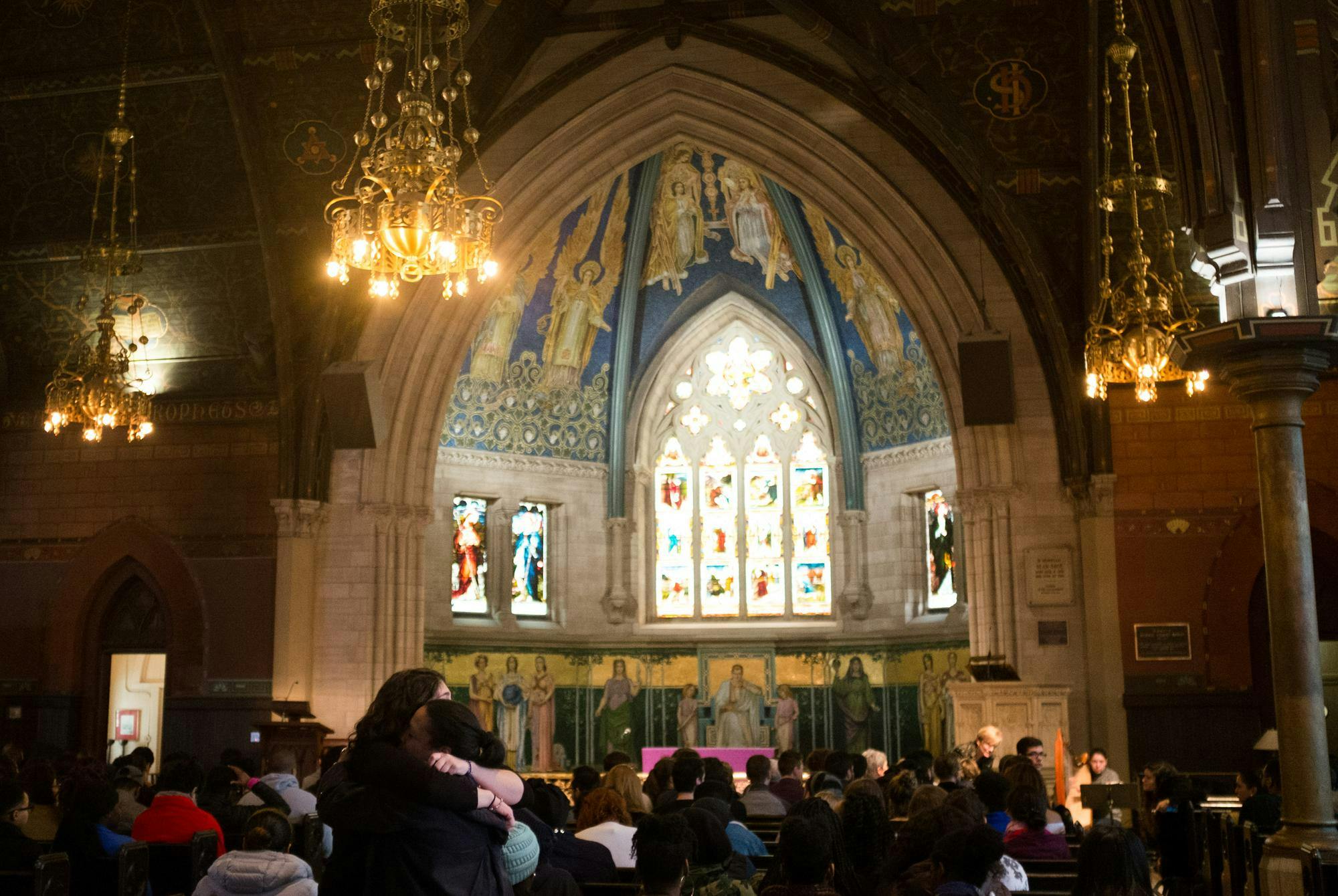
Okereke shared this feeling, calling Sage Chapel a “second home.”
“[The chapel] is separate from a lot of the other things I do on campus,” Okereke said, “[but] when I'm there, it's a very special and warm and welcoming place.”
Okereke, who also sings in the chapel during Sunday mass, appreciates getting to perform in formal and informal capacities. He said that the Glee Club produces a “grander sound,” and “acoustically the sounds can be very different” during different performances with each group.
The crypt is his favorite space in the Chapel, he said, “because being able to sing in there is super cool … knowing the people who made Cornell what it is today are buried there.”
Amid constant change — living in different dorms, attending different classes — Lane described her love for the Chapel.
“Sage Chapel … will always be a building that I spend a lot of time in,” Lane said. “[It is] the place I go … [to] … see all my friends.”
‘I Do’
Sage Chapel’s beauty has drawn couples to choose it as their wedding venue, particularly for couples of different backgrounds and religions.
Celia Rodee ’81 and Peter Cooper ’80 spoke to The Sun in 2024 about choosing Sage Chapel as their wedding venue.
Having met at Cornell while working in the dining hall, the University’s beautiful chapel felt like the right place to get married.


“Cornell was our connection — we met there [and] we fell in love there,” Rodee previously told The Sun. “But we thought that [since] Cornell would be a more neutral place being an interfaith couple, both families would compromise.”
Another element that set Cornell apart for the couple was Sage Chapel’s nonsectarian nature, as Rodee is Protestant Christian and Cooper is Jewish.
Shweta Modi ’19 and Neil Shah ’19 also chose to get married at Sage Chapel for sentimental reasons. Modi and Shah both have Indian heritage, so preserving their wedding traditions was important to them. They found Cornell to be accommodating during the planning process.
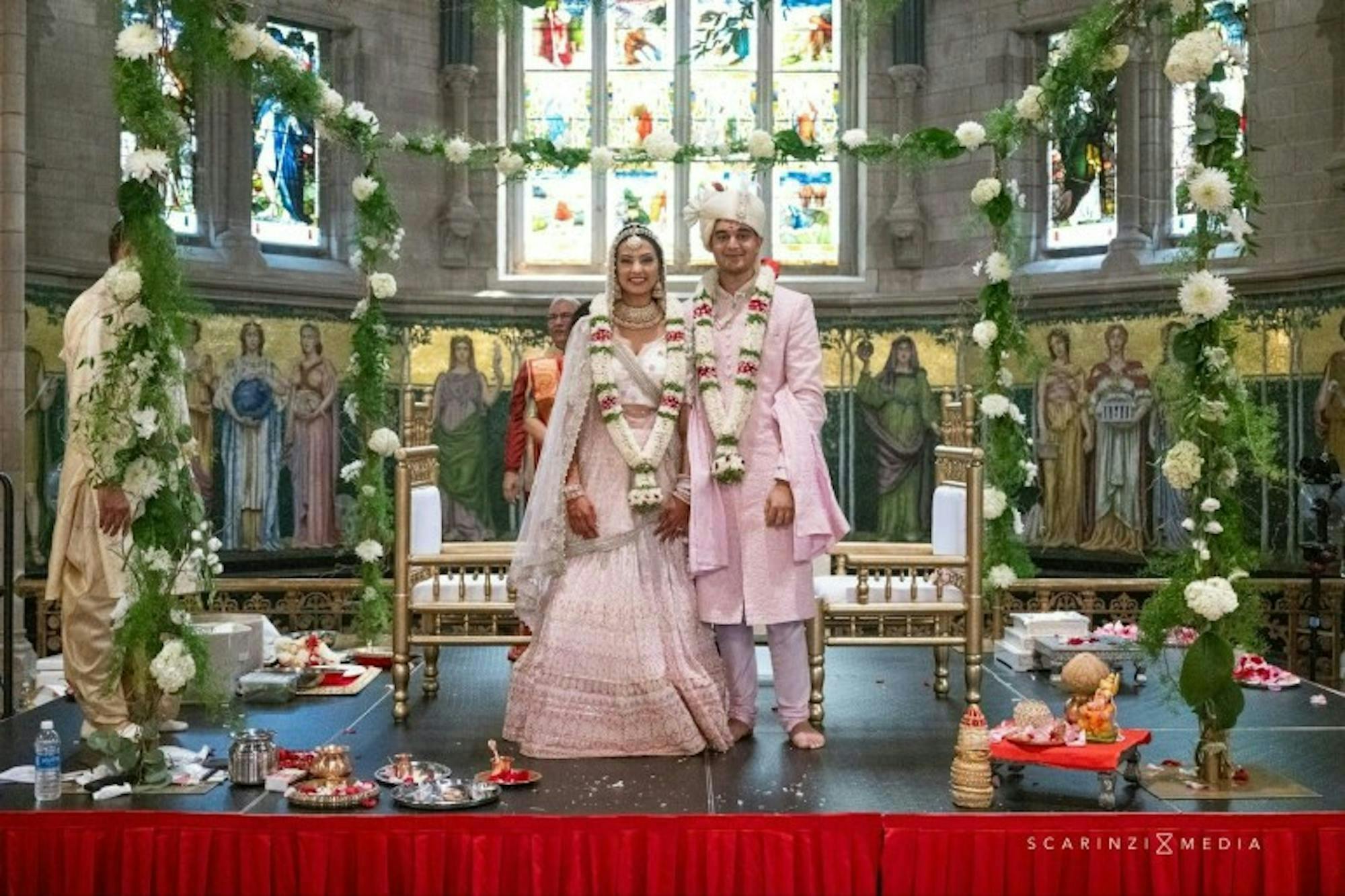
“Since Cornell didn’t do many Indian weddings they were so excited to learn about our traditions and make it unique to us. They were curious to learn more,” Modi previously told The Sun.
Though Jacqueline Maxon did not attend Cornell, she knew that she wanted to be married there when she visited Sage Chapel with her husband, Bob Maxon ’87.
“We had a late ceremony and it just happened that the sun set through the stained glass windows at the west end of Sage Chapel,” Jacqueline previously told The Sun. “And it was one of the magnificent settings you would imagine for a wedding. There was just something about that evening; it was just amazing.”
Religious Life
Sage Chapel also plays a large role in campus religious life, housing the Cornell Catholic Community mass and various events for other religious groups on campus.
Joaquin Rivera ’25 said that religious life “was the biggest part” of his time at Cornell. Now working in Chesterton House, a Christian residence, Rivera manages a program called Public Reading of Scripture, which meets three times a week, once in Sage Chapel.
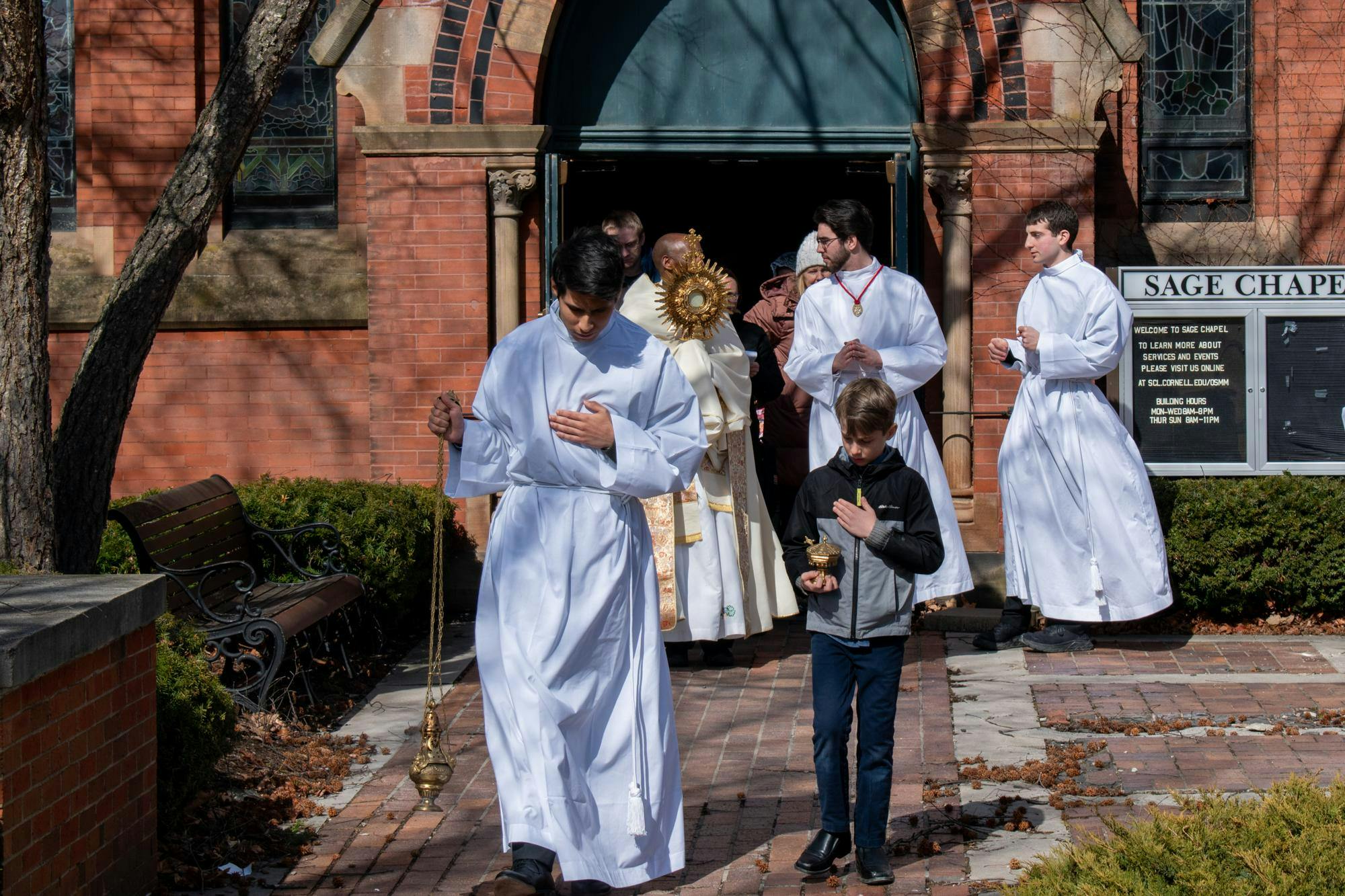
For Rivera, running the program has been “transformative.” He loves looking at the stained glass around the Chapel and hearing Scripture out loud. Rivera described his time at the Chapel as “very restorative and relaxing.”
One of his favorite memories involving Sage Chapel occurred during Holy Week, the week before Easter, of his freshman year, where several Christian organizations on campus set up prayer tents outside Sage Chapel.
“It's this really cool time where you pull up at 3 a.m. and people are praying together, or singing worship songs together,” Rivera said. “Some random nonreligious person passes by [and] you have an interesting conversation about faith.”
While services like the ones Rivera runs make up the day-to-day religious events in Sage Chapel, religious groups on campus also host well-attended events there, such as Ignite, a semesterly Christian celebration that features worship alongside student testimonials.
This event “brings together Christians all over campus and people who aren’t on campus anymore,” Winnie Hui ’21 previously told The Sun.
Rivera described his experiences going to Ignite celebrations held in Sage Chapel, which sometimes garner over 600 students, as “incredible moments of people from different Christian groups on campus gathering together, worshiping under the same roof.”
“For someone who tried to find truth, goodness and beauty at Cornell,” Rivera added, “Sage [Chapel] … has been one of the pinnacles of beauty that I've been blessed to encounter.”

Inga Wooten-Forman is a member of the Class of 2029 in the College of Arts and Sciences. She is a contributor for the News department and can be reached at irw7@cornell.edu.