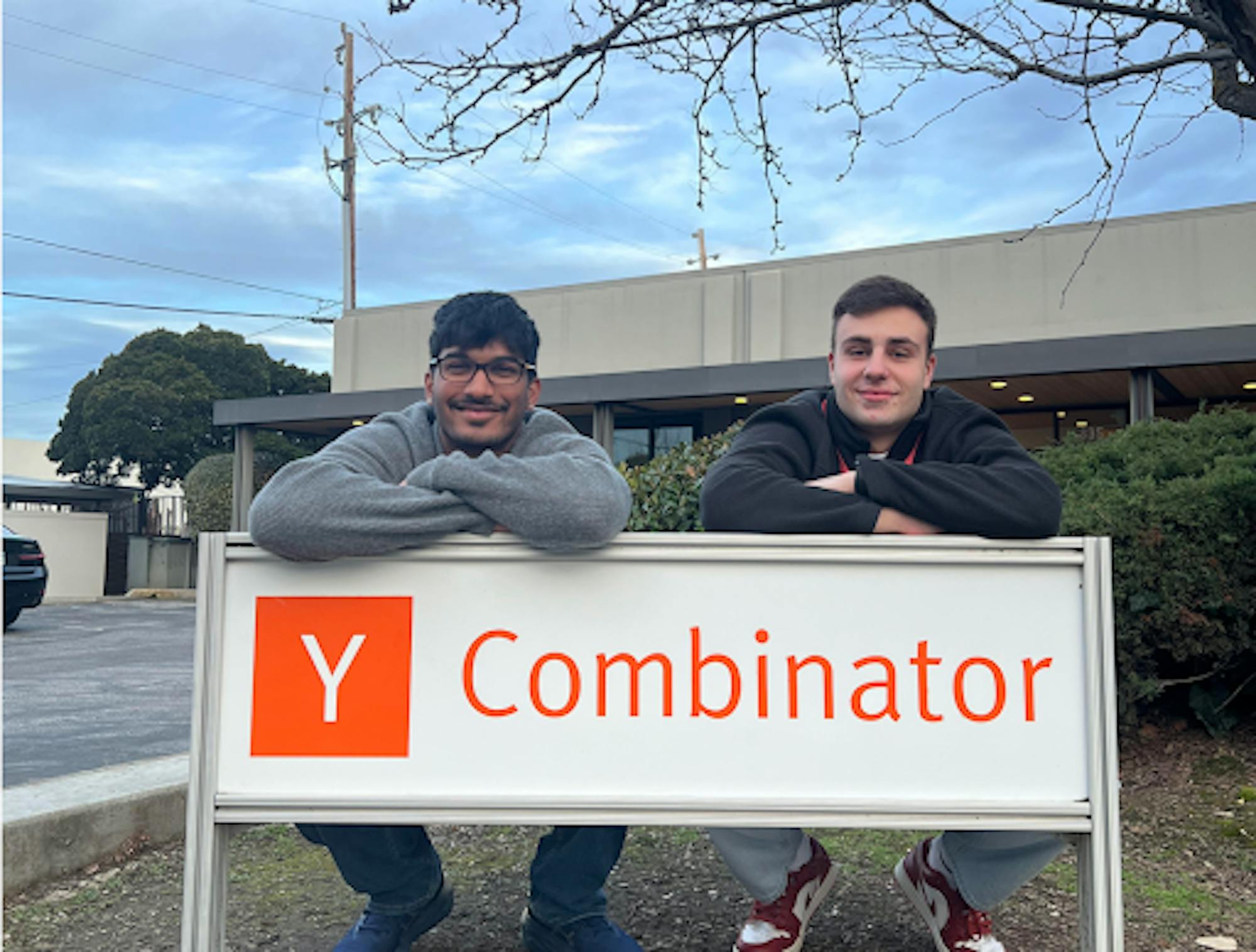
What began as a frustrating teaching assistant experience has since transformed into one of the most promising student-led startups in educational technology as two Cornellians forge into the world of digital tools and innovations to improve teaching and learning.
GradeWhiz, an AI-powered grading assistant, is reshaping how educators manage one of the most time-consuming tasks in their profession: grading. Founded by two Cornell students, Max Bohun ’25 and Aman Garg ’26, the company is now a graduate of Y Combinator, a world-renowned startup accelerator in Silicon Valley that has helped launch companies like Airbnb, Dropbox and Doordash.
Since its founding, GradeWhiz has processed over 30,000 assignments, cut grading time by more than 60 percent for users and continues to expand its impact on classrooms worldwide, according to Bohun.
“We’re building an assistant for every teacher,” Bohun said. “Grading is just the first step. Teachers spend less than half their time actually teaching. We want to help them reclaim that time.”
The idea for GradeWhiz was sparked in a Cornell data science course. While the teaching team enjoyed supporting students during lectures and office hours, the grading proved repetitive and inefficient.
“I’d be starting my next assignment without even knowing how I did on the last one,” Bohun said. “From both the student and teacher perspective, the process was broken.”
GradeWhiz’s platform leverages AI and computer vision to evaluate different mediums of student work, from handwritten notes and diagrams to tables and graphs. Once limited to structured assignments with QR codes and designated writing spaces, the technology has already evolved to handle a much wider range of student work.
“Now, students can submit almost anything — scanned notebook pages, PDFs, even slide decks — and we can grade it,” Bohun said.
The system currently boasts a 97 percent accuracy rate, with fewer than 3 percent of assignments requiring manual intervention, according to Bohun. On average, assignments are graded in two days, significantly faster than the turnaround time for most TAs or professors.
This growth hasn’t gone unnoticed. GradeWhiz has expanded beyond Cornell, with deployments in courses across several colleges, including Penn State, Drew University, Hunter College, Syracuse University, Cal Poly Humboldt, Alfred University and Occidental College. Recently, the company has begun expanding into the K–12 space, where overworked teachers often handle grading late into the night and on weekends.
YC’s support has been instrumental. After three attempts, GradeWhiz was finally accepted into the prestigious startup accelerator.
“We applied once with a basic idea, and again after some progress. But by the third time, we had real traction and a working product,” Bohun said. “YC isn’t about nailing the interview, it’s about building something that people genuinely want.”
Through YC, the GradeWhiz team gained access to weekly guidance from Tom Blomfield, founder of Monzo Bank, and met leaders like OpenAI’s Greg Brockman, Airbnb’s Brian Chesky and Twitch co-founder Michael Seibel.
“The network is life-changing,” Bohun said.
Though the product is still in development, major technical hurdles have largely been overcome.
“A few years ago, AI couldn’t handle handwritten input,” Bohun explained. “Now, we’re at the point where we can process virtually any student submission.” According to Bohun, the current focus is to keep improving the experience for users while expanding the platform to meet rising demand.
When asked about academic integrity and bias, Bohun emphasized that GradeWhiz may offer an improvement over human grading by eliminating bias.
“AI doesn’t know which student it’s grading. That removes unconscious bias from the equation,” Bohun said. “And we work under strict zero-data retention agreements, so student work isn’t stored or reused.”
While the grading automation market is still in its infancy, GradeWhiz sees its main competition not in other startups, but in the pen-and-paper systems many teachers still use. However, Bohun thinks that Gradewiz is “way ahead of paper.”
In the next five to ten years, the team envisions GradeWhiz as the go-to AI assistant for teachers everywhere, allowing educators to “focus on what really matters: teaching, mentoring, and connecting with their students.” Everything else, we’ll handle.”
As artificial intelligence continues to evolve, the team sees tools like GradeWhiz not as replacements for teachers, but as allies, streamlining routine tasks so that educators can focus on what really matters: connecting with students. And so, what started as a TA’s inconvenience could reflect the future of education.
Rebecca Ryan can be reached at rar352@cornell.edu.