


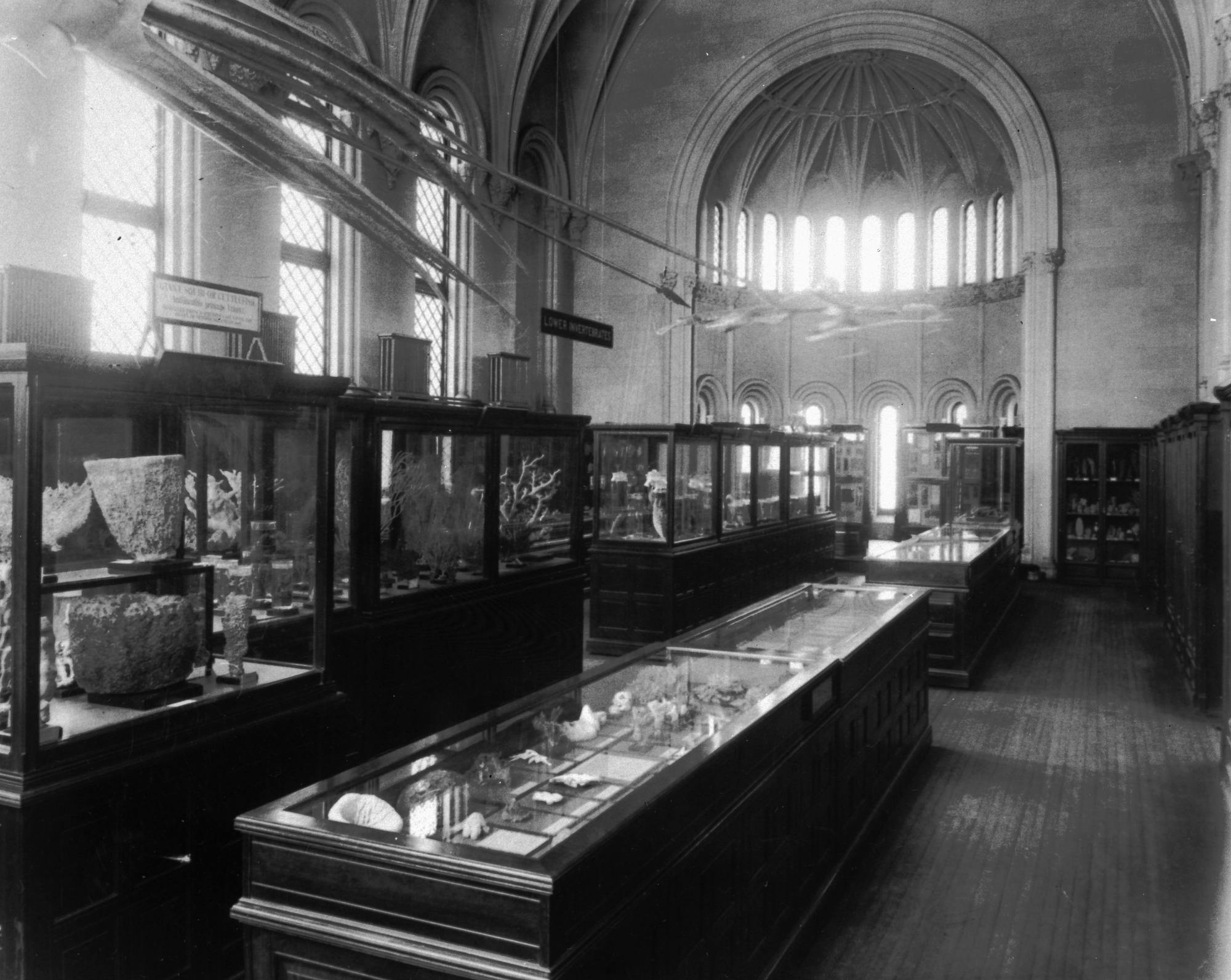
I have a confession to make. I love museums. I love the distinct, climate-controlled perfume of chilled air, polished marble, antique paper and dignified (bordering on pretentious) quiet. Stepping through the huge museum doors, both as a child and now, makes you feel small. You can stand before a lunar landing module, or a massive fossil, and walk away with a cozy sense that the universe was neatly categorized just for you to take it in. It was fully understood, and safely guarded by adults far smarter than you.
That sensation of quiet safety, however, was always a brilliant trick of illusion.
The Smithsonian Institution, the world’s largest museum and research complex, serves as America’s attic — though few attics require a billion-dollar budget and a team of rocket scientists to dust the shelves. Behind the neoclassical facades, the complex is currently enduring one of the most turbulent chapters in its long history: a conflict that cannot be contained by a floor plan. The recent announcement that Lonnie G. Bunch III will step down as Secretary by the end of the year marks a dramatic culmination of months of intense executive pressure, culture war skirmishes and an unprecedented battle over who controls the American narrative.
The immediate catalyst for this leadership crisis arrived with blistering speed. Following executive directives aimed at reshaping federal historical portrayals, the White House Domestic Policy Council released a scathing report targeting the National Museum of American History. The document accused the institution of ideological capture, arguing that curators had abandoned straightforward historical education in favor of political activism. Central to this executive critique was the claim that the museum was actively problematic in the nation’s 250th anniversary by emphasizing themes of racial injustice, economic disparity and environmental degradation at the expense of founding ideals.
What the current mess on the National Mall reveals is that an object inside a glass display case is never truly passive. Consider a simple 19th century silver teapot. Place it in a gallery celebrating industrial design, and it becomes an ode to human ingenuity, refined taste and domestic craftsmanship. Place that exact same teapot in an exhibition exploring global trade routes, and it transforms into a narrative about colonial expansion, forced labor and social hierarchy. The teapot is the same; the frame around it is different.
Public museums have always operated under an implicit contract. The museum was a secular shrine, the curator was an omniscient oracle and the visitor was a grateful recipient. You got to stare at some old relics, absorb the chosen narrative and leave feeling reassured. It was a comfortable arrangement for all parties involved.
Yet, for centuries, that contract has been straining under the pressure of reality. The museum cannot be a static mausoleum: not when politics is the way it is and our history shapes how we feel about ourselves and our choices. The museum tries to stand on its quiet pedestal, but is constantly thrust into the noisy arena of civics and ideology.
Within the museum world, directors are trapped on an impossible high wire. On one side stand traditionalists, major donors and figures who view museums as cathedrals of heritage designed to inspire patriotism, stoke your love for your country and preserve comforting unity. On the other side stand scholars, contemporary curators and younger audiences who insist that history without proper context is merely curated nostalgia. Transparency and ethical provenance are now demanded.
When you take in the modern hyper-competitive attention economy — where a gallery of locks and ornate door hardware must compete against social media feeds, immersive digital experiences and short-form content — the consumer finds themself in a difficult situation. Should they pursue the dignified, and deal with all its political ramifications and uncomfortable questions? Or should they simply retreat to what is close, easy and curated by an algorithm made just for them?
I think the discomfort is the point.
Great art and curation should never act as aesthetic wallpaper or emotional pacifiers. Discomfort is an essential friction required for intellectual growth. When an artist or institution confronts us with an awkward truth or a painful historical reckoning, it cracks open the calcified shell that we build for ourselves. We can only grow and learn when we are forced to sit with ambiguity and question what we find to be valuable. You have to negotiate your place in a story far larger than yourself; not merely slot yourself into a comfortable position with a glass frame and a plaque reading, “Here I am!”
Yet, this willingness to embrace friction is rapidly decaying. The physical museum is paying the price. The numbers confirm this: national survey data reveals an alarming downturn in museum attendance, pushing cultural institutions into their worst financial outlook since the pandemic. We are witnessing, in real time, a public fleeing from challenge, a retreat from emotional maturity to digital environments that offer endless, tailored flattery.
We must make an urgent stand against this retreat. To abandon the museum because it makes us uncomfortable, or because it refuses to mirror our preferred political script, is a form of self-sabotage. The museum will constantly be a battleground of bureaucracy and administrative conflict: by nature, it has to be. That does not mean we should surrender the last remaining sanctuaries that allow us to question our history. A culture that tolerates only the art that flatters its ego is a culture in decline.
Which brings me back to my earlier confession. To proclaim that you love museums today — while seemingly a very performative take — is becoming more of an unpopular opinion. In an age of scrolling, coffee chats and rampant careerism, we often forget to relish the feeling of standing in a quiet room, feeling small and challenged.
To love the museum is to cherish contradictions. We should never lose our willingness to step through its doors and embrace our uncomfortable history; for we may lose the very room where we learn who we are and who we might still become.
Ali AlSaif is a member of the Class of 2029 in the College of Industrial & Labor Relations. He is a staff writer for the Arts & Culture department and can be reached at aea252@cornell.edu.


