


Authentic Interactions, Inc. and the Arasaka Corporation would like to invite you to speak to the dead.
Authentic Interactions purportedly offers on its homepage the “most authentic digital humans in the world.” Nobody, of course, has any idea what exactly constitutes a “digital human,” so A.I. Inc. provides several examples of its work. The first is a “Lookalike,” a “digital twin” that you can “share with friends, family, or fans” so that you don’t have to bother yourself with tedious interpersonal interaction. Remember wishing for a clone to go to school and do your homework? Silly! You can focus on doing exactly those tasks while your new A.I. clone handles all the talking to friends and loved ones — thank goodness! I was growing tired of keeping in touch with all of those real people. Hopefully they buy Lookalikes too, so they don’t have to answer any pesky calls or texts from my clone. The second type of “digital human,” however, is what concerns me the greatest.
A.I. Inc. is one of many startups in the “digital afterlife industry.” This industry creates digital mimicries of friends and family to allow for others to continue interacting with them after their death. Some users of these “deadbots” rely on them for grieving their losses, imagining themselves maintaining a direct connection to the deceased that was hitherto impossible. A.I. Inc. labels these bots “StoryFiles,” a combination of recorded questions-and-answers and algorithmic inferences that result in your artificial impersonation, ready to be consulted once you have died. StoryFile services public institutions as well, through the creation of digital simulacra for museums, digitally replicating the testimonies and personal histories of Holocaust survivors and World War II veterans (there is merit to such digitization, though I would hope recorded interviews could suffice — how an A.I. can handle questions the subjects themselves never answered is a concerning concept).
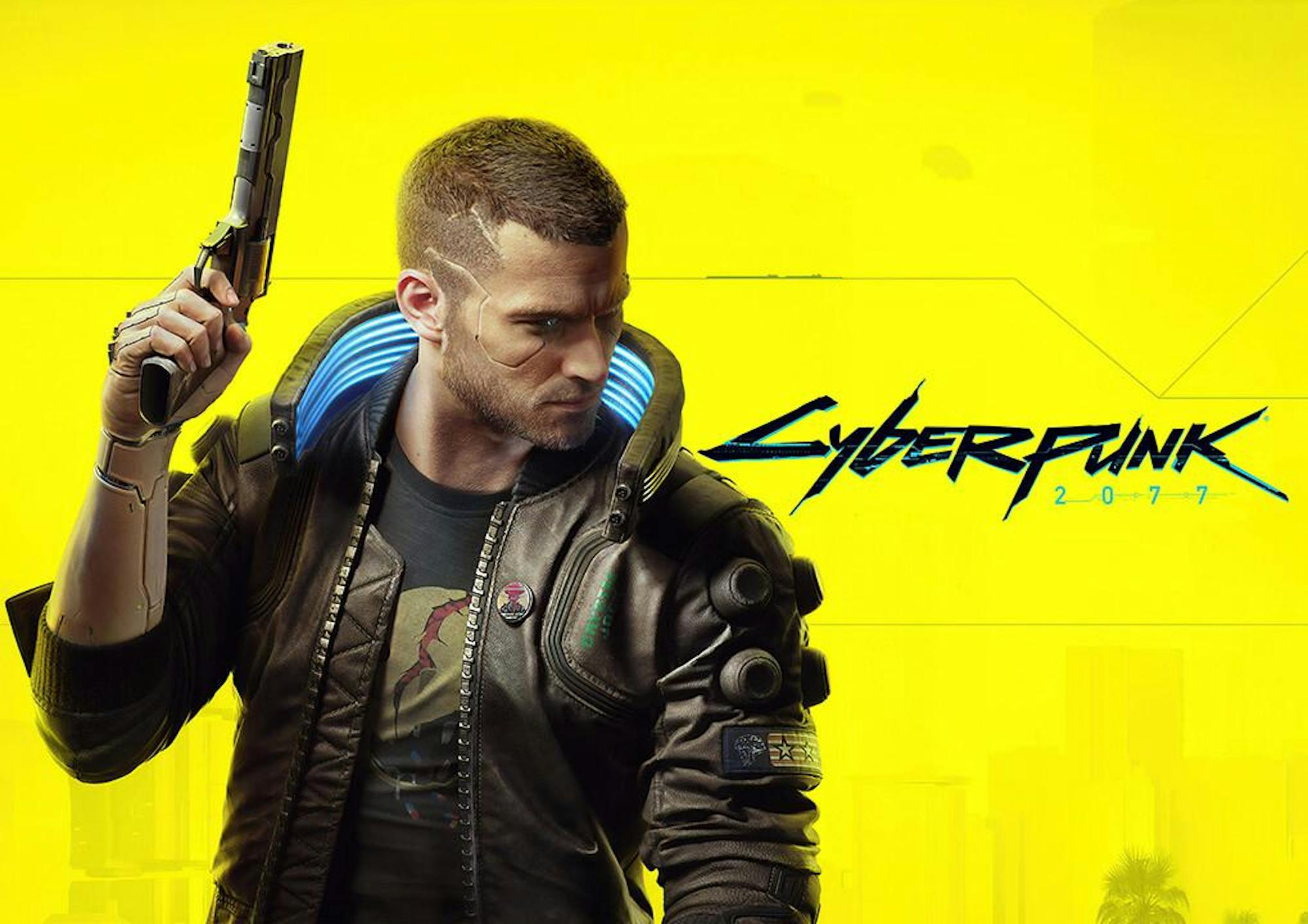
Should we embrace these digital avatars of the deceased? How “real” are they — does that even matter? Science-fiction film and television have skillfully explored the realm of human-digital replication, mimicry or even immortality in many great works (Star Trek, Altered Carbon, Black Mirror, etc.), and I nominate the video game Cyberpunk 2077 as a stellar addition to this discourse with a particularly prescient narrative that offers great clarity in the face of the “digital afterlife.”
Developed and published by Polish studio CD Projekt Red in 2020, Cyberpunk takes place in a dark, dystopian world crafted by climate disasters, rogue artificial intelligences and world wars sponsored by mega-corporations. The game follows V, a mercenary seeking fame and fortune in the Blade Runner-inspired Night City. Central to the game’s narrative is a cutting-edge biochip designed by the multinational conglomerate Arasaka, known as the “Relic.” The Relic is advertised to the wealthiest of the elite as a means of surpassing StoryFile, digitizing an individual’s psyche and encoding it onto the chip as what is known as an “engram.” That chip is then implanted into another’s mind to create a digital avatar perceptible only to the user — a “companion for life.” Celebrities and politicians swiftly purchase copies, securing their digital perpetuity in cyberspace.
While several characters laud the Relic as a means of finally bridging the gap between the living and the dead (one promoter describes the chip as “immortality”), the evil of the Relic is unambiguously clear. Secret Arasaka reports reveal the engrams of celebrities will be commercialized without consent, and V is forced to implant themselves with a prototype Relic that overwrites the brain of the host to replace their personality with that of the chip’s engram. V must find a way to remove the Relic before the engram of a rockerboy-turned-revolutionary (Keanu Reeves) involuntarily steals his body. This prototype is revealed to be intended for the CEO of the Arasaka Corporation, Saburo Arasaka (Masane Tsukayama), so that he can install his psyche in successive new bodies (a la Altered Carbon). In the worst-case ending the player can achieve, Saburo is successful, forcibly overwriting the mind of his rebellious son Yorinobu and returning from the dead at age 150, in a dreadful denouement to a narrative arc aptly entitled “The Devil.” Saburo achieves immortality and ensures Arasaka’s hypercapitalist despotism will enjoy an immutable body politic for the foreseeable future. The game leaves no shortage of hints, however, that this is not actually immortality. The software used by the Relic is christened “Soulkiller” by Arasaka, because they admit that engrams possess no consciousness, merely husks of memories and speech patterns without soul or awareness. Furthermore, the program’s creator Alt reveals that engrams invariably degrade with time; even the cybernetic science of the future cannot deliver immortality any more than it can create an “authentic digital human” to begin with.
Thus, Cyberpunk makes a claim that I must echo toward the situation today: to digitize the human is to kill the soul, caging ourselves in a perception of the human spirit as lines of code and bytes of data. Cyberpunk 2077 possesses technology far superior to our own, yet CDPR makes it clear that better technology cannot deliver perfect, indistinguishable replication of humanity — only soulless hallucinations of the departed. Authentic Interactions may not be as sinister in its intentions, though both A.I., Inc. and Arasaka prey on an emotionally vulnerable consumer base for profit, and the ongoing detriments of artificial intelligence in our modern day are well known — be they environmental, physical, legal or intellectual. These mockeries of humanity cannot fill the hole left by the loss of a loved one. The A.I. masquerading as a loved one is not an authentic means of communicating with the deceased, but just another extension of the A.I. grift now aiming to manipulate and commercialize grief and death. The human soul does not exist in an algorithm, but in the memories and heirlooms that are left behind when we die. We live on in those who succeed us through love and memory, not through technology.
Matthew Carolan is a member of the Class of 2028 in the College of Arts and Sciences. He is a contributor for the Arts & Culture department and can be reached at mfc89@cornell.edu.


