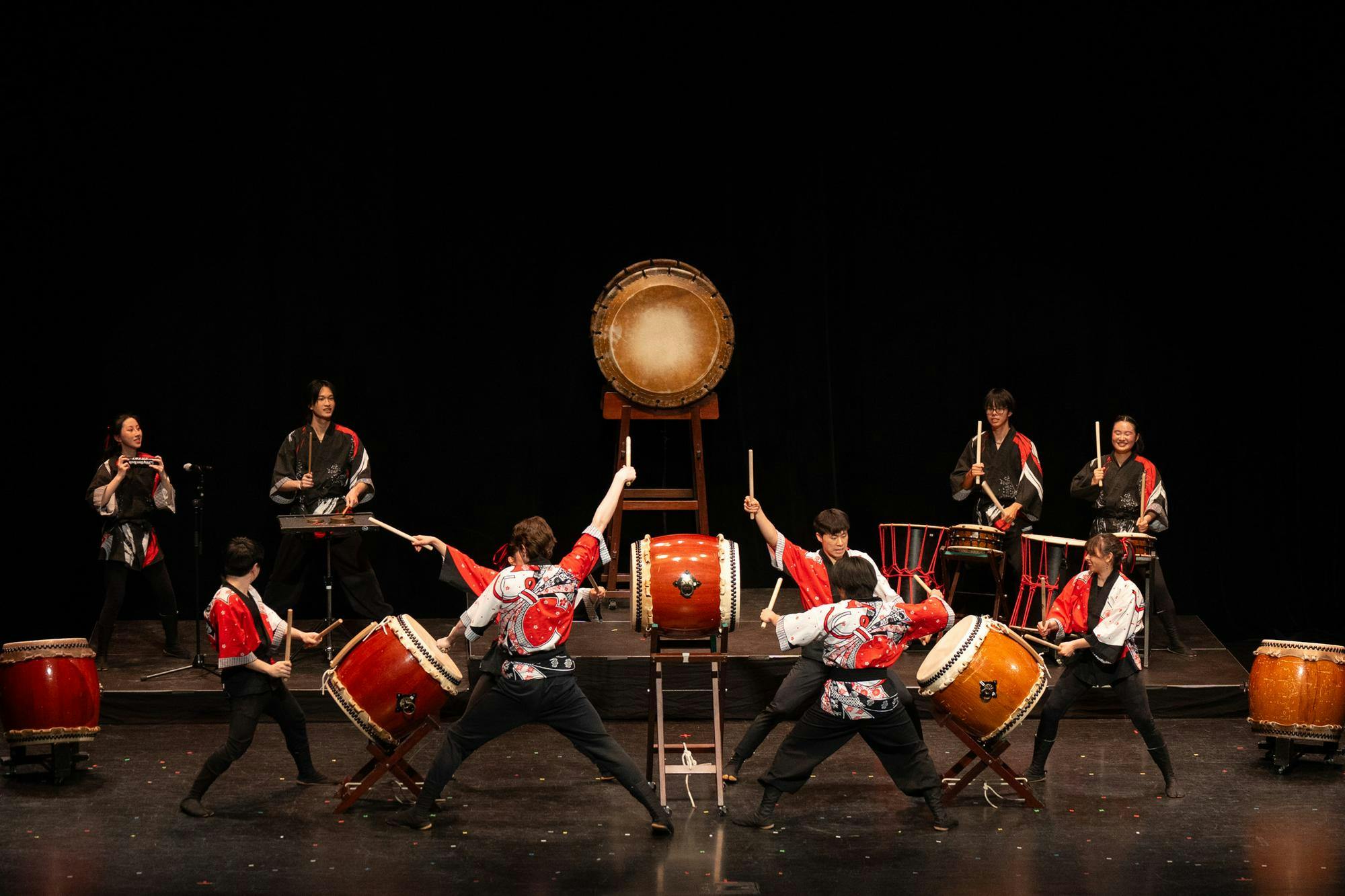
On April 12, Yamatai, Cornell’s one and only taiko ensemble, celebrated 20 years of summoning torrential music to the stage with the latest iteration of their annual concert “PULSE: Legacy.” This year, in a packed Bailey Hall, Yamatai reflected upon their evolving artistry, expanding community and fond memories through traditional Japanese performance art mixed with a scattering of distinctly whimsical innovations.
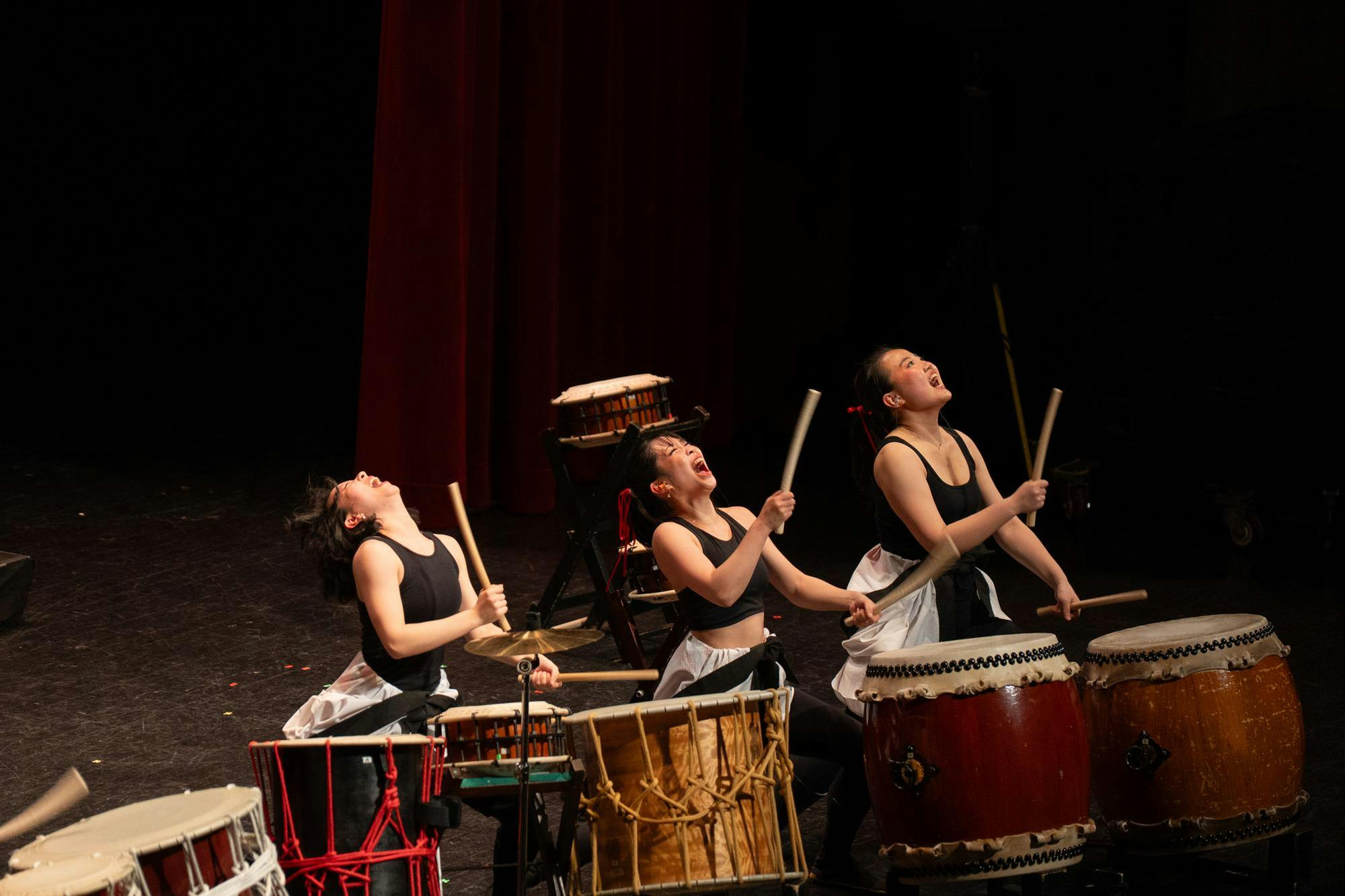
Taiko, which simply means “drum” in Japanese, has its roots in Buddhist and Shinto rituals and has been performed in places as varied as traditional theater, the imperial court and agrarian celebrations. The primary instruments of taiko performances, like Yamatai’s “PULSE,” are the drums of various sizes played with thick wooden sticks called bachi. Each drum generates its own unique pitch that adds to the melodic thunder of the music, while performers can strike their bachi on the reinforced rims of the drums for a more percussive sound. Other instruments augment the intonations and rhythm of the drums: The fue, which is a wistful Japanese flute, the shamisen which is a hand-held stringed instrument and the chappa which are small cymbals and gongs.
“PULSE: Legacy” began under dim red light, introduced by a brief solo by the group’s musical director, Emily Fan ’26, before other drummers soon joined her and the music swelled to a racing crescendo. The composer of this opening number, Masataka Kobayashi, is the leader of a professional drumming troupe in Japan and the sensei who helped to establish Yamatai. The core of the program revolved around his creations, paying tribute to Yamatai’s origins while also featuring a few original pieces by current Yamatai members. Adding to this blend of traditionality and creativity, the second act opening welcomed Yamatai alumni from across generations back to the stage as their performance was projected onto Bailey Hall’s massive screen. Making music everywhere from professional studios to homes to train tracks, their joy once more came together in celebration of their time with Yamatai and their enduring love for the art of taiko.
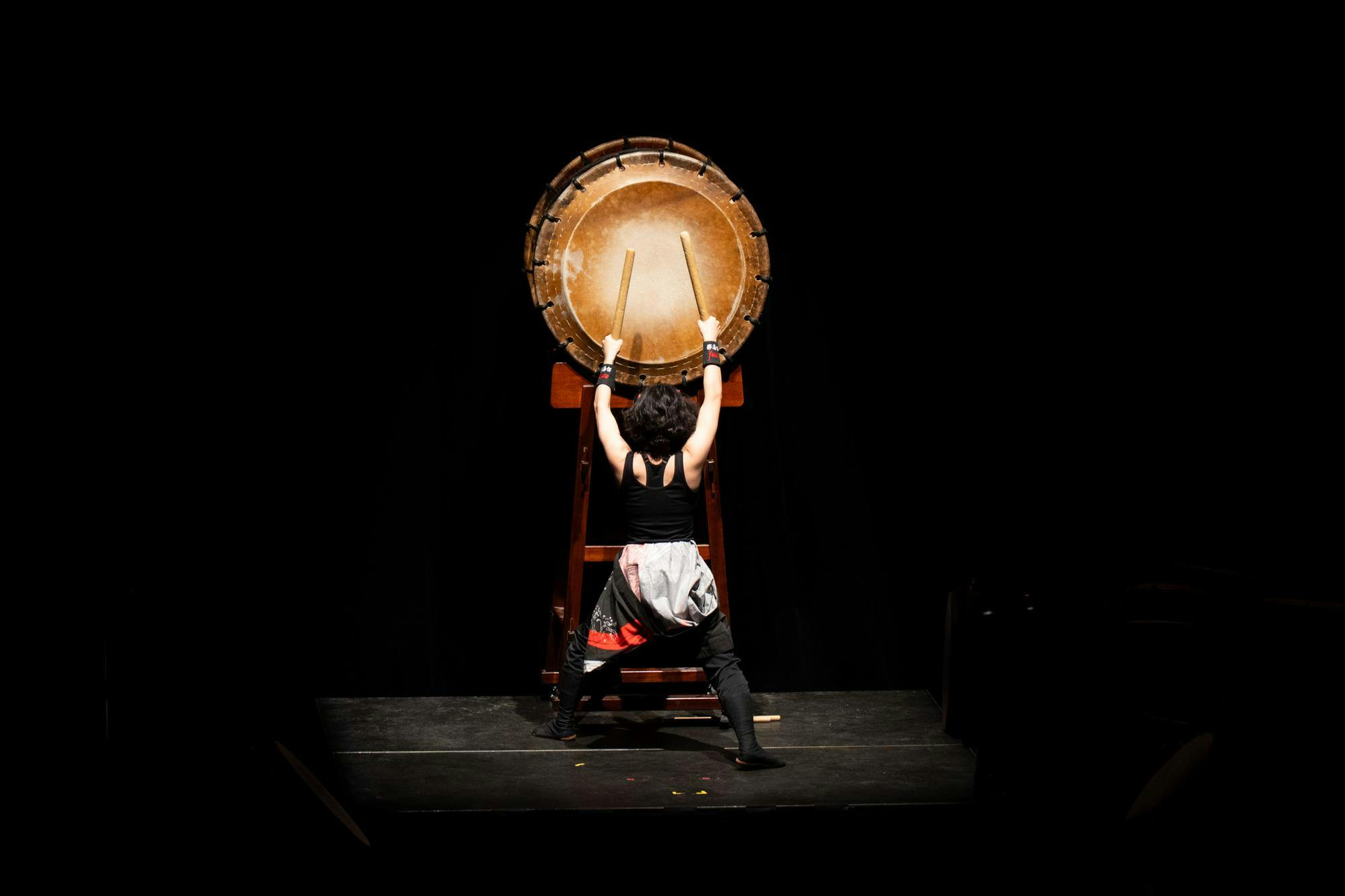
I particularly enjoyed the uniquely contemplative “Ōdaiko Solo” performed by Iris Ho ’26, which spotlighted the resonant weight of the massive drum that loomed upstage for most of the show. Strong and sure, Ho alone enveloped Bailey Hall in an ebb and flow of overlapping tones, evoking the modest musicality underscoring any taiko performance. Another of my personal favorites coincidentally followed right on the heels of Ho’s solo, and the performance was as free as Ho’s solo was powerful. Titled “Yodan-Uchi,” the Yamatai members performed this number as they spun around a few shared drums in a shifting, snapping dance that transformed the show into a visual — as well as auditory — whirlwind. With the limited stage space already crowded by large drums, the close-quarters choreography spoke to the Yamatai members’ coordination and dedication in their many hours of rehearsal. An honorable mention also goes to “Hiyoku,” a gorgeous fue duet cast over the beat of the drums to recall a pair of birds in flight.
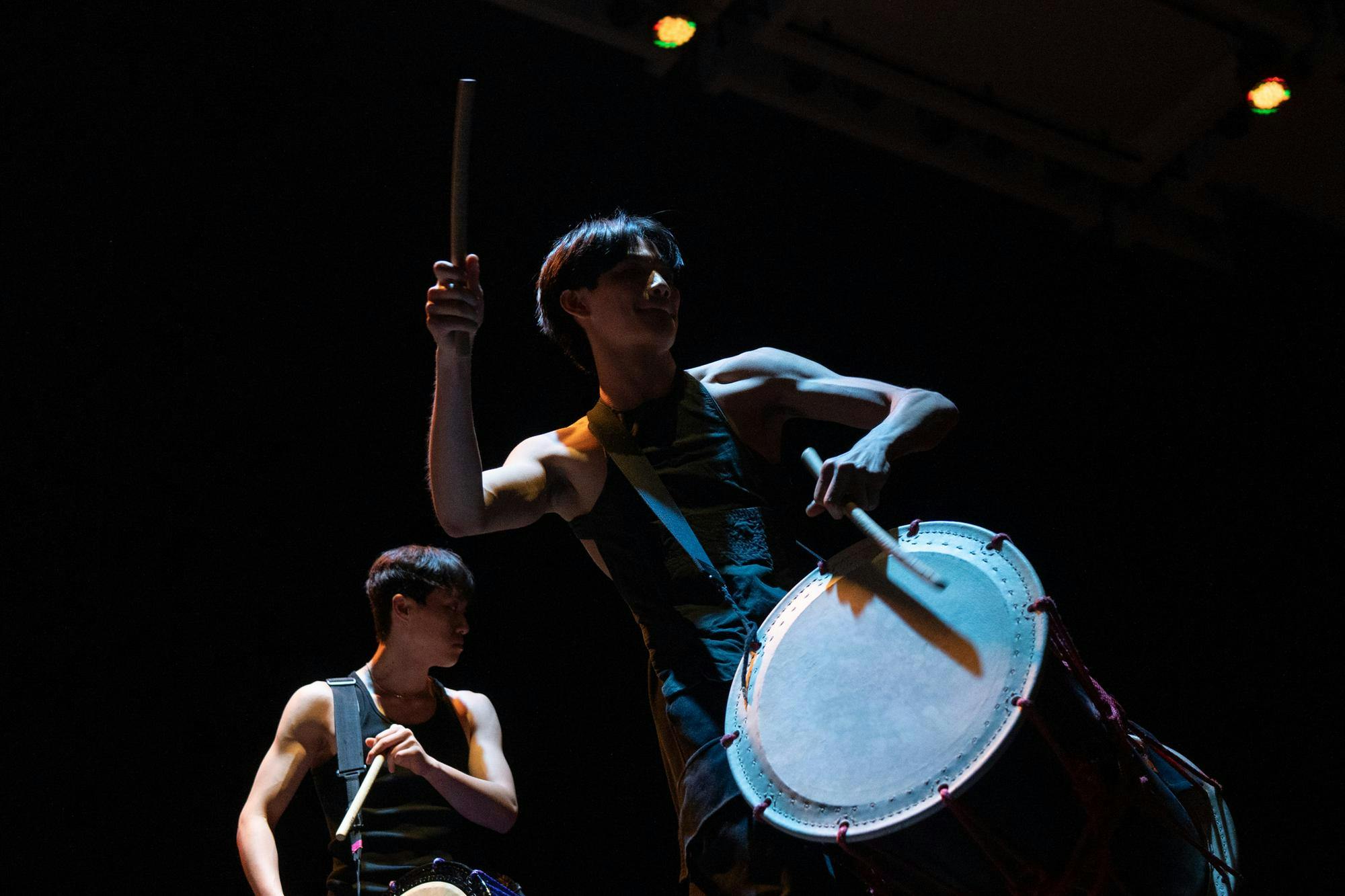
Between these and the other incredible numbers, Yamatai inserted comedic interludes of various, and sometimes tenuous, relevance to taiko but which never failed in bringing the audience to laughter. These included a mimed tennis skit with sound effects provided by members playing the higher pitched drums and a hyperbolic battle for dominance where two members fought over bachi sizes until one pulled out a blinking lightsaber. A bit more culturally significant — during the numbers, Yamatai members would call out interjections seemingly at random. The MCs explained that these interjections, called kiai, express unbound passion, encouragement for friends or spontaneous joy during the performance.
To close the program of “PULSE: Legacy,” Yamatai’s full ensemble assembled onstage for “Gaifuu,” meaning “wind of victory” — a clamorous culmination to the performance. The night concluded with one final number, “Sundance,” where the ensemble and any attending alumni bowed, played and danced one final time before departing the stage and leaving behind the echoes of their music in memory.
Music has the power to move people, not just metaphorically, but literally as well. Yamatai embodies this force in the power of their music, the brilliance of their passion and their resonance with the past. Through the thrum of their drums, they bring together the practice of ancient tradition with their own fond memories, even as they make new ones alongside those who come to revel in their performance. If you haven’t yet, or even if you have, I would highly recommend that you attend this event next year, feel the power of “PULSE” and become even a small part of Yamatai’s future legacy.
Wyatt Tamamoto is a member of the Class of 2029 in the College of Arts and Sciences. He is a staff writer for the Arts & Culture department and can be reached at wkt22@cornell.edu.