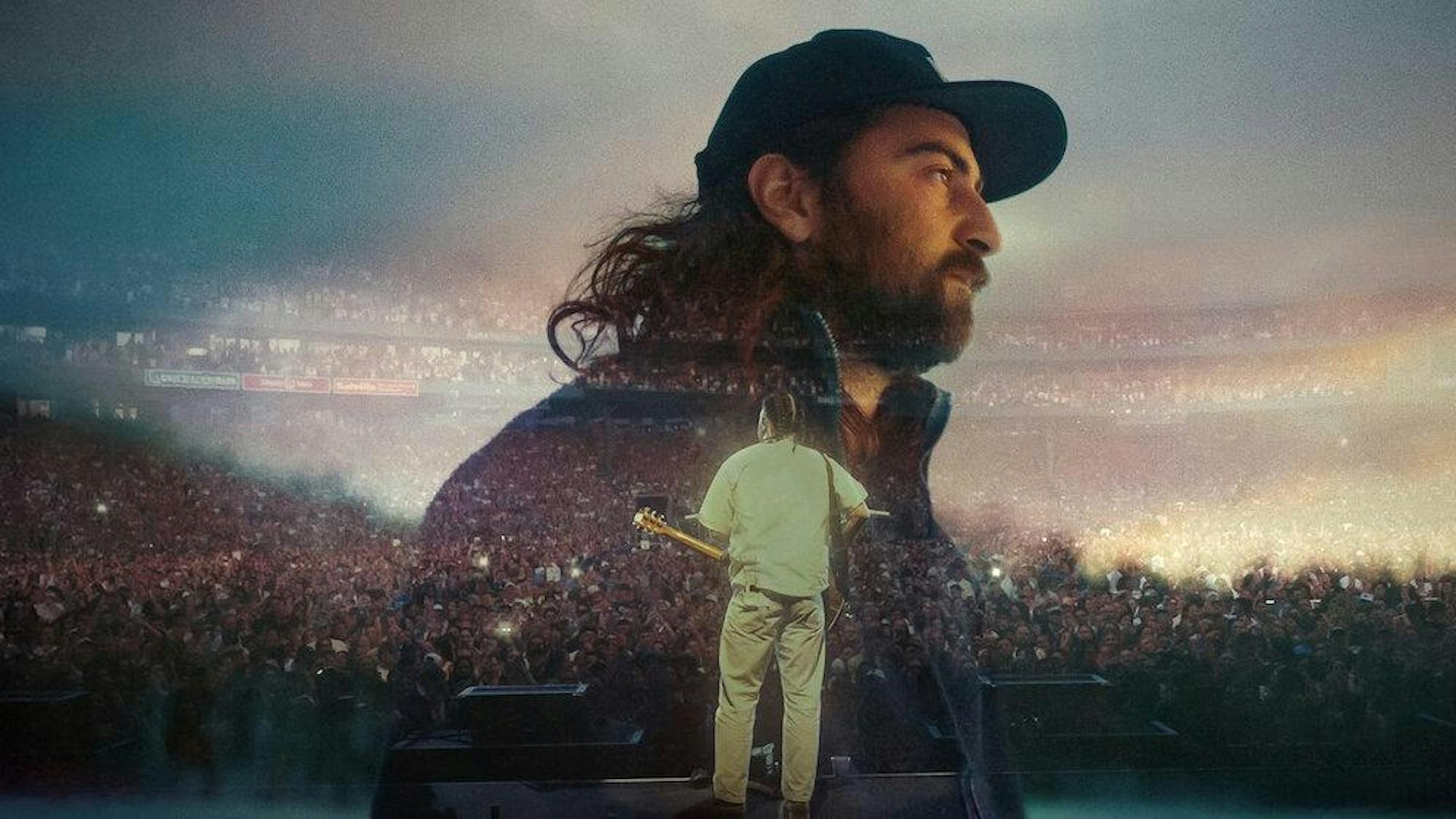
“You can’t escape who you are because you’ve moved to a different place,” said Noah Kahan in his new documentary, Noah Kahan: Out of Body, in which he reveals the quaint, New England roots behind Stick Season. The film was released on Netflix on April 13 in advance of his new album, The Great Divide. After rising quickly to fame in 2020, Kahan has dominated the folk-pop industry and captivated young adult listeners with nostalgic, relatable and soul-filled lyrics. Still, despite his massive streaming success and twin Grammy nominations, his journey to the Billboard Hot 100 had its own hitches. One major element of Out of Body is Kahan’s candor about his struggles with mental health issues and disordered eating, particularly following his first, star-studded Stick Season tour. The documentary illuminates the humble, eccentric man behind the Platinum albums and begs viewers to consider the degree to which an artist’s suffering improves their art and when it becomes necessary to prioritize their own well-being.
Noah Kahan wins over his fanbase with an easy-going demeanor, self-deprecating humor that is laced with expletives and heart-wrenching lyrics that dig deep for nostalgic millennials and sensitive teens alike. With the perfect balance of 2000s indie-pop and dry Gen Z wit, Kahan appeals to a wide variety of listeners, a phenomenon that is clear in Out of Body. One particularly poignant scene shows an interaction between Noah Kahan and a young fan, Zuza Beine, who was undergoing a series of cancer treatments at the time and expressed how Kahan’s music “got her through a lot of her treatment.” Beine passed away in September 2025, and Kahan honored her in a concert, dedicating a song to her and calling her a “special light.” A member of Kahan’s band noted in the documentary that “in this industry it’s hard to find an artist as humble as Noah,” and this humility, alongside a deep-seated desire to make a positive impact on his audience, is what makes his music so touching.
Kahan’s most tangible impact is visible through his nonprofit organization geared towards raising awareness and resources for mental health, titled The Busyhead Project. Over the last three years the organization has raised over $6 million dedicated towards making mental health resources available to inhabitants of rural and low-income areas, particularly for men and artists who are struggling and feel that they don’t have a safe outlet to find help. “I have done myself a disservice by not opening up,” Noah Kahan expressed when asked about his mental health journey, “there is no happy ending or full circle moment. … It’s waking up every day and trying.” In particular, Kahan revealed that he has suffered with body dysmorphia and disordered eating for nearly his entire life, inspiring the uplifting themes of many of his songs as a means of trying to combat these struggles. Out of Body did not spare any details on this topic, delving intimately into Kahan’s home life, relationship with his family and clips from his childhood.
The vast majority of the documentary focused on Noah Kahan’s connection to his hometown, Strafford, Vt. There is nothing quite as powerful as the community forged in a small town, a sentiment that is laced throughout Kahan’s music, from “The View Between Villages” to “Homesick.” The documentary opens with his artistic pinnacle: the two sold out shows at Fenway Park during the Stick Season tour. As Kahan prepares anxiously to perform, the roar of the crowd fades and cuts abruptly to shots of his neighborhood in Strafford, featuring commentary from community members. It’s a jarring but heartwarming shift, emphasizing the small-town soul that carried Kahan to the big leagues.
His song “Paul Revere” plays in the background as his neighbors go about their daily lives, discussing the “hellish” cold, the novelty of a new Dunkin’ Donuts and maple syrup — basically as rural Northeast as you can get. This lends a sense of humanity to the award-winning singer, putting into perspective that he was a son, neighbor and tree farmer before ever becoming an international folk idol. It was this isolation and sense of being, as he puts it, “nobody at all,” that gave him the freedom to explore the beauty of nature and the feeling of home through song.
Critically, however, the success of his music drew him further and further from his hometown, either grounding him in Nashville for extended periods of time or sending him traipsing around the country on tour. It was these moments when he was at his lowest, both mentally and creatively. Though he could translate his mental struggles into music, he explained: “That’s what I’m most scared of … that I have to be struggling or in pain to make music.” So, following the completion of his Stick Season (We’ll All Be Here Forever) tour in 2024, Kahan retreated to Vermont to reflect on his low points, take heart from his community and focus on producing what the fans have been craving: a brand new album.
Now he faces the pressure of the future. After all of his rapid accomplishments, what now? The Great Divide will be released on April 26, but will it measure up to his slam dunk successes? His two new singles, “The Great Divide” and “Porch Light,” as well as sneak peeks of new songs in Out of Body, show promising signs that the Vermont singer’s return to his roots has revived his creative spirit, and a new selection of wistful, authentic, small-town tunes are about to top the charts.

Gia Lish is a member of the Class of 2029 in the College of Arts and Sciences. She is a staff writer for the Arts & Culture department and can be reached at glish@cornellsun.com.