

Alexander Walters is a sophomore in the College of Arts and Sciences. He can be reached at apw65@cornell.edu.
A recent opinion piece was published that tore Francis Fukuyama and his seminal work, The End of History and the Last Man, to shreds. The article’s thesis, as was legible to me through its flurry of verbose attack words, was that Fukuyama’s theory was borne from uninformed, neoliberal naivete and today serves only to empower political and historical delusions of grandeur. It constructs this argument by handpicking and underexplaining concepts within Fukuyama’s theory and pointing to current events to prove their invalidity. I find this article ill informed of what it’s critiquing.
To preface, I feel it prudent to legibly clarify Fukuyama’s theory. He argues that in understanding history as an evolutionary process toward a final form of government, liberal democracy has proven, in its victories over fascism in World War II and communism with the collapse of the Soviet Union, itself to be that final form of government. It’s ambitious, but when you actually explore the construction of the argument, it’s a lot more illuminating than the article calling Fukuyama’s readers “oblivious,” gives it credit for.
Critiques of Fukuyama are not new in the field of international relations scholarship. In fact, liberal internationalist Robert Kagan wrote a book in 2008 propagating similar critiques to the published article, and is eerily similarly named in rejoinder to Fukuyama’s — The Return of History and the End of Dreams. Earlier was Samuel Huntington’s The Clash of Civilizations (1996), a direct response to Fukuyama. Huntington argues that the conflict of ideologies that characterized geopolitics to that point was to be replaced by the clash of civilizations, or between groups’ religious and cultural identities. My point: Criticizing Fukuyama is not a trailblazing endeavor, but rather a tried-and-true way to score intellectual brownie points. Both works in response to Fukuyama are potent and widely respected; the authors correctly inform themselves of what they’re critiquing and posit an alternative vision. The article published in The Sun does not.
Oddly omitted is the fact that Fukuyama has made considerable effort to not only respond to criticisms of his theory, but to revise and clarify it in light of those and current events. A primary critique of his theory is of the rising prominence of illiberal powers like Russia and China. In 2008, Fukuyama wrote an opinion piece in the Washington Post addressing this critique, in which he argued that despite authoritarian advances in recent years, these still must take liberal democratic appearances to achieve legitimacy. He points to Putin’s stepping down from the Russian presidency in 2008 in compliance with the Russian Constitution’s ban on consecutive third terms as an example. While he was able to return to power later through a constitutional amendment, Putin clearly felt that the process in doing so had to take a legitimate, procedurally democratic appearance. Authoritarians play-pretending democracy only proves his point.
Another hit against Fukuyama’s theory is today’s growing disillusionment with capitalist democracies. Fukuyama argues, in his The Origins of Political Order, that “a country having democratic institutions tells us very little about whether it is well or badly governed.” He prescribes wealth inequality and impotent democratic institutions not as symptoms of liberal democracies themselves, but as products of moneyed interests interfering in politics — itself a product of poor governance. Liberal democracy can be done well, or it can be done poorly. That is a reflection of those governing, not of the system itself.
On another note, the integral premise of Fukuyama’s argument that goes ignored is his coupling of Plato’s tripartite theory of the soul with Hegel’s philosophy of history as evolutionary; these unite in the desire for recognition, which Fukuyama coins as the driving force of history. Plato posits the soul to be composed of logos (reasoning), eros (desire) and thymos (spiritedness). It is within thymos that Fukuyama defines the desire for recognition. He argues that much of history can be studied through this framework of subgroups vying for change to enhance their status within their respective society. Thus, tying it back to Hegel’s evolutionary history, the final form of government must be best suited to the pursuance of reason, desire and recognition. Liberal democracy has proven itself most accommodating.
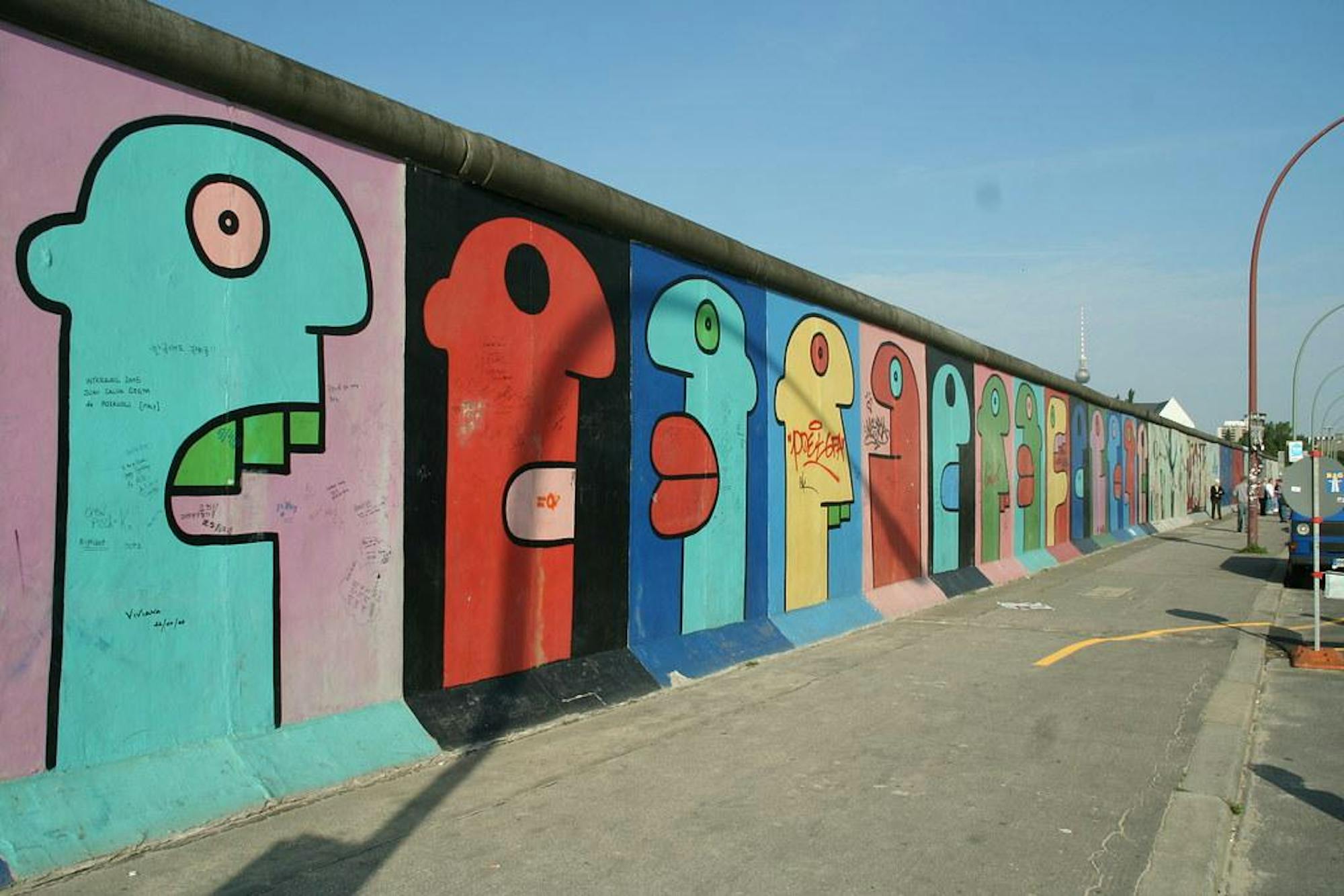
What many critics misunderstand Fukuyama’s theory to be is literal in the immediate term. Fukuyama writes in ideals rather than in literal realities; he never said that illiberalism was dead and gone, nor that conflict would disappear nor that cultural differences would fade into irrelevancy. He argued that the long arc of history has bent toward liberal democracy. For, “the end of history” isn’t the moment that liberal democracy becomes universal, merely the moment that we identify it as superior. What form of government has proven itself better suited to accommodate logos, eros and thymos? This is Fukuyama’s argument. Not that liberal democracy in 1989 delivered the final blow against communism and knocked it out of the fight; it didn’t. The people of Berlin and of the rest of the Eastern Bloc did. They did so in acting on their desire to be recognized as individuals with self-determination. But what form of government did they replace their Soviet-aligned predecessors with?
All this to say, I find scoring hit points by incendiary critiquing a theory paraphrased to sound fantastical, without presenting its fullest context, disingenuous. Tearing a theory and its purveyors to shreds with an erroneous interpretation and strawman arguments does nothing to build on intellectual discourse, but instead encourages capitulation to anti-liberalism and reinforces the same historical determinism critics of Fukuyama so matter-of-factly attack. In a 25th anniversary piece for The Wall Street Journal in 2014, Fukuyama wrote: “We forget that following the revolutions of 1848 — Europe's ‘Springtime of Peoples’ — democracy took another 70 years to consolidate.” Maybe instead of submitting to pessimism — the true “erosive philosophy” — we should allow for the events of the last century to more fully play out. After all, hardly a generation has passed since the Iron Curtain fell.
Guest authors are people who submit pieces to The Sun and undergo the same thorough editorial process as any Sun staff writer. The Sun does not endorse the views of any guest author. If you would like to get in contact with the author of a Guest Room article, please use the undersigned author's email provided at the bottom of the article.
The Cornell Daily Sun welcomes any and all submissions of guest columns and letters to the editor for review. Please visit this website for information on how you can submit as a guest author to The Sun: https://www.cornellsun.com/page/join-the-suns-opinion-section. If you have any questions regarding this process, please contact us at associate-editor@cornellsun.com.


