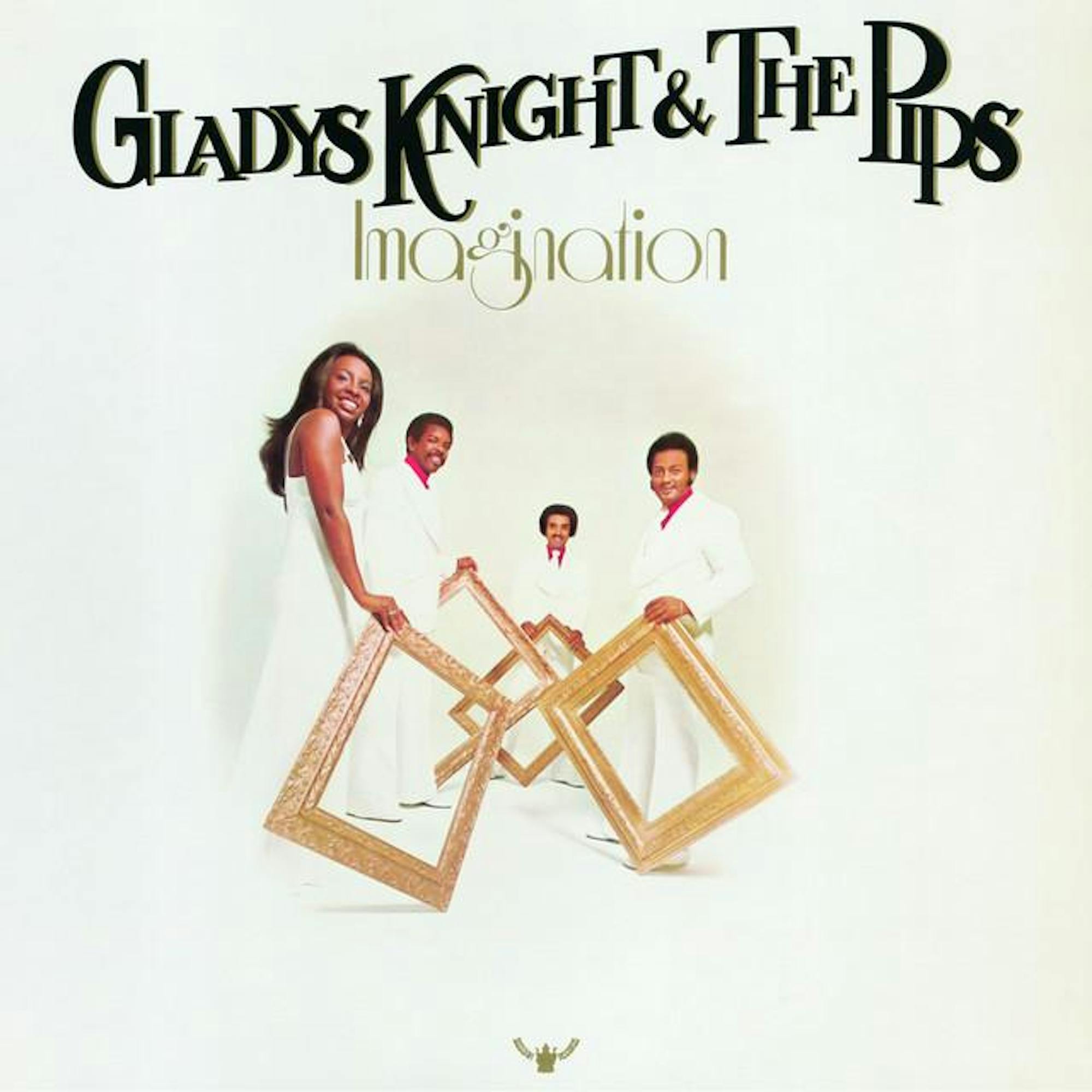
If you’ve ever read Charles Dickens’ Great Expectations, you’ll know that names play a pretty big role in it, as they do in many Dickens novels. I’m in the middle of Great Expectations right now for ENGL 3470: The Victorian Novel, and from what I’ve seen so far, Dickens has taken extra care to underscore the significance of names in this particular story. Pip, the main character, especially stands out to me; his real name is Philip, but he adopts “Pip” as his nickname during his humble childhood. Pip comes to have what are repeatedly referred to as “great expectations” — in other words, potential. As Pip’s circumstances change, so too does his nickname, despite a promise he made to always be called “Pip.” Interestingly, though, Pip’s name changes at the moment when it seems to best describe him: the word ‘pip,’ which refers to a fruit seed, denotes the very potential Pip — now known as Handel — is being told he has. Now, me being me, I couldn’t help but think of Gladys Knight & The Pips the first time Pip’s name is mentioned. But the connection is far more than just surface-level: in the early ’50s, the family band now remembered as Gladys Knight & The Pips was simply called “The Pips,” which was drawn from the nickname of a cousin. Only when the group relocated from Atlanta to New York and switched record labels did they become Gladys Knight & The Pips. Contrary to what I’ve seen from Pip’s transformation in Great Expectations thus far, however, the group only got better once their name changed. The name change allowed them to stay true to their roots while platforming their star. In honor of a group that truly did live up to ‘great expectations,’ this week’s Test Spin is dedicated to Gladys Knight & The Pips’ 1973 record Imagination — an album that gives a taste of just how far they would go.
“Midnight Train to Georgia" is one of Gladys Knight & The Pips’ most iconic songs, and for good reason. The Queen of Soul spins the tale of a man who is returning home after trying (and failing) to make it in Los Angeles, and she’s heading home with him. Knight’s voice is guttural as she explains: “He kept dreamin’, ooh / That someday he’d be a star / But he sure found out the hard way that dreams don’t always come true.” She still loves him though, and insists on sticking with him. Track two is “I’ve Got to Use My Imagination,” one of the best songs on the record. Knight is capable of ripping your heart right out with her vocals, and the Pips hold their own with the practically angelic backing vocals. The heavier percussion makes for the perfect exclamation point. This song is the closest Imagination gets to having a title track, and it’s a really strong showing; it’s a moving, emotional whirlwind of a song — exactly what Gladys Knight & The Pips do best. “Storms of Troubled Times” is positively cinematic, and sees Knight offer a helping hand over a gorgeous instrumental accompaniment. “When the world, when the world / Falls down around your shoulders / And you need a hand that’s strong and kind / Reach out for mine, reach out for mine / And I will lead you through the storms of troubled times,” Knight bellows, pledging her friendship.
“Best Thing That Ever Happened to Me” slows the album back down a bit, but certainly does not mellow it out. Knight’s voice soars over the steady harmonies of the Pips as she professes her love and appreciation. In a way, it serves as the flip side to “Storms,” because whereas “Storms” delves into being there during rough times, “Best Thing” delineates someone actually being the cause of the best times. The chilling “Once in a Lifetime Thing” follows this theme, but here we see Knight lament the loss of something that could have been a “once in a lifetime thing.” Some well-placed guitar accoutrements help round it out and punctuate the lyrics. It’s truly impossible to listen to this song without having a visceral reaction, so if you’d like to feel something other than prelim stress, give it a spin. “Where Peaceful Waters Flow” is imbued with funk, and the Pips’ contribution serves as a sort of echo that makes it feel like Knight’s voice is carrying over said waters. The vibrato in her voice is just stunning. Next is “I Can See Clearly Now,” originally performed by Johnny Nash, in which Merald “Bubba” Knight takes on lead vocals. It’s a theatrical rendition, and it’s lots of fun. “Perfect Love” is a true group effort, and has a Pip on lead vocals yet again. Listening to this song with AirPods in completely transports you — with Gladys in my left ear and the Pip in my right, it felt like I was being serenaded. Imagination ends with “Window Raisin’ Granny” — a funky track with William Guest taking the lead. Everything about this song screams attitude, from the guitar to the trumpets to the woman Guest sings about … a grandmother, a woman who raised the kids with love but took absolutely no sh*t. “Out of the window, she gave me love / But granny didn’t take no stuff / She was a little bitty package in a wheelchair / But she was sure ‘nough mighty rough and tough / That’s why they called her / Everybody called her / Window, window raisin’ granny,” Guest relays.
In his 1974 Rolling Stone review, Russell Gersten wrote that “Imagination is exactly what this album so desperately lacks.” But I’d argue that it’s not the album that lacks imagination — it’s the review. Comparing the songs on Imagination with other contemporaneous music simply isn’t productive. Looking at Imagination as the culmination of years of hard work — some might even say as the pinnacle of their bursting potential as The Pips (wink) — is where the real insights come from. Gladys Knight & The Pips was a beacon even in a market that was filled with soul powerhouses. At this point in their time as a group, they had reached the top. It seems like sometimes, ‘great expectations’ can actually be achieved.
Test Spins is a fortnightly throwback column reviewing and recommending classic and underrated albums from the past. It runs every other Friday.
Sydney Levinton is a member of the Class of 2027 in the College of Arts and Sciences. She is a senior editor specializing in music and was the arts and culture editor on the 142nd and 143rd Editorial Boards. She can be reached at slevinton@cornellsun.com.