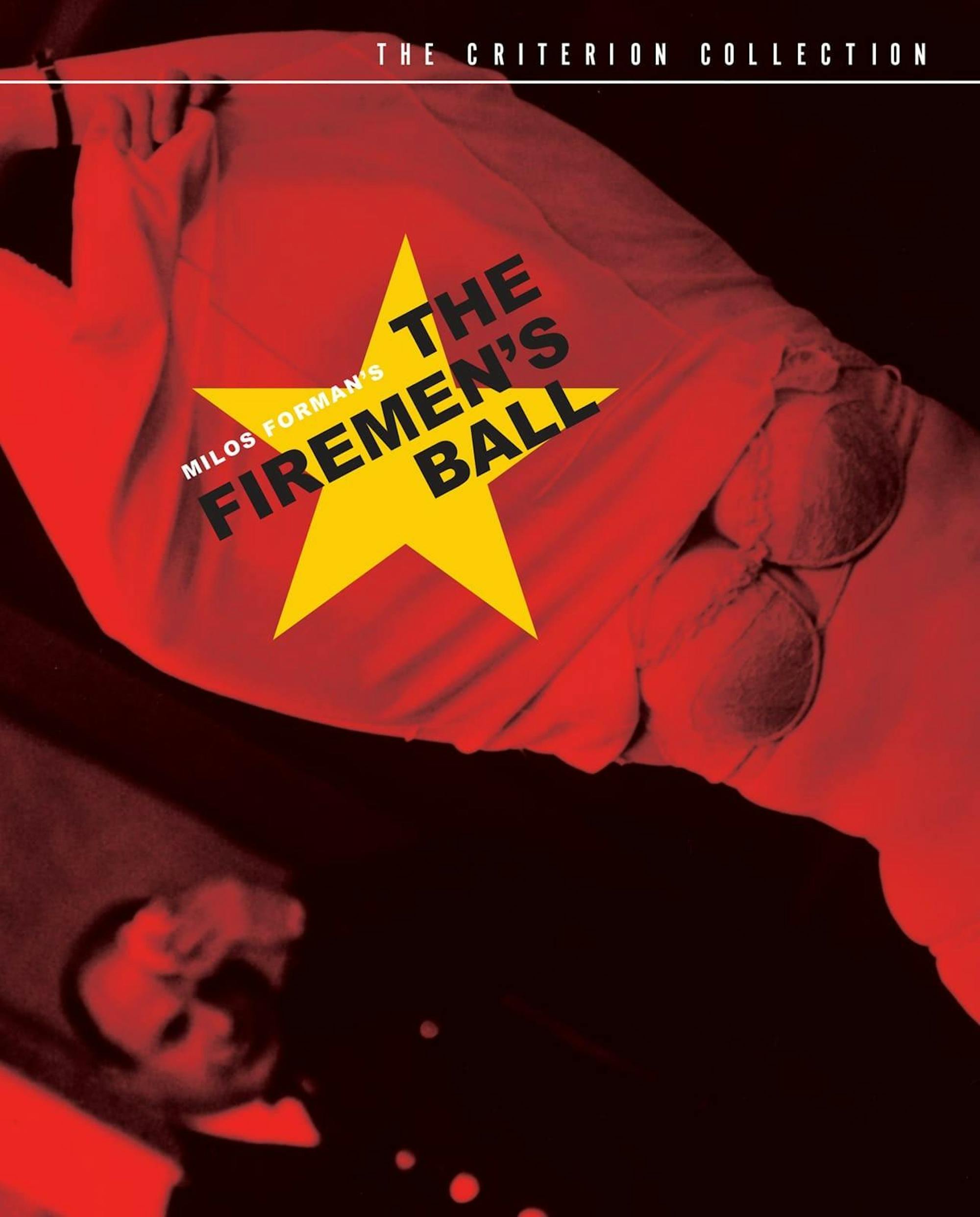
After months worth of film screenings, Cornell Cinema unveiled its final film of the spring in its once-a-semester Mystery Screening on April 30: The Firemen’s Ball. A 1967 Czechoslovakian comedy, The Firemen’s Ball, adds to Cornell Cinema’s long history of exposing audiences to international films. Cornell Cinema’s Mystery Screenings have previously displayed German thrillers, Scottish documentaries and even co-productions between the U.S., Latvia and Luxembourg. Providing a humorous and seemingly lighthearted glance into Czechoslovakian life, The Firemen’s Ball balances slapstick comedy with darker satirical tones as it comments on political corruption.
Miloš Forman, the director of The Firemen’s Ball, focuses on Czechoslovakian governance within the microcosm of a small group of firefighters. The fire department throws a party for its small town to celebrate the 86th birthday of its retired chairman. However, as raffle prizes meant for party guests disappear and firemen struggle to round up participants for the Miss Fire Department beauty contest, the ball figuratively goes up in flames.
Forman wrote The Firemen’s Ball alongside Jaroslav Papoušek and Ivan Passer after visiting Vrchlabí, a small town in the Czech Republic. Observing a real firemen’s ball there, Forman, Papoušek and Passer grew inspired to reenact the celebration for a larger audience. By filming in Vrchlabí and using real townspeople rather than professional actors, Forman maintained a natural tone throughout. Comedic events felt authentic and genuine as they unraveled. Without overly-staged scenes and wholly refined performances, audiences could stay immersed in the calamitous celebration, feeling like partygoers themselves.
Throughout The Firemen’s Ball, Forman includes an abundance of slapstick comedy moments embedded within deeper themes of satire. In the film’s opening, a man fails to hang a banner welcoming guests to the ball, dropping the ladder below him as the banner catches on fire. As the ball commences, firemen look high and low, assisted by a variety of creative camera angles, to scout out the most attractive women for the Miss Fire Department pageant. When it comes time for the pageant to begin, however, all of the participants run to the bathroom in a frenzy to escape. These scenes of physical comedy fill The Firemen’s Ball with lighthearted chaos, ensuring the film is an enjoyable surface-level watch for all viewers.
As audiences contextualize the film, though, Forman’s critique of the Czechoslovakian government grows more apparent. Moments of quick laughs become allegories for the dysfunction created by communist rule, as Czechoslovakia was still a part of the Eastern Bloc at the time of the film’s release. The firemen, representing the regime in power, constantly bicker and sabotage their own ball. As they each focus solely on poaching women for their beauty pageant, they fail to notice an actual fire engulfing a nearby home. The firemen’s misguided priorities prevent them from performing their job, as Forman insinuates his government is guilty of, too. Furthermore, firemen and partygoers alike continually steal from the assortment of raffle prizes. While this may prompt a laugh from audience members, it also satirizes broader corruption endemic to communist Czechoslovakian society. Forman deepens surface-level scenes by communicating a larger political message, giving each laugh a greater purpose.
In 1968, following the release of The Firemen’s Ball, Soviet leaders banned the film within the country, considering it an insult to the regime. This ban coincided with the end of Prague Spring, a period of liberalization and protest threatening the communist regime. Forman then emigrated to the U.S. to continue pursuing his career as a filmmaker after facing suppression within his country. Despite backlash in Czechoslovakia, The Firemen’s Ball still had great success abroad. In 1969, the film was nominated for the Best Foreign Language Film Oscar.
Through scenes of humorous exaggeration and laughter, The Firemen’s Ball shares a heavier political narrative. The film may present itself as deceptively light to casual viewers, but further framing within the 1960s reveals substantial metaphors within comedic chaos. As a viewer, I’m grateful that Cornell Cinema can expose me to these types of international films. Coupling conventional elements of comedy with country-specific themes, The Firemen’s Ball is sure to spark enjoyment from all viewers.

Michelle Bookbinder is a member of the Class of 2029 in the College of Arts and Sciences. She is a staff writer
for the Arts & Culture department and can be reached at msb394@cornell.edu.