This February, more than one million people around the world stepped outside to observe and report birds as part of the Great Backyard Bird Count, marking a new record for the number of participants in the annual event.
The four-day event is co-organized by the Cornell Lab of Ornithology, National Audubon Society and Birds Canada. It invites people of all experience levels to record birds they see and submit them through eBird and Merlin Bird ID, two digital databases for birdwatching, or “birding,” developed by the Lab of Ornithology.
The Origins of GBBC
GBBC started in 1998 with a simple question: would people be willing to share the birds they were seeing?
“We thought, well, if we created an event where we invited people all across the United States to tell us what birds they’re seeing, would people do it?” said Becca Rodomsky-Bish, project leader of GBBC. “And so we decided to start the GBBC and give it a go.”
The event was initially held in the United States. It quickly gained popularity and expanded to Canada through Birds Canada, a nonprofit organization dedicated to bird conservation.
GBBC’s early success helped inspire the development of eBird, a platform that allows people to record bird observations from anywhere in the world. As eBird became widely used and interest in birding continued to grow, GBBC expanded globally in 2013.
“The love of birds and interest in sharing sightings is something that has just taken off as being really popular,,” Rodomsky-Bish said.
GBBC takes place each year over the President’s Day weekend in the United States. Since most people have Monday off and schools often hold special activities the preceding Friday, organizers see it as an ideal time to encourage public participation.
This time of year is also ecologically significant. Late February comes just before many birds in the Northern Hemisphere begin their spring migration, so the data show where migratory species are before they depart for the breeding season.
A Record-Breaking Year
Participation in GBBC has steadily increased over the years, and in 2026 the numbers reached a new high. An estimated total of 1,146,284 people took part in the count, and 467,696 checklists of sighted birds were submitted, according to a report published by the event.
Observers reported 8,257 of the world’s known bird species. From rural natural areas to urban neighborhoods, people discovered the joy of birding in a wide range of environments.
“Some people think birding is only happening in remote places,” Rodomsky-Bish said. “But people are seeing birds from right outside their door.”
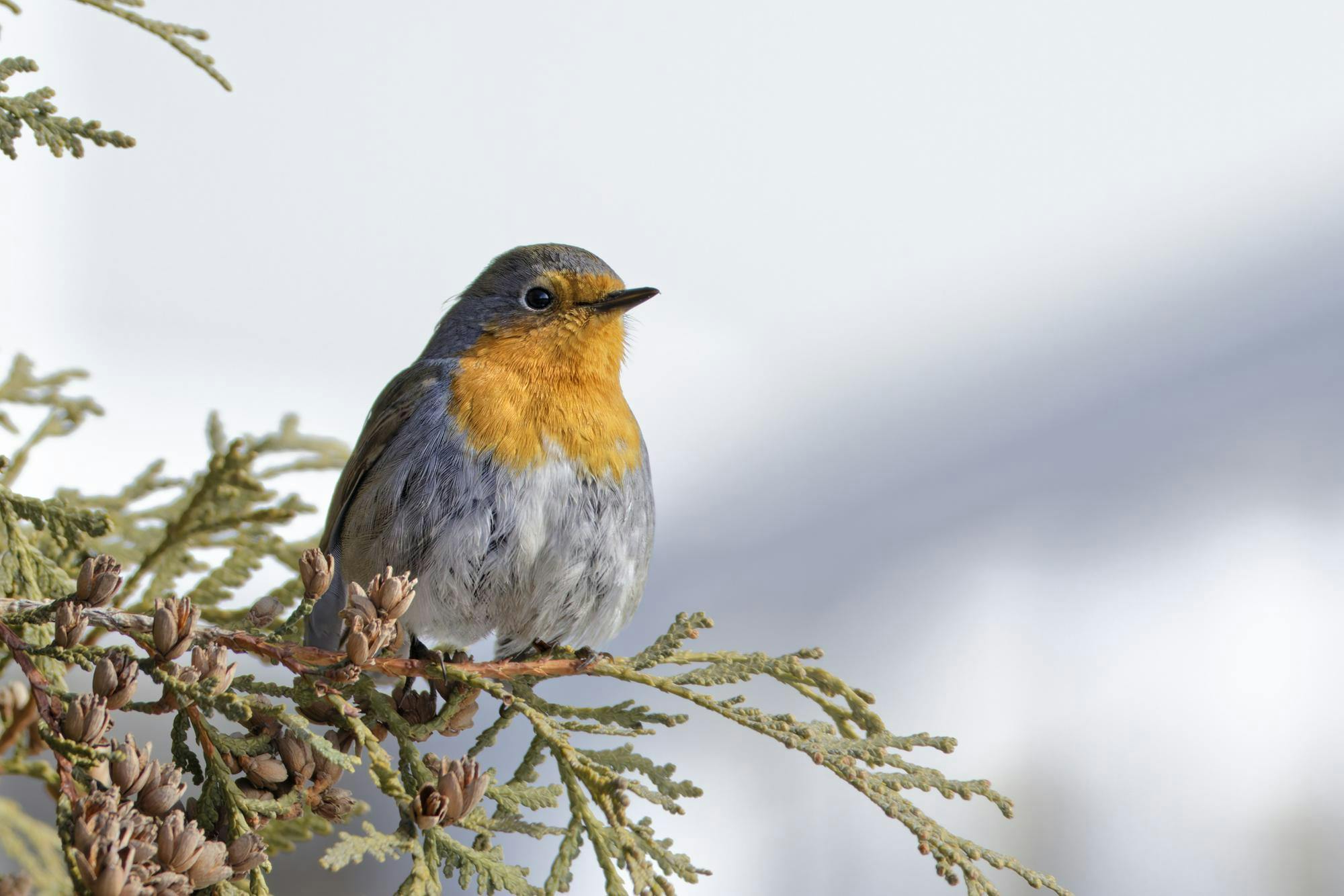
Among the more impressive sightings was a flock of around 120,000 king penguins gathered in a single area of Antarctica. In Canada, participants also spotted a European robin, a species rarely seen in North America.
Submissions came from 216 countries and subregions, covering nearly every country in the world. Reports were also submitted by people in countries such as Iran, Syria and Yemen. Rodomsky-Bish noted that birding continues to bring people together in a time marked by unrest.
“There’s a lot of things happening in the world that divides us and makes us less connected,” she said. “Birds have this way of pushing through that noise, and people all over the world can come together and really enjoy them.”
Part of Something Bigger
Observations collected during the event directly contribute toward scientific research. All GBBC data become part of the eBird database, one of the world’s largest biodiversity-related datasets and an open-access resource widely used by scientists, conservationists and policymakers. The data tell researchers where certain birds are being found, and how many of them there are.
In 2024 alone, more than 150 research papers were published using eBird data. They examine bird population changes and migration patterns, as well as the impact of disturbances like climate change and wildfires on birds.
Rodomsky-Bish emphasized the importance of citizen science in making research possible. While many people watch birds for pleasure, events like GBBC allow them to actively contribute to the scientific process.
“If you want to go that extra mile and actually submit your sightings, you automatically then become a part of something bigger than yourself,” she said.
GBBC aims to deepen people’s connection with the natural world. Rodomsky-Bish hopes participants leave the GBBC with a greater appreciation for birds. Found almost everywhere, these creatures provide a unique lens through which people can understand the places they inhabit and visit.
By fostering this appreciation, organizers also hope to inspire more environmental awareness. When people become passionate about birds, they often care more for the broader ecosystem, leading them to take meaningful steps toward its protection.
“Sometimes I feel that birds can save the world,” Rodomsky-Bish said. “You don‘t save what you don’t love, right? For people who love birds, you have to love the natural world because they’re dependent on it.”
Photograph of European Robin by André Turcot / Macaulay Library.
Susan Su is a member of the Class of 2029 studying linguistics and psychology in the College of Arts and Sciences. She is a staff writer for the science and technology department and can be reached at ssu@cornellsun.com.