


Cornell Career Services continues to advertise U.S. Customs and Border Protection recruitment opportunities despite backlash on campus, prompting concern and fear among students.
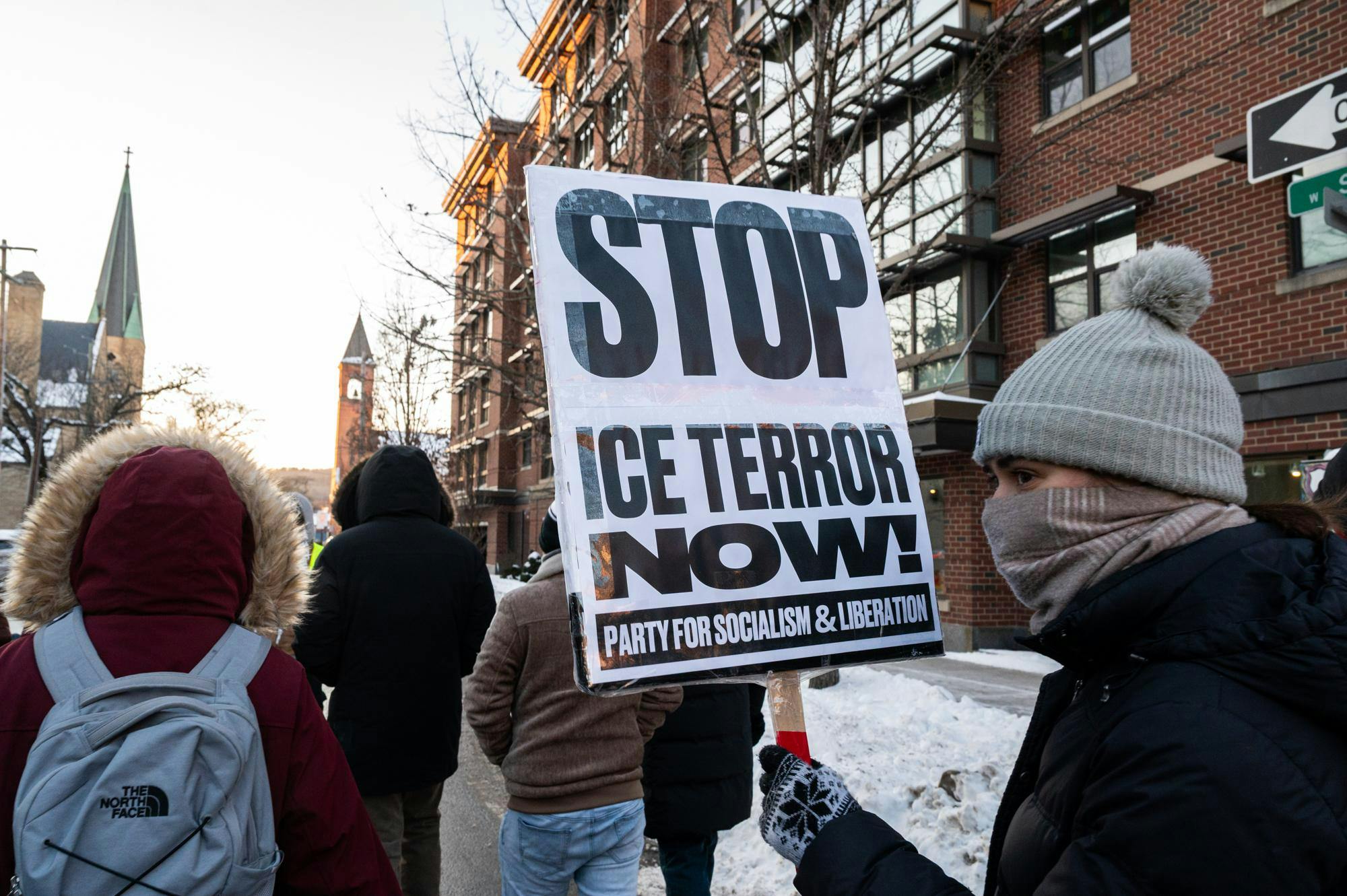
The issue comes amid national scrutiny of federal immigration enforcement, as large-scale operations involving the deployment of thousands of immigration officers have intensified in U.S. cities and drawn criticism over aggressive and alleged unconstitutional conduct by U.S. Immigration and Customs Enforcement and CBP. Scrutiny intensified following the killings of two U.S. citizens, Alex Pretti and Renee Good, by federal immigration officers in Minneapolis in January. The incidents sparked nationwide protests and outrage, including an “ICE Out” protest on campus on Feb. 4.
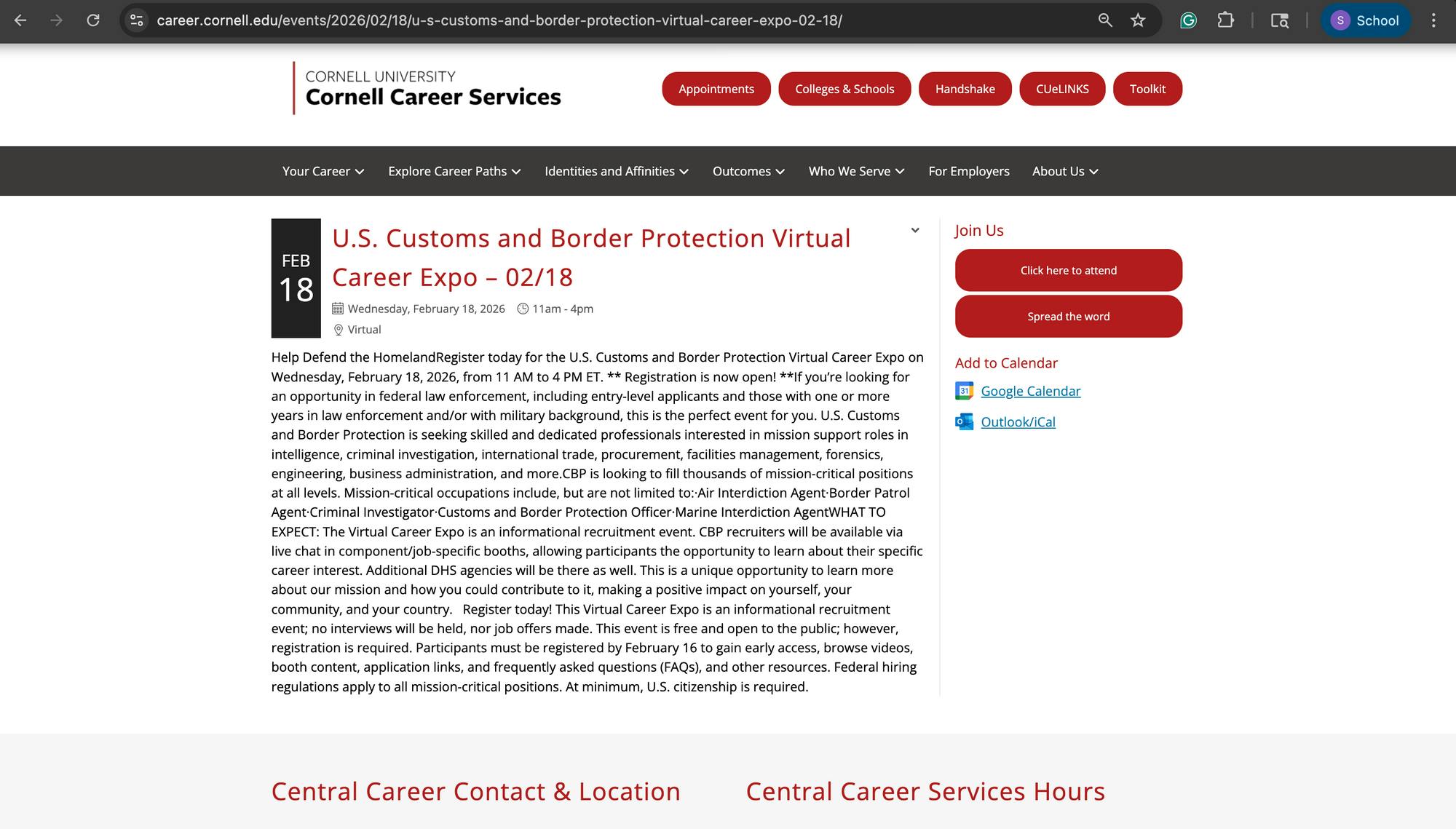
The Sun first reported that Cornell Career Services shared multiple positions at the Department of Homeland Security on Handshake in August. Since then, at least six virtual recruitment events for CBP have been promoted on the Cornell Career Services website and on Handshake, a career recruiting tool used by universities and institutions to connect students with job opportunities. Five of these events have already occurred — on Feb. 4, Feb. 5, Feb. 10, Feb. 11 and Feb. 18 — with one to take place on Feb. 26.
The Sun spoke to Cornell students and a professor about their reactions to the promoted events and jobs.
Prof. Monica Cornejo Highlights Academic and Emotional Risk for Students
Prof. Monica Cornejo, communication, said that Cornell’s continued promotion of federal immigration enforcement careers is a political stance in itself.
“All I see is [the administration] choosing a side and then turning around and claiming that they are for ‘any person, any study,’” Cornejo said. “That is really sad, and that is their choice.”
Cornejo’s research explores the barriers that undocumented students experience in college and has been cited over 300 times. Her research found that undocumented students often live with constant anxiety about detention or deportation for themselves and their family members. This stress negatively affects students’ academic performance, focus and sense of safety, her research found.
Cornejo said that Cornell’s endorsement of federal immigration enforcement careers affects the entire student body, and directly impacts students with legally vulnerable statuses, including undocumented students and international students. International students make up 26% of Cornell’s student body, according to Global Cornell’s latest data, collected in Fall 2024.
The impact of federal immigration enforcement “now expands to people of color or people who speak Spanish given the new approval by our court systems to allow ICE agents and CBP to legally detain a person just for their ethnic, racial makeup,” Cornejo said.
Students From Immigrant Communities Express Stress and Fear
“I just think it’s a slap in the face,” said Anna Cecilia Fierro ’27, the public relations chair for MECHA de Cornell, a student organization focused on Chicanx representation and social justice. “Students here are suffering so much, having to think about their identity being targeted and racialized.”
Fierro, who is from Santa Ana, California, is the daughter of Mexican and Argentine immigrants.
Ongoing immigration enforcement has made it difficult to focus on student life, Fierro explained, as she worries about her community and family back home.
“I think it’s really hard as a Latino student from a [majority] immigrant community to be on Cornell’s campus,” Fierro said. “There’s not a single moment that I’m not thinking about deportations.”
Vanessa Sandoval ’26, the advisor at large for MECHA de Cornell, echoed these feelings.
Sandoval is from a predominantly immigrant community in Los Angeles. Last year, she witnessed once-busy streets full of street vendors and small businesses transform into quiet, empty streets after large-scale immigration raids sowed fear in the city, which has one of the largest undocumented populations in the country.
Away from her hometown, Sandoval described a feeling of constant “guilt.”
“You don’t know when something could happen to your family members, but [you’re] also still continuing to pursue your degree,” Sandoval said. “Every day you have a heavy heart.”
Sandoval said that "even if virtual,” federal immigration enforcement recruitment at Cornell is “a very shameful thing."
Sandoval also shared that a Cornell student she knew had a parent who was detained by immigration enforcement, and said that “they have to deal with that everyday, and that’s just one person who opened up about it.”
“When students come to Cornell the whole purpose is to pursue an education — because ‘any person, any study’ — but how can you do that if your background is being targeted?” Sandoval said.
“Take Responsibility With the Power That We Have Been Granted”
Cornejo said that educators have a responsibility to improve relationships within their community and added that watching Cornell support “these systems” has been “really discouraging and disheartening.”
The academic and emotional impacts on students represent only part of the broader consequences of immigration enforcement, Cornejo said, pointing to the risks faced by individuals who are detained.
“That’s just one side of the coin of the immense consequences that the system has for people,” Cornejo said. “The other side is what happens when people are actually apprehended. If they survive, because, as we've seen, CBP and ICE officers and other Immigration Customs Enforcement officers are murdering people for recording them.”
When asked how Cornell is supporting community members who may be affected by ongoing federal immigration enforcement actions, a University spokesperson wrote that “University leaders are committed to ensuring that community members understand their rights, know where to seek support, and feel cared for,” and that the University offers resources to the community.
The University spokesperson pointed to guidance, educational programming and immigration-focused webinars and resources offered through Global Learning, Undocumented & DACA Support and other campus partners.
“Right now, we are in a culture shift where violence is not only brewing … it is actively happening in our streets, and it is up to each of us to take responsibility with the power that we have been granted,” Cornejo said.

Sofia Loayza is in the College of Agriculture and Life Sciences. She is a senior writer for the News department and can be reached at sloayza@cornellsun.com.


