


Cornell’s rapidly growing digital agriculture efforts, which focus on incorporating technology in agricultural management, could expand further with funding from a potential portion of the University’s $30 million federal settlement.
Part of the $60 million settlement with the Trump administration, which was reached on Nov. 7, is a $30 million investment into agricultural research over the next three years. Though it is still unclear how funds will be distributed, the settlement gives potential hints as to where Cornell may see investment.
“Cornell shall invest the sum of Thirty Million Dollars ($30,000,000) … in research programs that will directly benefit U.S. farmers through lower costs of production and enhanced efficiency,” the settlement reads, “including but not limited to programs that incorporate [artificial intelligence] and robotics, such as Digital Agriculture and Future Farming Technologies.”
Digital agriculture is the use of technology and data in agriculture. It often refers to the use of data from previous farm yields to help farms run more efficiently. Future farming technologies refers to novel technologies used in agriculture, such as AI.
The settlement’s explicit reference to digital agriculture piqued the interest of researchers, including Prof. Julio Giordano, animal science, who researches technological applications in dairy farming and serves as associate director of the Cornell Institute of Digital Agriculture.
“My interpretation of the settlement is that the funding is supposed to be for digital agriculture at Cornell,” Giordano said. “I'm really hopeful that this investment is directed toward improving our existing infrastructure for digital agriculture research.”
Giordano also said that digital agriculture is a time-relevant topic of study with growing importance as farms seek “a sustainable future for food production.”
Cornell has a variety of programs related to research and education surrounding digital agriculture, which involve everyone from undergraduate students to faculty. The Sun spoke to some digital agriculture researchers to better understand what Cornell’s settlement funds may potentially affect.
Fostering Collaboration: The Cornell Institute of Digital Agriculture
CIDA is a collaborative group of faculty and students from across departments and colleges who conduct research and outreach in digital agriculture, or are interested in doing so. The organization fosters partnership in research, particularly between people of differing expertise, and helps projects obtain funding.
According to Giordano, what makes CIDA “unique” is its cross-disciplinary nature. CIDA’s Research Innovation Fund provides seed grants to projects with cross-college collaborators.
“Two people [and] at least the two [principal investigators], have to be from different colleges and different expertise,” Giordano said. “That's part of our core strategy to foster cross-disciplinary collaborations.”
Seed grants are granted to budding projects early in development, helping them bring in additional grants from federal agencies and industry down the line. CIDA’s seed grants have already been successful in attracting “hundreds of millions of dollars,” Giordano said. CIDA’s website currently lists 58 projects as seed grant recipients.
In addition to attracting research funding, CIDA holds an annual workshop, annual hackathon and monthly seminar series. CIDA also supports research for students through a summer stipend program for digital agriculture-related projects.
Giordano encourages undergraduates and graduate students to get involved, saying, “students are the future.” One way that students start engaging with digital agriculture is through the course ALS 1110: “Introduction to Digital Agriculture.”
Engaging Students: ALS 1110: "Introduction to Digital Agriculture"
A two-credit, fall semester course that began in 2022, ALS 1110 exposes students to digital agriculture through lectures and field trips to local farms.
Isabel Téllez ’28 took the class as a freshman without any agricultural experience. Téllez, who studies global development, is interested in working to increase food security and study food systems.
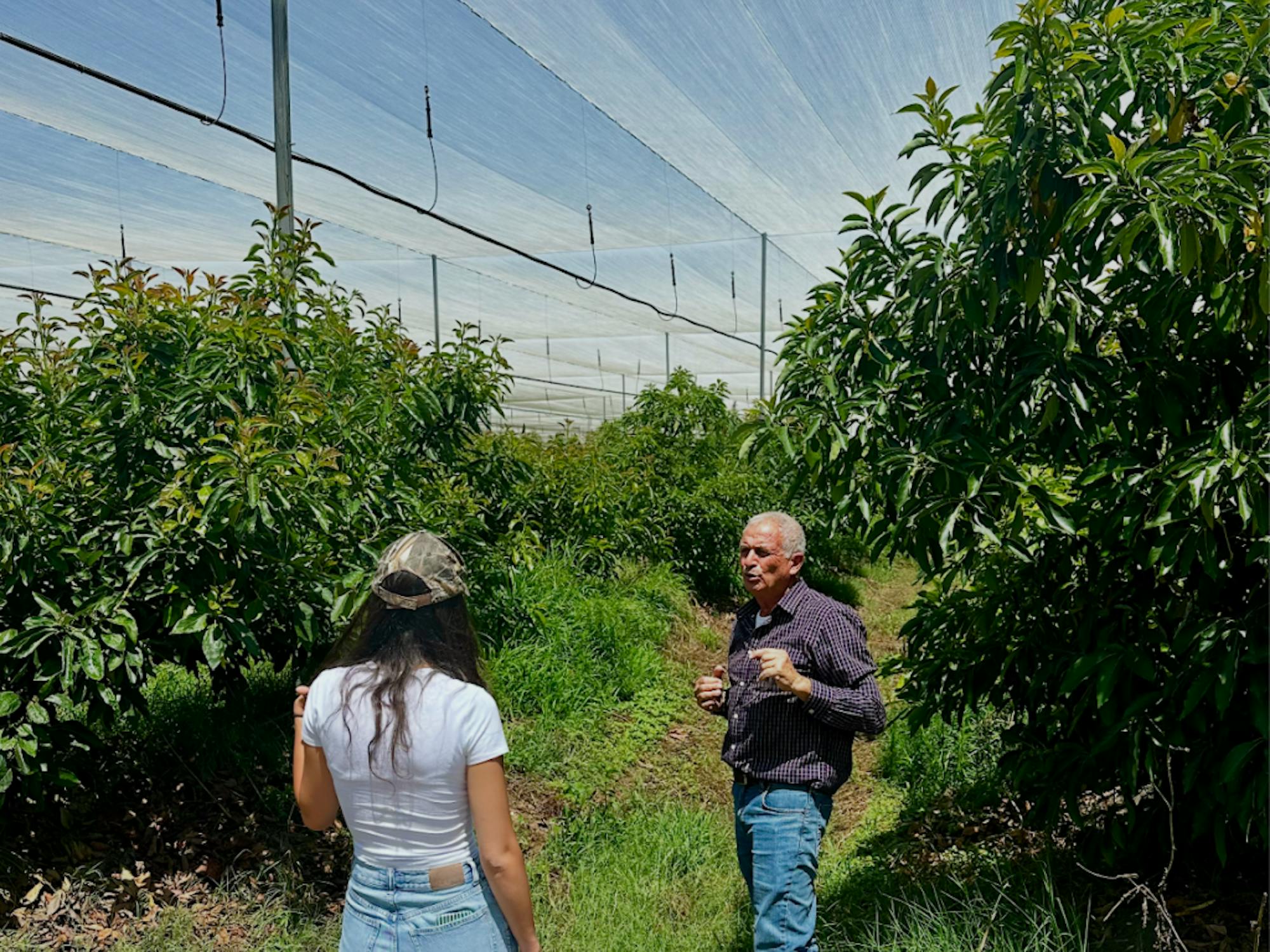
“I took ‘[Introduction to] Digital Agriculture’ in an attempt to better understand the technological tools being developed to address [food insecurity],” Téllez wrote in an email to The Sun. She called the class a “turning point” for her, inspiring her to pursue an internship and conduct research in Portugal at Atlantrees, a high-tech avocado farm.
Continued student engagement after taking ALS 1110 is common — Giordano, who teaches the course, said that of the 30 to 35 students who take the course each year, about five to 10 go on to pursue the digital agriculture minor, which launched in 2023, and an additional five to 10 students go on to engage in digital agriculture research, coursework or seminars.
ALS 1110 serves to be career-altering for many, including Téllez.
“Exposure to digital agriculture at Cornell … [showed] me how innovation can drive real, tangible change,” Téllez wrote. “Seeing this intersection of technology, agriculture, and investment has shaped how I envision my future career and the kind of impact I hope to contribute to.”
Pioneering Research: Cornell AgriTech
One ALS 1110 field trip takes students to Cornell AgriTech, a Cornell campus for agriculture and food research in Geneva, New York. Applied research projects and extension events are held at AgriTech, and it consists of “laboratories and 900 acres of fields, orchards and vineyards,” according to its website.
Prof. Yu Jiang, horticulture, has conducted research on agricultural robotics and AI at AgriTech since 2019. He said that one “flagship” project at AgriTech is VitisGen3, an interdisciplinary program investigating which genes can increase grape disease resistance when farmers breed and create new grape varieties.
Part of this project at AgriTech is developing robots to collect large quantities of data regarding how plants with different genes are handling the disease, increasing project efficiency.
With regards to extension work, AgriTech serves as an educational center to teach farmers how to sustainably increase their productivity and profitability, according to Jiang. He also told The Sun that tours and workshops are offered not just to farmers, but also state legislators, offering a high-profile outreach opportunity for Cornell.
Ultimately, the goal of the work done at AgriTech is to give back to New York state agriculture and food industry, boosting the economy.
“Digital agriculture opens up a lot of opportunities for all of us, from research all the way down to new entrepreneurs,” Jiang said. “We need this [agricultural] workforce, and who’s going to offer these training programs? … I personally foresee AgriTech really having a strong position.”

Angelina Tang is a member of the Class of 2028 in the College of Agriculture and Life Sciences. She is a science editor for the 144th Editorial Board and was an assistant news editor for the 143rd Editorial Board. She can be reached at atang@cornellsun.com.


