Editor's Note: This article mentions sexual assault.
Months after the University established the Presidential Task Force on Campus Sexual Assault early last Spring, no updates have been released to the public and a summer time deadline to issue a report on their findings has passed.
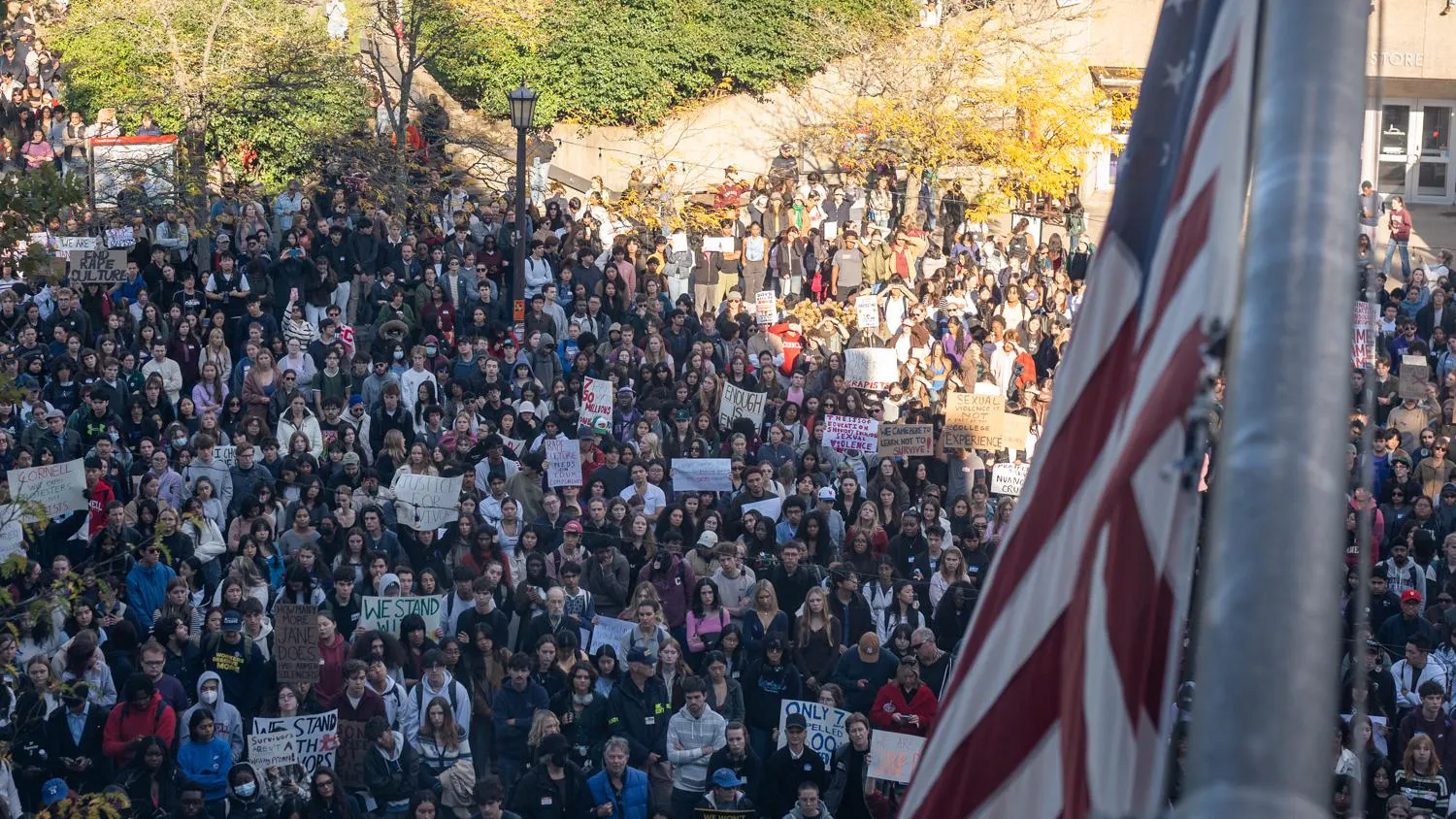
The task force was announced on Feb. 6, in a statement by President Michael Kotlikoff and Provost Kavita Bala, and aimed to address and prevent sexual assault on campus. Its establishment followed concerns on campus after the reported sexual assault of an individual by multiple men at the Chi Phi fraternity house.
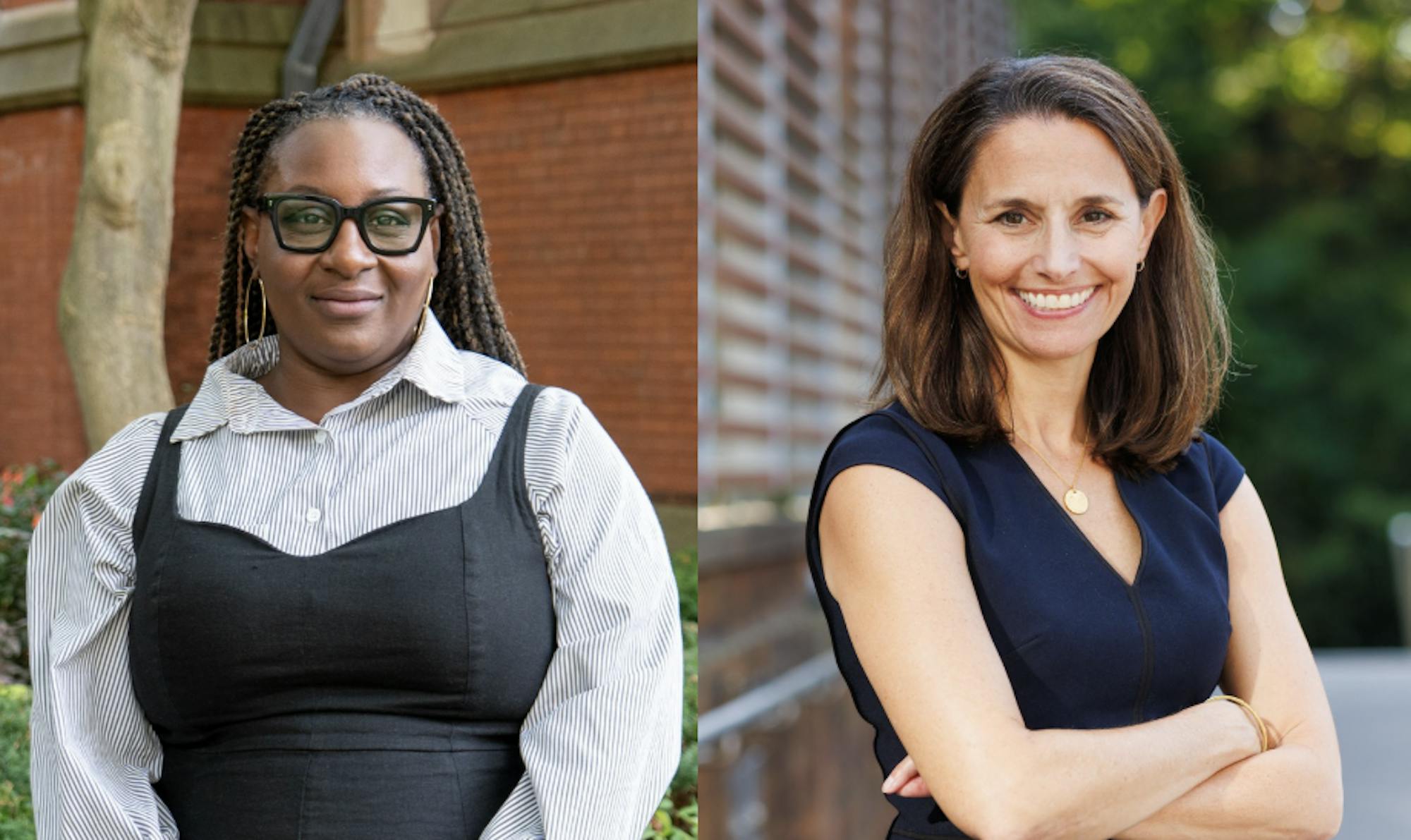
Amid this delay The Sun spoke with task force co-chairs Dean of Students Marla Love and Dean of the College of Human Ecology Rachel Dunifon about the reason for their slowed progress and the objectives they envisioned for the task force. The co-chairs said the task force’s report had been delayed to give them more time to gather students' reactions and discussed education and raising awareness.
“What progress has the task force made on this report and specifically what month could be expected for its release?”
When the University established the taskforce they wrote in the Feb. 6 statement that the task force would deliver a “report that outlines evidence-based strategies for addressing sexual assault at Cornell, including a timeline for implementation, metrics for success, and a plan to institutionalize this work”, by that summer.
Dunifon, however, defended the delay, affirming that the task force was continuing its work.
“We did adjust our timeline, and the primary reason for that was we ran out of time in the spring semester to get as much feedback and engagement from students, as we know we needed to really make this work thoughtful and helpful,” Dunifon said.
She noted that the task force has held several focus groups with students over the summer and in the beginning of the fall and plans to release a report to the public in the 2026 spring semester.
When asked how they plan to incorporate the feedback the task force received, Love explained that the focus groups, which she says asked questions surrounding campus culture and sex and relationships, provided “qualitative information that would be compared with “evidence-based best practices.”
According to Love, the comparison of this data will allow the task force “to better ground, what is the problem here at Cornell, or what our students are experiencing,
“Dean Love, you [just] said that part of the report’s aim is to find what the Cornell specific problem is. …You are still developing [the task force’s] report, but can you give us anything a little more tangible in terms of what that [report] looks at?”
“Let me just clarify one thing — our charge is not to zone in on what the problem of sexual assault at Cornell [is],” Love said. “I think it's to understand what our community is telling us about sexual assault to better inform … what we think our campus work is around changing the campus culture.”
She added that, “the charge was never for us to solve the problem,” but rather to “take a public health look” at how to approach the issue of sexual assault on campus.
For Dunifon, this public health look was the core of their objective.
“We're taking this public, holistic public health approach that's really thinking about the climate and the culture here at Cornell, and ways in which the climate and culture can evolve to be promoting everyone's health and safety across this whole campus.”
She added that much of the task force’s work was grounded by a book called Sexual Citizens: A Landmark Study of Sex, Power, and Assault on Campus, a case study which examines sexual assault and consent at Columbia.
Is the task force accounting for individuals that aren't necessarily reporting their experiences [of sexual assault] to officials?
The 2025 Annual Security Report, which provides the government with crime statistics, only includes cases which are reported to designated campus officials. The 2025 Survey of Sexual Assault and Related Misconduct, however, shows much higher rates of experienced sexual harassment and non-consensual sexual contact.
Forty-nine percent of respondents reported sexual or gender-based harassment and 15 percent of respondents reported nonconsensual sexual contact, which encompasses penetrative sex, kissing, groping and choking.
Dunifon affirmed that they were also accounting for the survey data.
“Those numbers [from the survey] answer the question: ‘How many students say that they have experienced sexual assault during their time at Cornell?’ [The survey data] doesn't say, ‘only let us know if you've officially reported it,’” Dunifron said. “So we're very fortunate. We've been relying a lot on that data.”
However, Dunifon also said that the data falls outside the scope of their focus group discussions.
“We're building off that data and using that data to inform us. [However], when we have the focus groups, importantly, we're not asking people about sexual assault. We're asking them about the culture and climate on campus, because, again, it's really that culture and climate that's going to be the most relevant to our committee's work.”
Love explained that the high percentages of sexual assault in the survey data compared to the Annual Security Report could also be explained by the utilization of confidential resources — opportunities for sexual assault survivors who want care but are unsure about whether to report incidents to the University or police.
“We know that many of our students report sexual assault to folks that are either confidential resources, in which there is not a mandate that they then communicate that with the Title IX office, or with CUPD,” Love said.
“You can’t kind of talk about sexual assault on campus without thinking of the incident that occurred at the Chi Phi fraternity house. … Dean Love, have there been any updates regarding the fraternity’s suspension?”
On Oct. 25, 2024, an individual reported being drugged and sexually assaulted by multiple males at the Chi Phi fraternity house — leading to the temporary suspension of the fraternity and a number of students amid investigation.
“The investigation continues and still in process, and that's about all I can say about that,” Love said.
She added that when the investigation ends, information about the fraternity’s sanction will be posted on the Greek Life scorecard — a tool used to measure sorority and fraternity performance.
When asked why the investigation has taken so long, Love stated that “some of this [delay] is about the procedure.” She outlined several possible reasons an investigation might be delayed, including lack of witnesses and natural breaks in the semester.
Love also gave the example of how if a group opts into an alternate resolution, a manner of resolving disputes outside Cornell’s formal disciplinary complaint process, any ongoing investigation must be paused. When pressed over whether or not Chi Phi opted out of an official investigation and into an alternative resolution, she stated “It's an example.”
When Duifon was questioned over if she thinks Greek Life at Cornell helps enable increased sexual assault on campus she stated that “because we're looking at climate and culture across the whole campus, and Greek life is part of that, Greek Life has a role to play in all of this.”
She added that “we've had some really productive conversations with members of the Greek community around this exact topic.”
According to the 2025 Survey of Sexual Assault and Related Misconduct, 20 percent of nonconsensual sexual contact occurred in fraternity chapter houses or annexes.
“Are there any initiatives that we can see the task force contributing to, to implement or to contribute to this declining trend that we're seeing?”
“We will be coming out with a variety of recommendations that will include some of the things I mentioned around education and communication,” Dunifon said. “Then as we do that we've been partnering and hearing from students.”
Love feels that this possibility to recommend increased education around sexual assault can lead to more widespread reporting of sexual assault events
“The success of evidence-based resources and programming and things that might come out of this task force actually might have a community more engaged in saying, ‘what happened to me was sexual assault,’” Love said.
“You have stressed the need for increases in education and awareness and communication. Will the report also recommend any changes to policy, or any policy implementation at all?”
“The charge from the president and provost doesn't focus on rewriting policy,” Dunifon said. “Again, our charge is to take this holistic approach, and that's what's going to make a difference. I think what's going to make a difference is this longer term engagement, understanding, communication and cultural shift.”
The Task Force webpage states: “The task force is charged with developing and recommending a holistic framework for addressing and preventing sexual assaults on campus.”
Members of the Cornell Community may consult with the Victim Advocacy Program by calling 607-255-1212 and with Cornell Health by calling 607-255-5155. Employees may call the Faculty Staff Assistance Program at 607-255-2673. An Ithaca-based crisis line is available at 607-272-1616. The Tompkins County-based Advocacy Center is available at 607-277-5000. For additional resources, visit health.cornell.edu/services/victim-advocacy.
Benjamin Leynse is a member of the Class of 2027 in the College of Arts and Sciences. He is a multimedia editor for the 144th Editorial Board and was a news editor for the 143rd Editorial Board. He can be reached at bleynse@cornellsun.com.
Ariana Sanchez is a member of the Class of 2028 in the Dyson School of Applied Economics. She is a Sun Contributor for the News Department and can be reached at acs327@cornell.edu.