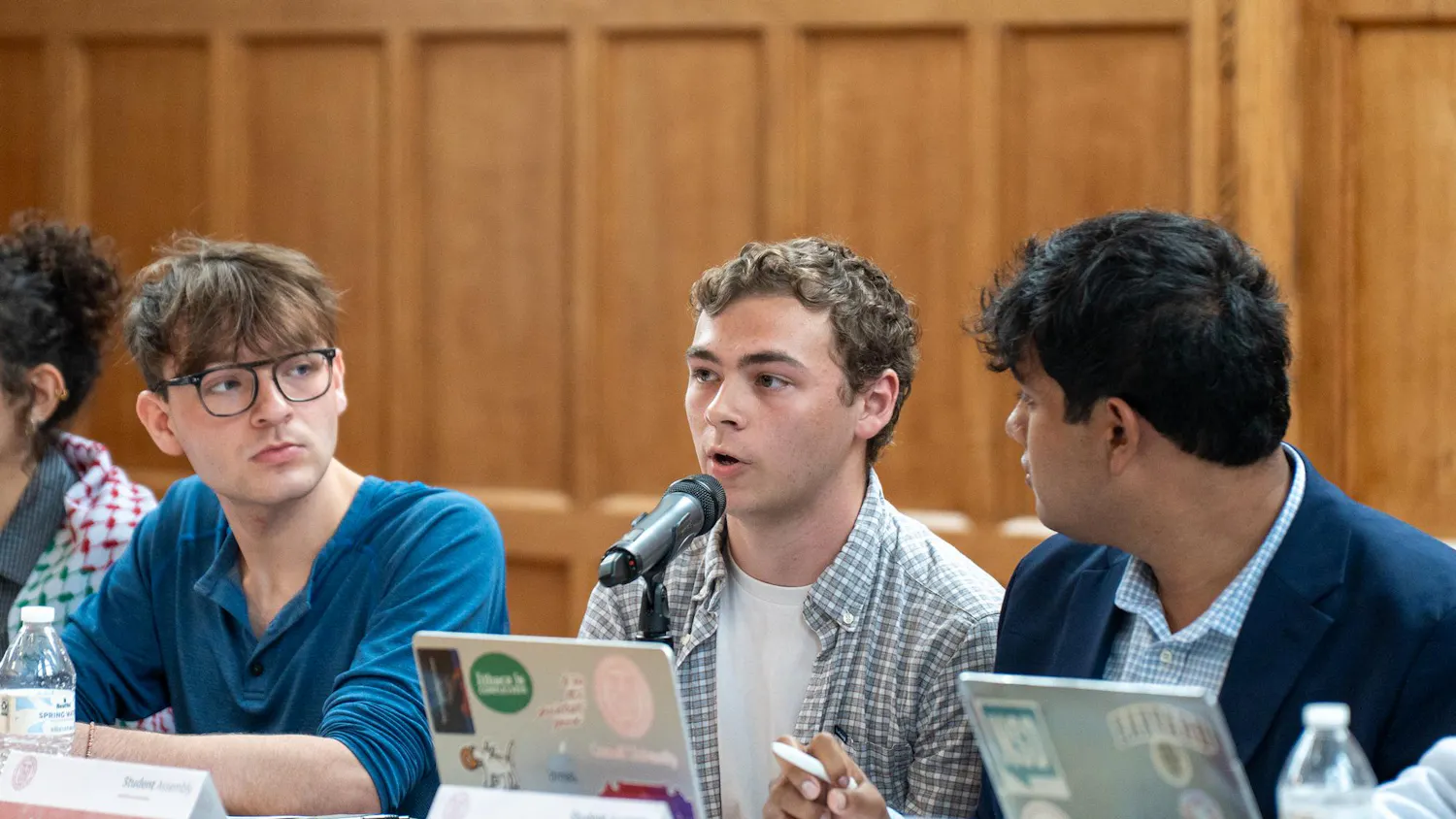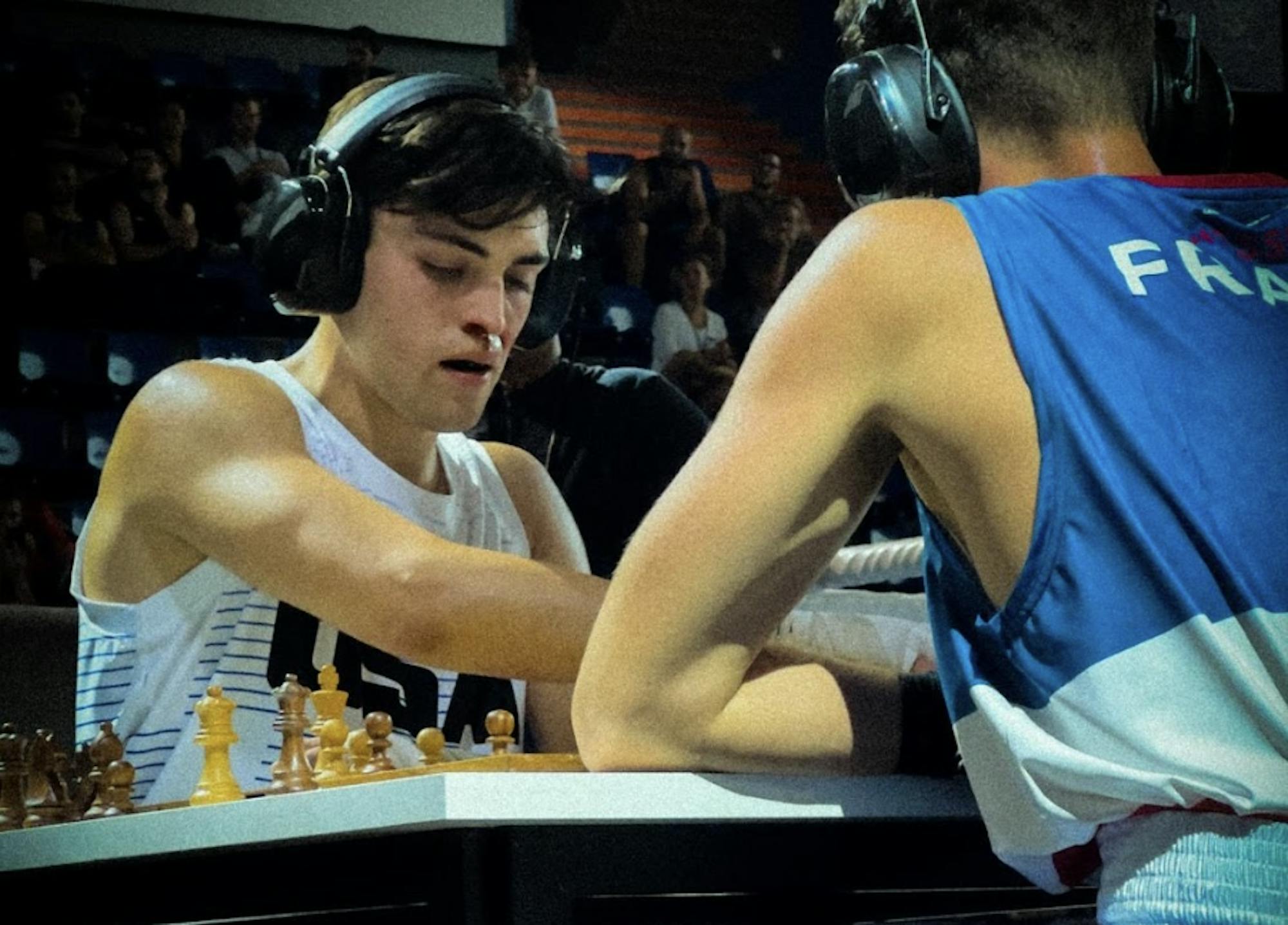
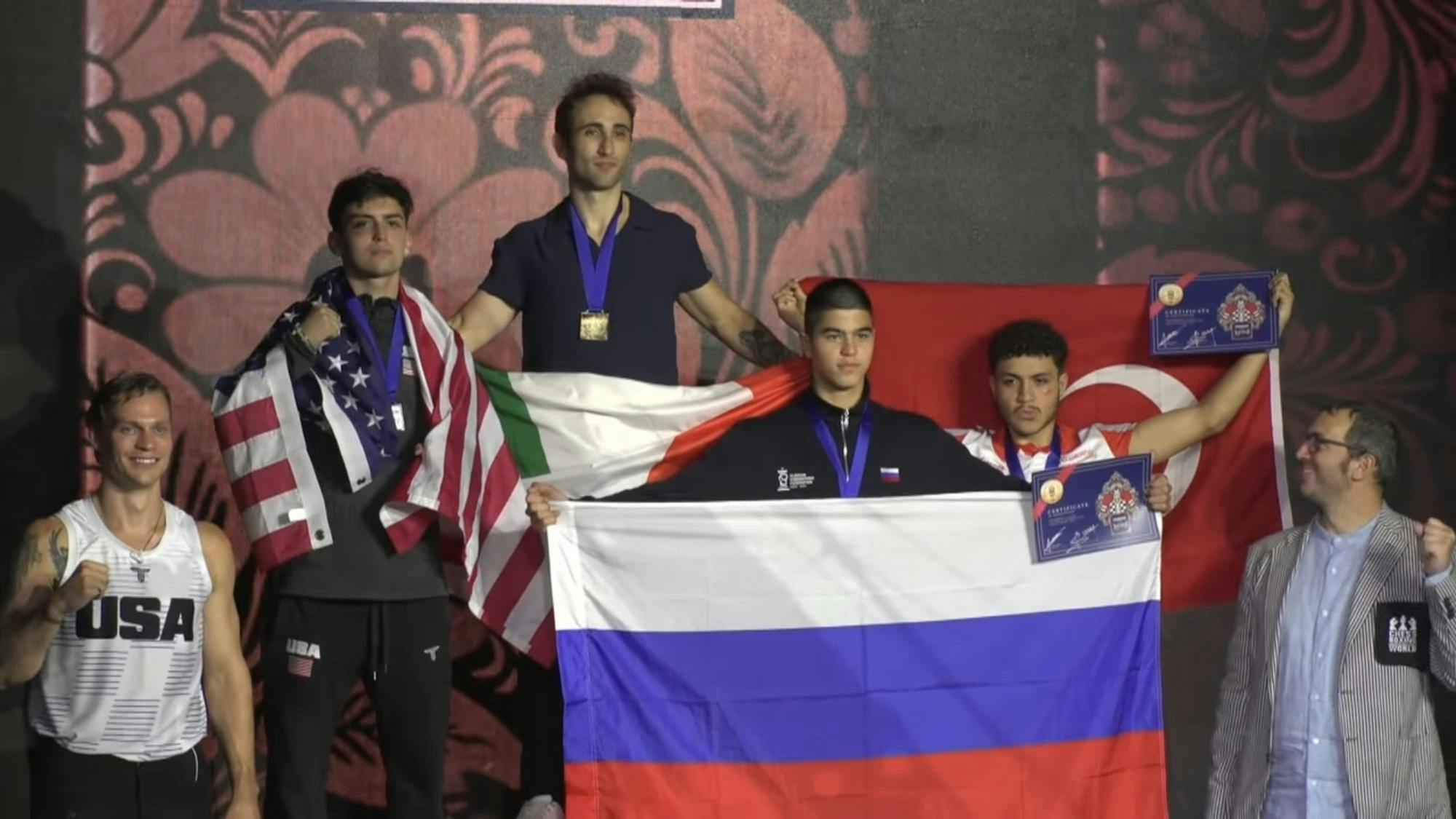
Will MacLeod ’26, a math major in the College of Arts and Sciences, earned silver for Team USA in the Chessboxing World Championships in September after starting the sport just three months prior.
And Cornell saw the starting stages of his career. The chessboxer picked up boxing in a physical education class at Cornell, and then later joined a boxing gym in Ithaca. Meanwhile, MacLeod was a lifelong chess player, having learned the game at age four from his dad. MacLeod said he honed his skills by playing with friends and competing in high school tournaments.
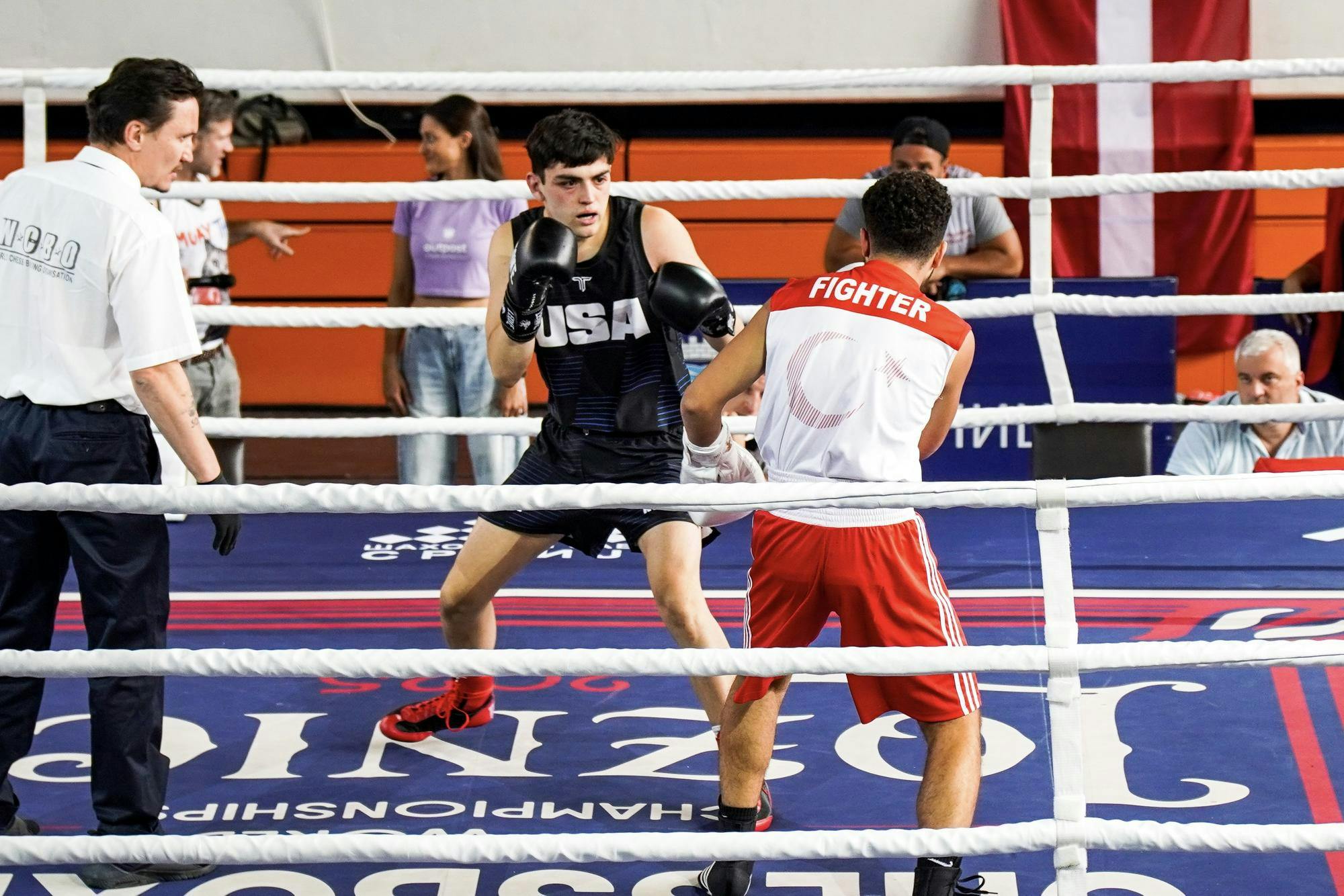
Chessboxing originated in a French graphic novel and was brought to life in 2003 when the first match was held in Berlin. A chessboxing bout consists of alternating, three-minute rounds of chess and boxing with one-minute of rest between, where it is possible to win in the ring or through checkmate. Players continue competing if a round ends in a tie, and the bout ends when a round is won. Competitors play a maximum of eleven rounds.
After an amateur boxing fight in May, MacLeod recalled a chessboxing clip he had seen online. He realized, “There's a lot of people [who] do chess, a lot of people [who] do boxing, there's very few people who do both.”
MacLeod knew he could excel at the sport, so he reached out to Team USA and attended a sparring showcase in Atlanta in June that served as a tryout. From his performance at the showcase and chess skills, Team USA coordinators selected him for the team from a pool of interested chessboxers.
Determination and Commitment: An Individual Sport
Members of Team USA lived across the country — MacLeod mentioned teammates in New York, Louisiana, Chicago and New Jersey. They called weekly on Sundays to check in with each other, but it wasn’t possible to do much conventional, group training.
In New York for the summer, MacLeod attended a chessboxing club weekly but otherwise stuck to a personal routine: “First thing in the morning, I would do my calisthenics, and I would go on a run … then I go to work and … I'd go to boxing,” he said.
This routine, which he balanced six days a week, was a big time commitment alongside a finance internship he worked. But Macleod found that “sticking to something and doing it over and over again builds a form of discipline.”
Much of MacLeod’s philosophy revolves around follow-through. He never considered quitting chessboxing, saying, “Once you commit to something, you [have] got to see it through.”
Calm and Collected: Putting Things into Perspective
MacLeod had always enjoyed chess, but boxing, he said, “[is] not fun.” He decided to try it in pursuit of multidimensionality, but the sport reinforced a characteristic he already possessed: “I've always been calm, level-headed,” he said. “But boxing even exacerbated that mindset.”
MacLeod explained that boxing simulates the dangers that society has mitigated, such as being eaten by an animal or attacked by a neighbor. Facing off against someone, MacLeod said, makes other problems seem trivial.
He instanced stage fright: public speaking is a common fear, but it pales in comparison to being on stage while “you have someone who’s going to try and literally take you unconscious.”
In combining these activities, MacLeod faced a new challenge: the transition between rounds. According to the athlete, a difficult element unique to chessboxing is the one-minute break between chess games and boxing matches.
Each requires “completely different skill sets,” MacLeod said, “One is super high adrenaline, the other one, you have to calm down and focus.” According to MacLeod, just practicing chess and boxing can not fully prepare you for this transition.
MacLeod described how Team USA coach Matt Thomas prepared members of the team for the sport’s unique aspect, incorporating breathwork and other strategies in his coaching.
‘Own the Overlap’
One thing MacLeod swears by is his personal phrase, “own the overlap.” Instead of following one path, MacLeod advises people to “try out things that you're interested in, because otherwise you're living for someone else.”
For MacLeod, chessboxing is just one example of this. He also listed taking a ballet class despite having no experience, and he is working on a short film with a friend.
MacLeod acknowledged that it is common to worry about what others think or stress about failure during this process, but there are a lot of “different frameworks that you have to use … to get yourself to do things.”
Alongside this, MacLeod reminds that “Cornell is a very big institution, both in terms of the students and also [its] offerings.”
“If you're fortunate,” MacLeod says, “maybe you're able to … find intersections or commonalities between different parts of yourself and different interests that can potentially create your own unique opportunities.”
MacLeod says he plans to attend the World Chessboxing Championships next year, as Team USA wants him to return and he hopes to try for a Gold medal. But he is also considering traveling abroad, pursuing more public speaking and potentially working a finance job post-graduation.
Given the large time commitment of training and competing for Team USA, and the health effects of boxing, MacLeod has not decided if he will pursue the sport in the long term.
But most importantly, MacLeod hopes to share what he’s learned. He enjoys interviews and posting videos on Instagram about his experience chessboxing, and he developed a talk over the summer about “owning the overlap.”
“I've gotten a wide variety of experiences … that I think [are] very unique,” MacLeod said. “I [like] the idea of helping other people figure out what their overlaps are, or what they want to do.”

Inga Wooten-Forman is a member of the Class of 2029 in the College of Arts and Sciences. She is a contributor for the News department and can be reached at irw7@cornell.edu.