


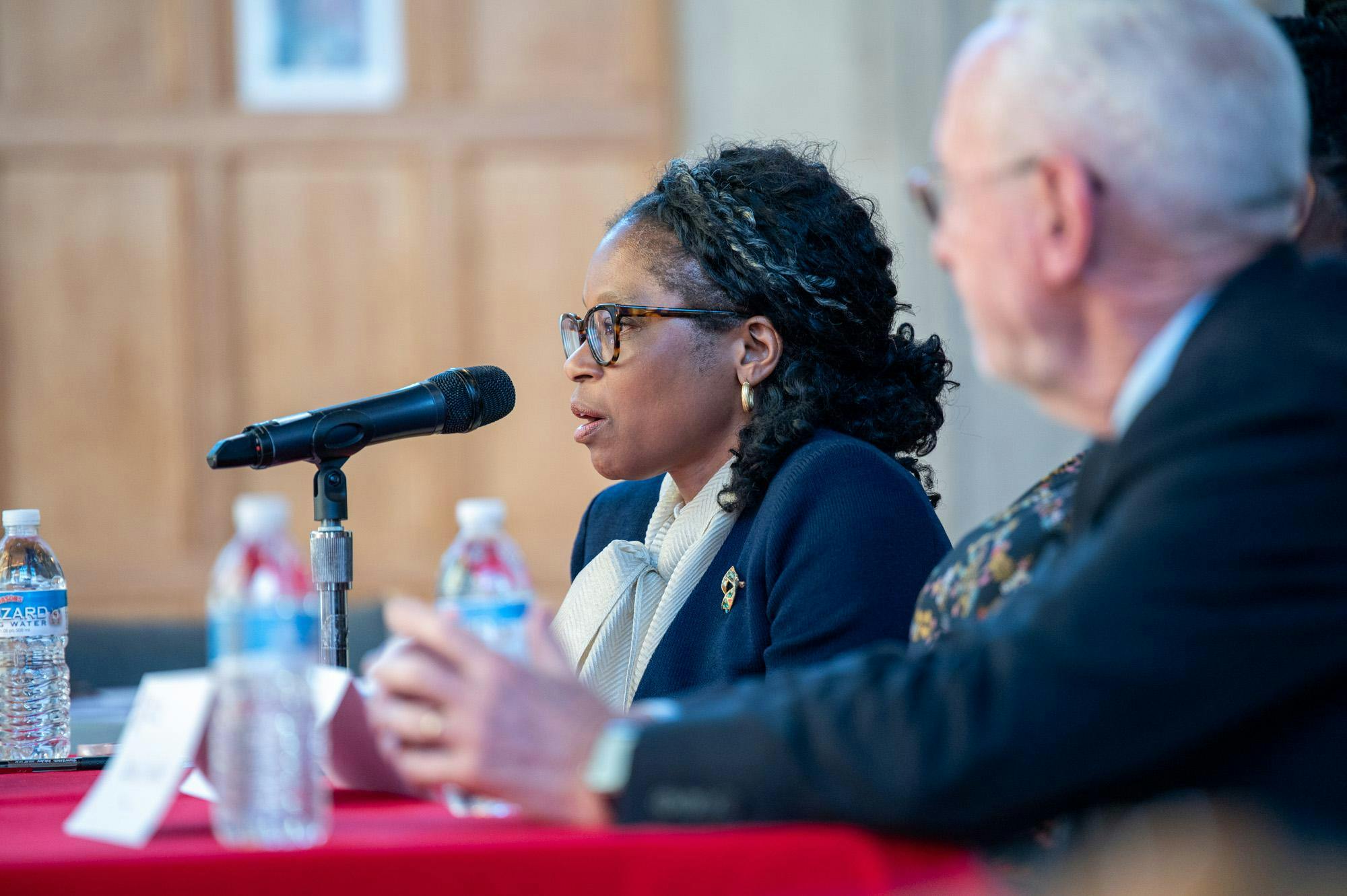
Donica Varner, Cornell’s vice president and general counsel will depart from Cornell on Feb. 6, 2026, according to the Cornell Chronicle.
As the University's chief lawyer, Varner represents and advises the University’s boards, senior leadership, and administrative units, helping guide major policy decisions, transactions and institutional compliance. Varner’s term at Cornell had marked the first a Black person served as the University’s chief legal counsel.
“My serving as Cornell’s chief legal officer was an historic first. I am grateful for the tremendous opportunity to partner with dedicated colleagues across the university and Board of Trustees to advance the university’s mission with integrity and fidelity to its ‘…any person…any study’ ethos” Varner said to the Cornell Chronicle. “I am very proud of the work that we have accomplished together.”
Cornell Media Relations did not immediately respond to a request for comment regarding Varner's decision to step down.
Varner joined Cornell as the university’s top in-house lawyer in 2021, as the University returned to fully in-person and residential instruction during the pandemic. Over the past four years, she has led the University through unprecedented challenges and turbulent years, including the 2023 Supreme Court’s decision that ended affirmative action, over two years of campus protests in response to the Israel-Gaza War, federal executive orders affecting higher education, and mounting federal attacks on universities.
Prior to Nov. 7, the U.S government had several ongoing civil rights investigations into the University which were resolved when Cornell reached a $60 million settlement deal with the Trump administration. The negotiated agreement also restored nearly $250 million in federal funding that had been frozen by stop work orders last spring.
During her term, Varner helped develop Cornell’s Interim Expressive Activity Policy, which drew swift and sustained criticism from faculty and students who argued it imposed overly restrictive limits on protest and free expression. The policy also provoked a student and faculty protest in front of Day Hall. In a conversation with the Sun in spring 2024, Varner explained the policy’s development and emphasized a desire for public discourse, while defending the policies as protecting public safety and promoting accountability.
At a forum, several faculty members expressed concerns over the policies’ vague language and disciplinary nature. While the Student Assembly passed a resolution stating that “This interim policy appears to be in direct reaction to the rise of protest[s], rallies and demonstrations on the Ithaca campus.” The resolution further warned that the policy would create a “chilling effect” on the Cornell community.
The policy’s final version, announced in a statement from President Michael Kotlikoff and top administrators on March 28, walked back many of the Interim Expressive Activity Policy’s most contentious points, after an extensive public comment period.
During Varner’s term at Cornell, the University’s handling of the discrimination investigation into Eric Cheyfitz, a former professor in literatures in English — prompted controversy and debate across campus.
Cheyfitz faced a civil rights investigation and two semesters of unpaid leave, after he allegedly asked an Israeli graduate student to leave his spring course on Gaza, claiming he was disruptive. Cheyfitz later retired before the investigation’s conclusion, ending his disciplinary proceedings. In an October Faculty Senate meeting, faculty condemned the University’s disciplinary process of Cheyfitz and presented a resolution with 200 signatories in support of Cheyfitz, which was later overturned by Provost Kavita Bala.
At the Oct 22. Faculty Senate meeting, Varner defended the administration’s actions and addressed claims that Cheyfitz was suspended and punished without due process.
“The process was ongoing and only ended at the request of the faculty member. He was provided due process,” Varner said. “There should be no ideological litmus test for participation in academic offerings.”
According to the Cornell Chronicle, during her tenure Varner restructured Cornell’s legal office into four core practice areas: litigation, administrative proceedings and regulatory compliance; research, technology and academic innovation; business, charitable giving and transactions; and people and inclusive excellence, while expanding educational outreach to campus units.
She launched workshops and trainings, including the “Conversations with the Office of General Counsel” series, which she described as a key part of her team’s commitment to being engaged, accessible advisers. Varner also served as an executive mentor for undergraduates in the Meinig Family National Scholars Program, acted as an executive sponsor for the Women of Color Colleague Network, and contributed nationally through the Legal Services Review Panel of the Association of Independent Colleges and Universities.
In a joint statement to the Cornell Chronicle, President Michael Kotlikoff and Chair of the Board of Trustees Anne Meinig Smalling praised Verner’s leadership during the past four years.
“Donica has provided us and countless university leaders with wise counsel, steady leadership and a deep commitment to Cornell’s mission and values,” wrote Kotlikoff and Smalling. “Please join us in thanking Donica for her outstanding contributions to Cornell and wishing her every success in her next endeavors.”
Before joining Cornell, Varner was the vice president, general counsel and secretary at Oberlin College & Conservatory. She also previously served as an assistant general counsel at Wayne State University.
Varner graduated from the University of Michigan Law School, and began her 31-year career in employment and labor law in Detroit area firms.
Upon leaving Cornell, Varner told the Cornell Chronicle that she plans to explore new opportunities for meaningful impact.
Cornell will launch a national search for Varner’s successor, and Debbie Hodys — the associate vice president and deputy general counsel and secretary of Weill Cornell Medicine — will lead the Office of General Counsel on an interim basis upon Varner’s departure.

Sofia Loayza is in the College of Agriculture and Life Sciences. She is a senior writer for the News department and can be reached at sloayza@cornellsun.com.


