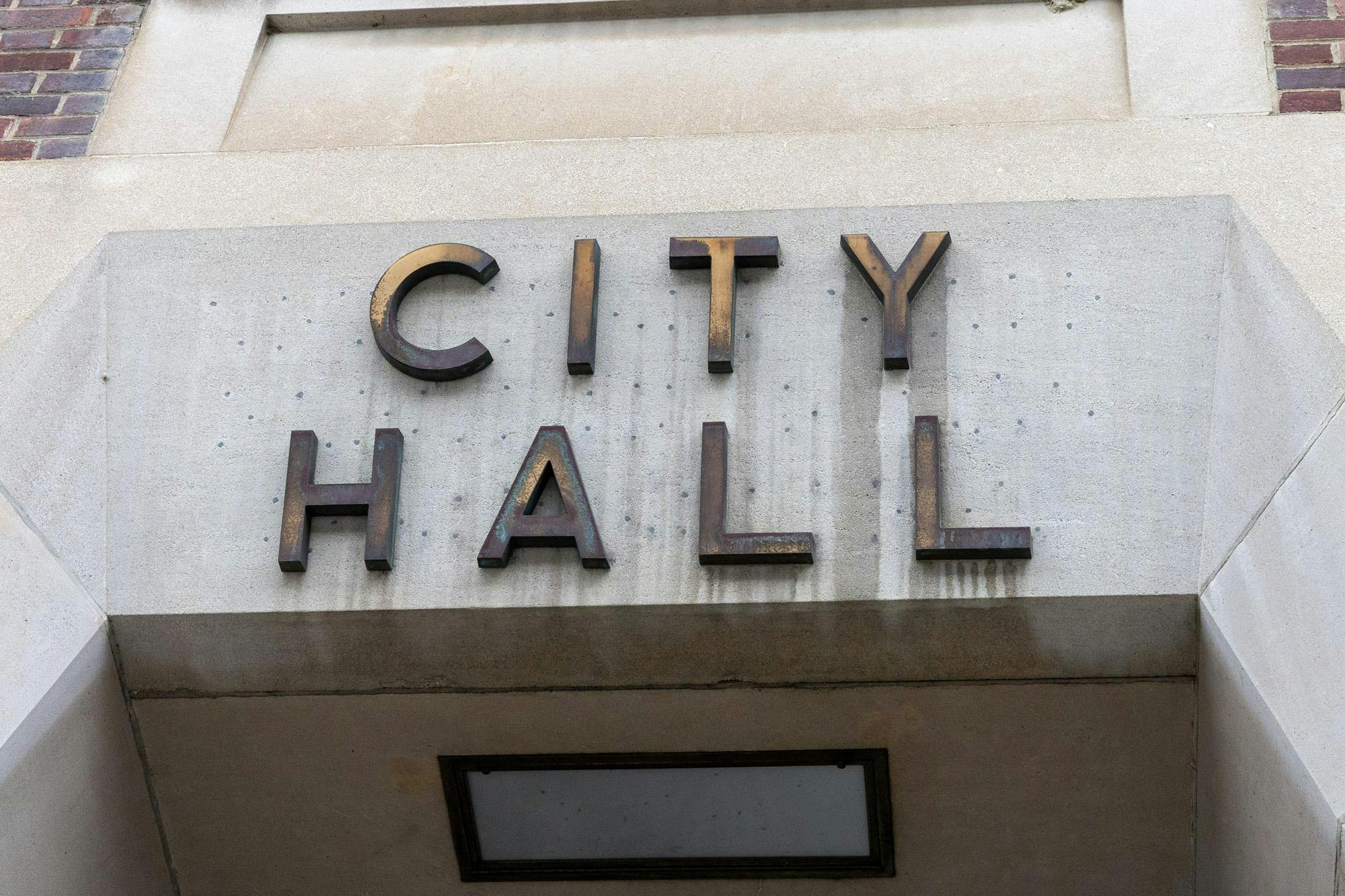
Ithaca city manager Deb Mohlenhoff announced the discovery of an unexpected $2.1 million deficit in the proposed 2026 city budget during an Oct. 21 Ithaca Common Council meeting. The shortfall, in addition to Mohlenhoff’s proposed $6.1 million budget increase compared to 2025 and the city’s backlog of annual financial audits, poses a new challenge for city finances.
The $2.1 million revenue gap was caused by the removal of a line of the draft revenue not transferring to the underlying budget dataset due to a software “synchronization error,” Mohlenhoff said.
Mohlenhoff has since organized an emergency budget task force, that includes herself and senior city officials such as deputy city manager Dominick Recckio and acting city controller Wendy Cole, to rectify the error. The final budget vote by the Common Council will occur on Wednesday, Nov. 5.
Mohlenhoff presented her original budget proposal to the Common Council on Oct. 6, claiming that increased spending was “based on the cost of doing business” for the city.
In an interview with The Sun, Mohlenhoff said the largest increases in the budget tend to be “personnel and personnel benefits.”
“The City has ratified several contracts with employee unions over the past several years that maintain steady raises in line with the cost of living — this increases the amount that the City needs to budget to maintain effort and deliver services to the public,” Mohlenhoff said. “The City cannot carry out its work or meet the needs of the public without our employees.”
Mohlenhoff added that the city has conducted several line-item reviews for each department’s budget, effectively reducing expected expenses by “several million dollars.” The original budget for 2026 was around $112.9 million, but since the identification of the budget shortfall, the city proposed adjustments that would reduce this total by around $2.4 million through cuts and additional revenue.
Since at least 2021, property tax rate increases in Ithaca have exceeded the state’s property tax cap, which limits the growth of property tax rates for local governments and school districts. Last year’s tax increase was over 2.5% the maximum state proposed cap. Common Council members voted on Oct. 22 to not exceed the state’s property tax cap of 4.2%, limiting the amount of revenue the city can generate for the 2026 budget.
To follow the Common Council’s decision and mitigate the budget shortfall while maintaining support for the city’s essential operations, Mohlenhoff proposed several measures in an Oct. 3 message to Mayor Robert Cantelmo and the Common Council. These include temporarily defunding six unfilled rostered positions, maintaining a five percent staffing vacancy rate, freezing all non-essential 2026 borrowing, considering additional parking fee increases and partially relying upon an “optimistic” increase in sales tax revenues.
Additionally, Mohlenhoff proposed straying away from using the city’s fund balance until the 2022-2024 financial audits are completed. Due to its backlog of financial filings, the city’s credit rating was withdrawn in March 2024. Currently, the city relies on short-term bonds to fund its expenditures. The interests on these bonds are influenced by the city's credit rating, which determines its reliability as a borrower.
Mohenhoff said completing the audit backlog is a “top priority” for the city and once its credit rating is reinstated, the city will implement a comprehensive five-year capital plan.
However, Emily Thuja, an Ithaca resident and credit analyst at Tompkins Community Bank, expressed concern regarding the city’s financial reporting backlog. She attributes it to “very poor management and lack of interest” on the part of the city, stating that audits and financial transparency do not seem to be a priority for the Common Council.
Thuja said the lack of a city controller, which would serve as the chief financial officer, affects the city’s ability to make "fully formed decisions” about its financial expenditure. The city controller position has been unfilled since the end of 2023.
“I think [the $2.1 million budget shortfall is] a mistake, but I think it's a mistake that maybe could have been avoided if [the city] had a controller,” she said.
To Alderperson Margaret Fabrizio (D-Fifth Ward), the lack of audits and a city controller prevents the city from knowing what they have spent on their budget throughout the years. Fabrizio said she is “surprised” about the methods the city is using to address the budget shortfall.
“I wasn't that surprised [by the budget shortfall], because we are actually in a really difficult moment with not having audits completed for the last three years,” Fabrizio said. “What I'm surprised about is the methods used to fix it, to sort of plug the hole. I think we're relying, and probably over relying, on a vacancy rate, instead of going in and making real cuts.”
The vacancy rate is the assumed percent of staff positions that are unfilled and, according to an Oct. 23 memorandum issued by the Emergency Budget Task Force, a possible tool to fill gaps in the budget. Due to predictable staffing changes such as employee turnover, retirement or internal promotion, money allocated to certain positions may not be fully spent throughout the fiscal year. By assuming a 5.5 percent vacancy rate for the 2026 budget, the city can then use these funds for other expenses.
Mohlenhoff proposed increasing the vacancy rate from 5 percent to 5.5 percent, saving the city $247,500. This is the fourth largest proposed budget adjustment, accounting for 10.4 percent of the total $2.4 million deficit. Less than half of the changes involve spending reductions, such as not setting aside any funds for emergency repairs and reducing the proposed salary increase for management from 2.5 percent to 1 percent.
Another concern for Fabrizio is sales and property tax revenue, which she said is impeded due to the amount of tax exempt property in Ithaca. Tompkins County has the highest amount of tax exempt property out of any county in New York, with an exemption rate of 37.89 percent.
Ithaca has the third most tax exempt property out of all cities in the state, with a rate of 58.39 percent. Around 47 percent of the property in Ithaca is owned by Cornell as the University is almost completely tax exempt.
However, a memorandum of understanding passed in 2023 made it so Cornell pays $4 million in an annual voluntary contribution to Ithaca for 15 years, adjusted yearly for inflation. In 2024, they additionally signed an agreement to annually contribute $425,000 to the Town of Ithaca for 10 years. Although this is progress, it doesn’t make up for the over $30 million in property tax revenue the city that Cornell does not pay to the city because of its exempt status, Fabrizio said.
While she said the city likely can’t “expect anything else” from the University with its ongoing financial challenges, Fabrizio added that the city and University need a “fuller partnership”
“We are trying to make up a really unimaginable amount of money in local property taxes,” Fabrizio said. “Now, do I think that we should be funding essential services with property taxes? Absolutely not. It's such a stupid regressive idea. But until we totally reform our tax structure, this is how we support essential public services.”
Correction: November 4, 5:00 p.m.: This article has been updated to include the correct date for when the final budget vote by the Common Council will occur and to include the correct job title and organization of Emily Thuja.

Shubha Gautam is a member of the Class of 2028 in the College of Arts and Sciences. She is an assistant news editor for the 144th Editorial Board and can be reached at sgautam@cornellsun.com.