The mark of a good open mic is its applause, but not in the way you might think. Of course, an audience might cheer for a singer’s perfect high note or a guitarist’s complex riff, when the musicians are at their best. But more importantly, at an open mic we cheer for the slip-ups, for the false starts, for the voice cracks. These moments of vulnerability are when a little bit of encouragement goes the farthest.
My hometown open mic shaped me into the musician I am today. When I was a new guitarist performing for the first time, I remember feeling instantly welcomed by the regulars who applauded even my simple, unvarying strumming pattern and my inexpressive singing. The people, more than anything else, kept me coming back to the coffee shop week after week. As soon as I decided to transfer to Cornell, I began searching for a new place to perform during my time here.
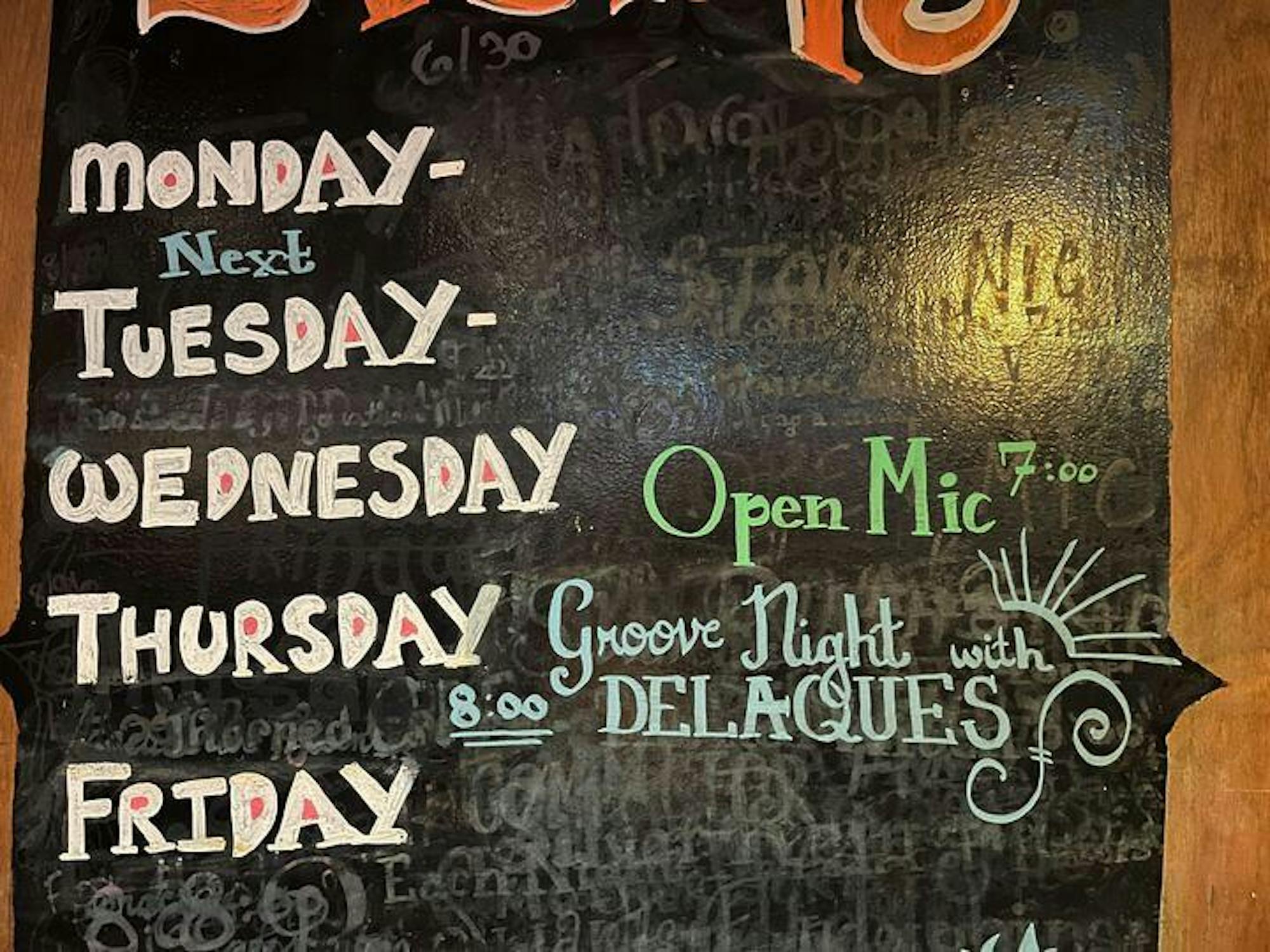
My first venture into the Ithaca open mic scene was at The Nocturnal Café. The venue is a cozy, dimly lit underground space with twinkling lights on the ceiling and tables, several couches in each room and a wide selection of non-alcoholic beverages. They hold an open mic every Wednesday night at 7 p.m., and sign-up slots tend to fill up quickly with the names of faithful regulars. I have been to this open mic more than any other in Ithaca; so far, this is the venue that has taken the place of the coffee shop where I perform in my hometown. I have already begun to feel a sense of community there.
I recently attended open mic at The Downstairs for the first time. This is a more intimate space, with closely set tables and a small but well-lit platform stage at the back of the room. When I went, it was decorated for Halloween, with cobwebs and plastic skeletons adorning the ceiling. Performers played songs that were spooky, silly, sad and everywhere in between. The enthusiastic host, SingTrece, leads this open mic (“for singers, rappers, songwriters and poets”) every fourth Tuesday at 7 p.m.; on other days, The Downstairs hosts separate open mics for stand-up comedy and poetry. Although this venue will be closing down in late December, I hope to return at least once while I still can.
Another recent visit for me is The Westy. Though they are well established as a bar, their open mic is very new, having started up only last month. This event (which is exclusive to people at least 21 years old) takes place every Tuesday night from 9 to 11 p.m. There were only a few performers when I attended, which made for a relaxed environment since there were no concerns about making time for a long list of other musicians. However, the room filled up as the evening progressed, and by the time I headed home the atmosphere in the bar was lively and sociable, with the audience thoroughly enjoying the music.
Of course, this list would be incomplete without the open mic hosted by Cornell’s own Electric Buffalo Records. Taking place on alternating Thursday evenings, this event brings student musicians together at the Cornell Media Guild headquarters. In a small room lined with shelves of vinyl records, students crowd together to socialize and watch the performers. I couldn’t stay long when I visited, but I loved the energy of this audience. Our shared Cornell affiliation provided an automatic point of connection, which the music only strengthened.
Deep Dive had the most advanced setup of any open mic I visited. With its colorfully lit stage, a guitar available for performers to use and several large speakers, this venue is fully equipped for a wide range of musical performances. This event, for people at least 18 years old, takes place every other Wednesday from 9 p.m. until midnight. Deep Dive is unique in alternating their open mic performers with live band karaoke, an experience that highlighted for me the power of music to bring people together. Though I had never been to Deep Dive before, much less rehearsed there, the band joined me during part of my set, and I loved having the opportunity to make music in a more collaborative setting than I usually do.
Across venues, the core of an open mic is its emphasis on music as a social, not purely performative, activity. The word “open” is essential; anyone can step up to the stage, not just seasoned professionals. It is a space of growth, of experimentation, of connection. Though I have often been awestruck by the talent of my fellow performers, their skill is never the focal point. We show up to perform, again and again, purely because we love to be there, sharing our music with others.
An open mic thrives on the inherent vulnerability of performing for an audience. Expressing intimate emotions through music takes courage, as does stepping onstage to share them in the first place, but this courage is well rewarded by the sense of solidarity that comes from shared vulnerability. By dissolving the divide between performer and audience, an open mic inspires a unique kind of applause: a celebration not just of good music, but of the individual musician as a vital part of a growing artistic community.
Raina Lockwood is a junior in the College of Arts and Sciences. She can be reached at rl978@cornell.edu.
Raina Lockwood is a member of the Class of 2027 in the College of Arts and Sciences. She is a staff writer for the Arts & Culture department and can be reached at rl978@cornell.edu.