

We tend to equate great acting with loud, dramatic moments full of yelling and tears; narrative tension erupting into an exploding cascade of emotion. Think of Daniel Day-Lewis in There Will Be Blood, bellowing with furious bravado to a crowded church: “I’ve abandoned my child! I’ve abandoned my boy!” These are often the most memorable part of a film — rewatched constantly, easily reproduced in popular culture. To secure an Oscar nomination, an actor must deliver a dramatic monologue or speech, a moment of great intensity reliably labeled by audiences and awards alike as “great acting.”
There is no grand mystery to why we love these emotive performances. They often produce the highest form of emotional catharsis, characters releasing any tensions or anxiousness, fulfilling the sense of narrative crescendo we crave in any story. Yet subtler forms of acting, a character’s intonation, the facial expressions, the physical behavior of an actor, can compel the viewer as much as any bombastic speech or monologue. A character truly finds their identity in these specificities in performance, conveying as much about a film as yells or screams.
Actors never work alone. Actors exist within a huge ecosystem of directors, producers, screenwriters, film composers, fellow cast-mates, makeup artists, and other crew members, who all work towards a wider artistic vision. Filmmaking is a collaborative medium; performances are shaped by the stylistic and thematic needs of a film. A slow period piece set in the countryside would obviously require a more subtle performance than an anxious crime thriller. Yet true acting genius lies in those who can master both forms, who can captivate the viewer both when they are loud and when they are quiet.
In that regard, Teyana Taylor is quickly proving herself to be among the acting greats. In an interview with The Guardian, she describes herself as the entertainment equivalent of “a Glade plug-in” air freshener, as through her versatility as singer, songwriter, dancer and model, she can make “every room smell good.” Yet her two most recent acting roles in A Thousand And One and One Battle After Another shows that her talents are most fully realized as an actress.
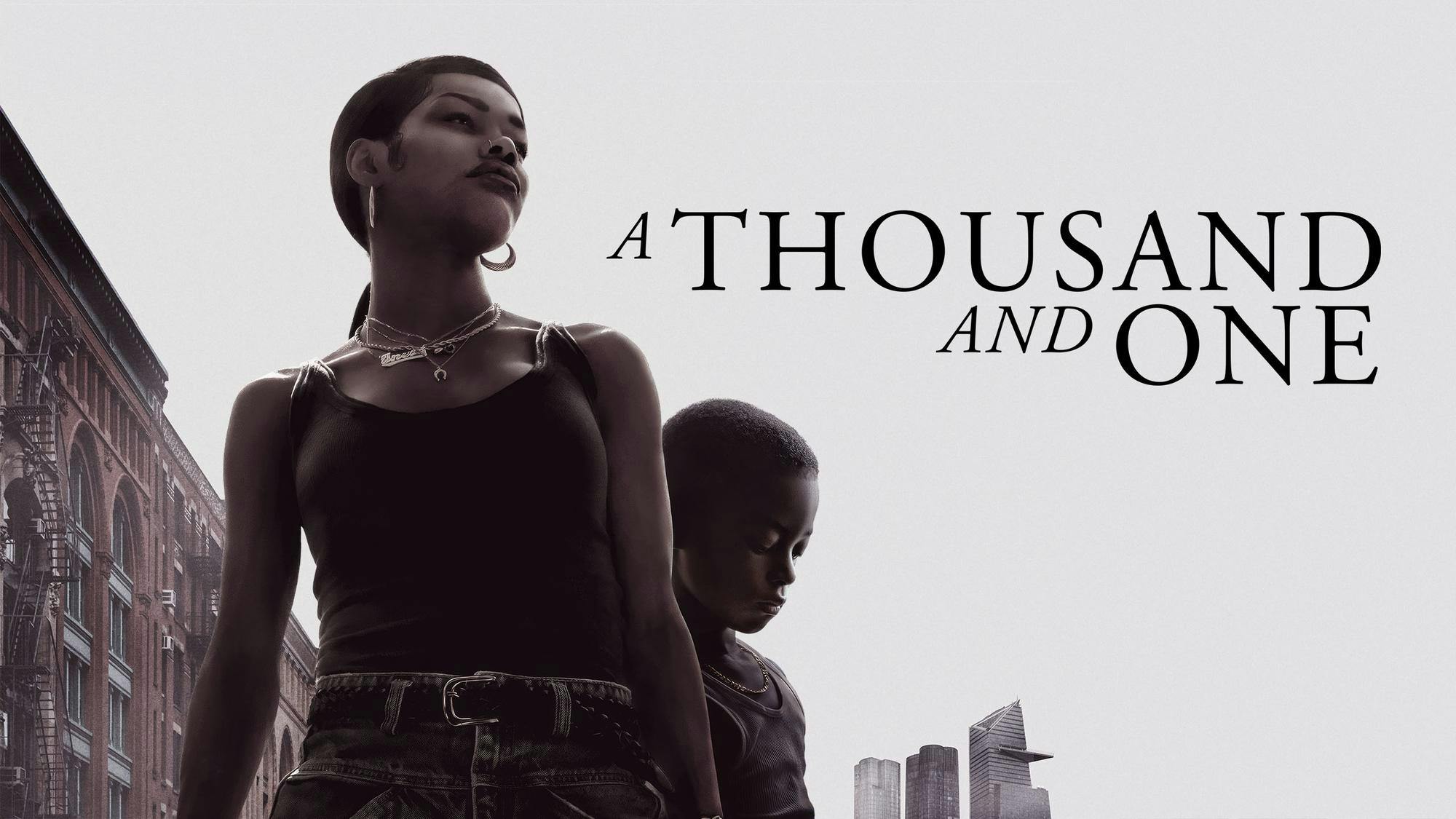
As Inez de la Paz, Teyana Taylor faced a remarkable challenge of film acting. “When casting Inez, I knew this role will be demanding for any actress,” A.V. Rockwell explained, discussing the casting for her directorial debut. “I really wanted something truthful to come through … I just wanted somebody that, through and through, you believed her, you believe that this is her experience.”
A.V. Rockwell certainly tested Teyana Taylor in her ability to embody this difficult character. With the backdrop of Harlem in the late 1990s and early 2000s, the film dwells on the perspective of Inez, the single mother raising a son she kidnapped out of the foster care system. In every scene, the camera chooses to quietly observe its characters, holding the scene a few seconds longer so we can better absorb their reactions and feelings. There are no musical cues to guide our reactions, no overwrought melodramatic speeches telling us how to feel. The emotional elegance of A Thousand and One springs forth from its characters, and so the cast must imbue their performances with the truthfulness and precision the film demands. Nowhere is this demand greater than playing the role of Inez de la Paz.
In Teyana Taylor, we have someone who has mastered the emotional elegance needed for Inez. A mother who must hide a secret from her son, Inez lives with a numbing fear of losing her son, constantly struggling to hold on to the unconditional love of a mother. She harbors a complex mix of pain and anger, and lesser actresses would inflate these emotions for cheap melodrama, full of yells and tears. Yet Taylor stays true to Inez’s emotional complexity. She remains faithful to Inez’s world in loud and quiet moments, even with that camera always watching, making the film’s narrative twist that much more marvelous.
Teyana Taylor faced a much more heightened challenge as an actress with the newly-released One Battle After Another. This may be Paul Thomas Anderson’s most intense, fast-paced and paranoid film, the camera hurriedly trying to capture these characters constantly on the run from something. The amazing score by Jonny Greenwood, with its cacophony of synths, strings and piano, is the perfect sound to set off feelings of claustrophobia within the characters and the audience. And within all that sound, with a cast including Leonardo DiCaprio and Sean Penn, Taylor utterly commanded every scene she was in.
Teyana Taylor’s character, Perfidia Beverley Hills, feels utterly trapped – a jumbled mess of revolutionary fervor, violence, love and fear of motherhood, stuck in a dangerous relationship with Colonel Steven Lockjaw. Taylor has to make us buy into the emotional authenticity of such a seemingly extreme and unreal character, and she is given only 40 minutes in the film before vanishing off to Mexico. For a film that quickly gets absurd, Taylor manages to play a whole set of emotions, including happiness, pleasure, rage and sadness, without ever feeling false. There is an empathy in Taylor’s performance as Perfidia that sustains this character, never forgetting her humanity even in her loudest and most boisterous moments.
Teyana Taylor has a quality belonging only to true masters of acting: the ability to make her performances feel effortless. The best actors are ones who can meet the stylistic and thematic demands of a film, which elevates the circumstances of a character beyond everyday reality. Teyana Taylor is one of few actresses who commands narrative complexity with this much control, who can achieve the precision that turns good films into masterpieces.
Basil Bob is a sophomore in the College of Arts and Sciences. He can be reached at bob27@cornell.edu.

Basil Bob is a member of the Class of 2027 in the College of Arts and Sciences. He is a staff writer for the Arts & Culture department and can be reached at bbob@cornellsun.com.


