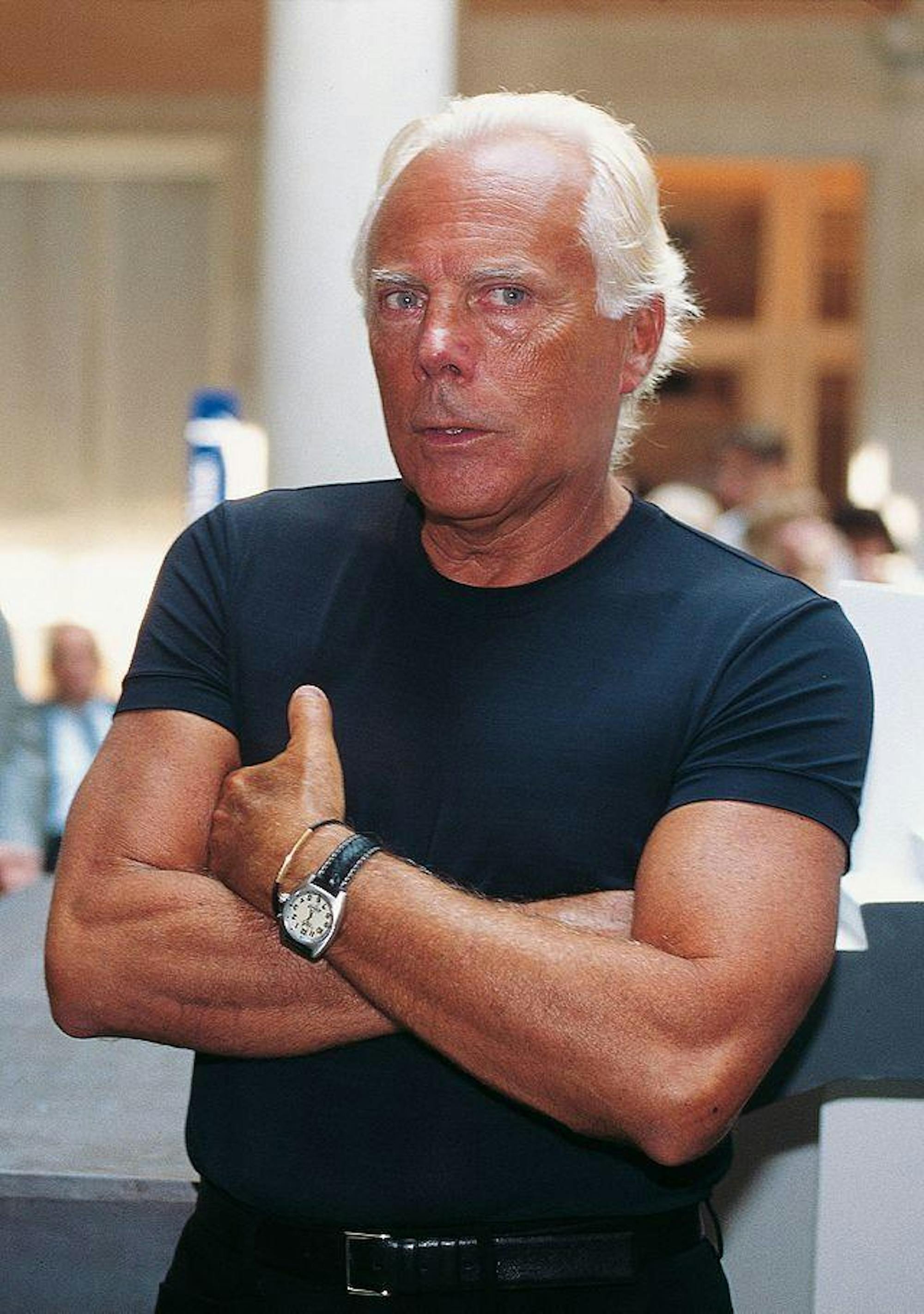
Whether you work in the world of Haute Couture or are a regular department store shopper, it is almost inevitable that you have heard the name “Armani.” Though some may associate him with the fast fashion launch of Armani Exchange, Giorgio Armani before anything else was an innovator of fashion and a much beloved figure in the industry. Armani passed away on Sept. 4 at the age of 91, leading many in the field to mourn him and find various ways to honor his legacy.
Armani has been a household name for decades, starting in the ’70s when he pioneered what became known as the “deconstructed” or “unstructured” suit. Prior to this suits were bulky, shoulder padded and stiff. Armani’s suits changed the way that men’s and especially corporate fashion were perceived. No longer did a suit have to be like a piece of armor, showcasing authority through stiff structure, it now became a more loose, custom-tailored object of aesthetic appeal.
Armani’s work in suits did not stop at men’s fashion. As one of the most notable figures in the shift in corporate wear, he was also the person behind dressing many women in corporate fashion. Armani realized the plight of women entering the workforce and struggling to dress themselves in a way that would be viewed as professional and equally as worthy of their place as their male counterparts. In the 1960s and 1970s when women first began to seek out a professional life for themselves, the dresses that were in trend were extremely outdated and impractical. So Armani modified the same loose fitting suits he made for men and created a version for women as well. When speaking on the topic Armani said, “I realized that they needed a way of dressing equivalent to that of men. Something that would give them dignity in their work life.” He understood that power, especially in the corporate world, was often expressed in clothing.
Armani could be considered the father of a cultural shift. When he first arrived on the fashion scene it was full of bright colors, eccentric designs and what I would term as “hippie fashion.” Armani, on the other hand, toned down on the colors and developed a sleek look rooted in more neutral tones. His choices way back in the day echo the contemporary trend of “quiet luxury.” It wasn’t about the brightness of the design but its sleek shape and simplicity. That was the beauty of Armani’s vision.
Throughout the history of Armani’s Couture lines, his stylistic choices have stayed consistent with his original vision, not due to any lack of creativity to design something new, but because Armani did not need to catch up on every new trend that came into the industry. His initial work of redeveloping the very silhouette of corporate-wear has changed the way we view the suit, but also power and elitism in fashion. He demonstrated that in order to be popular, one doesn’t need to bend to convention, but to have a character of one’s own to be known by. Even though Armani created lines that were much more vibrant than his initial neutral color palette, he remained with the same structural convictions as his early works. To quote Giulia Segreti : on the premiere of Giorgio Armani’s Spring Summer 2018 collection: “The collection drew together most of Armani's characteristic traits: crisp cuts, asymmetrical lines, bright colors side by side with black and strong geometric patterns. But unlike past designs, Armani used a palette of pastel colors, with many of his creations in light blues, pinks and pale aquamarine.”
Outside of the creative scene, Armani was also one of the first designers to turn his brand into a global empire complete with hotels, sublabels such as Armani Exchange and EA7 and even a watch label called “Giorgio Armani Orlogi.” Armani did not stop after influencing the world of fashion but turned his name into a multi-billion dollar empire that spanned many different industries.
Although much of the fashion industry feels unattainable and far away from the regular person, Armani’s designs have influenced the entire industry of corporate wear. Regardless of whether you are wearing an Armani suit to work or not, it is his designs that are taken into consideration when creating a new suit. It may be an overstatement, but some believe that Armani’s designs and life’s work changed the way in which suits have been made. It was Armani who has been the inspiration behind the modern suit for men, and many people consider Armani to be the one who normalized women wearing pantsuits rather than the stereotypical secretary outfit of a pencil skirt.
At the end of the day, though many just remember Armani for his diffusion lines, I think it's important to remember what made him famous. What makes a designer important in the history of the fashion industry? For Armani, it wasn’t just about a slight change in clothing structure, it was about what that change communicated and the ripple effect of these style changes 50 years later. The looser-fitting suit for men and women became the start of a new era in the workforce, one where clothing was more about sleek and sensual design than the bulky armor of shoulder pads and stiff skirts. This seems to be the true legacy of Giorgio Armani.
Lusine Boyadzhyan is a Junior in the College of Arts and Sciences. She can be reached at lboyadzhyan@cornellsun.com.

Lusine Boyadzhyan is a member of the Class of 2027 in the College of Arts and Sciences. She is a staff writer for the Arts & Culture department and can be reached at lboyadzhyan@cornellsun.com.