“You do not yield.” — Sarah J. Maas, Throne of Glass series.
Reading is political. It always has been, and it always will be. To disagree is to miss the point entirely. Our world is on fire, and it is tumbling closer and closer to the dystopian realities described in fiction. Readers are starting to realize that, if the stories from books are coming true, maybe the heroes from these stories can become real too.
Good writing makes us feel something, and, in the case of fiction, it can transport us to another world where we indirectly heal and learn all that we need to support us in the real world. I previously wrote an article on reading in times of distress, and again we are in a new time of distress and uncertainty — a time where the horrors described in fiction are bleeding into our own realities.
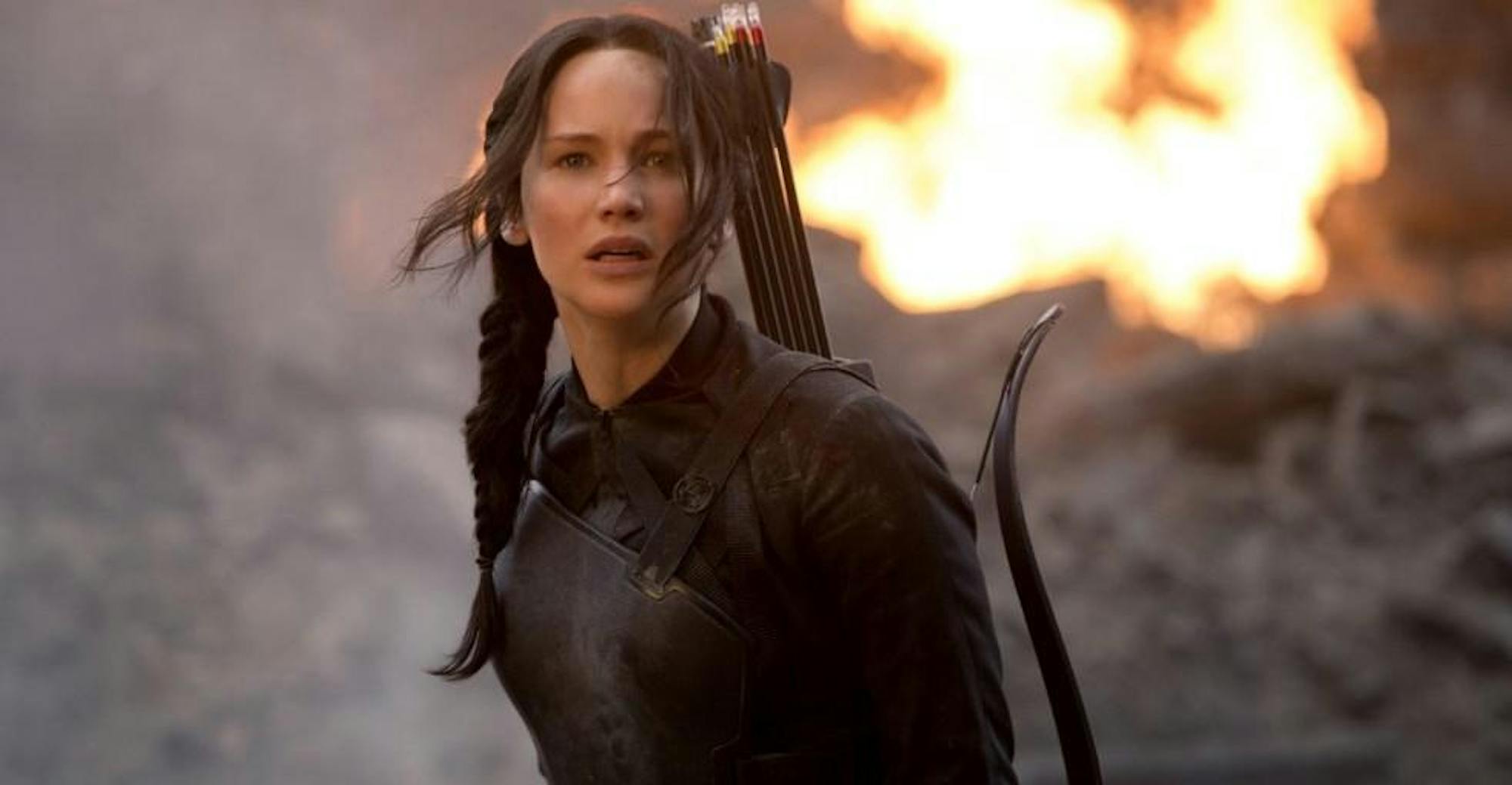
I have been coming across multiple posts and reels across Instagram lately that call people to action using books. People have brought to mind powerful characters like The Hunger Games' Katniss Everdeen, Throne of Glass’ Aelin Galathynius, Fourth Wing's Violet Sorrengail, Divergent's Beatrice Prior, Harry Potter, Shatter Me's Juliette Ferrars and many more. These are the characters we love and admire, but they are also characters who stand up for what they believe in and fight for it. They are rebels. They would never stand for the things that are happening in the world right now. These characters are accepting of all and they fight for peace, equity and hope for everyone, no matter where they come from. If these characters were dropped into our reality, they would be horrified, and they would do something about it. They would love fiercely, and their rage would burn ceaselessly.
“If we burn, you burn with us.” “Remember who the real enemy is.” — Suzanne Collins, The Hunger Games series.
Recently, in Minnesota, a symbol of resistance has emerged: the rebel loon. It is a symbol of connection and solidarity in an incredibly challenging moment where people have to fight for the most basic right to exist in their homes. It is a time where nothing feels certain, not even the laws meant to protect us. The loon is the bird of Minnesota, but, looking at the image, it is hard not to draw connections between it and the Mockingjay — the symbol of resistance in The Hunger Games. In the book series, the Mockingjay represents rebellion and defiance, but it also represents hope for a better future. Their rebellion is against the Capitol, which is a regime of extreme authoritarian power that oppresses its districts and imposes horrible, violent forms of control. It is hard not to make a connection. The U.S. even has its own Hunger Games now: the “Patriot Games.” In this time of fear and uncertainty, people are turning back to books for the strength and power they hold.
“The Party told you to reject the evidence of your eyes and ears. It was their final, most essential command.” — George Orwell, 1984.
This Orwell quote has been used quite often as of late. With the government trying to hide the objective truth of tragic recent events, people have grabbed on to Orwell's words. They are realizing, through dystopian writing, that we are at a point where we need to act. The government is actively attempting to alter reality by claiming that peaceful protestors represent an imminent threat to armed, masked and wildly belligerent federal agents. This is not dystopia, this is not fiction, this is reality, and it is frightening. When people turn back to books and see that fiction is no longer fiction, it is possibly the clearest sign that something needs to be done.
“Dark times lie ahead of us and there will be a time when we must choose between what is easy and what is right.” — J.K. Rowling, Harry Potter and the Goblet of Fire.
Good versus evil and darkness versus light are prevalent dichotomies throughout the Harry Potter series. These dichotomies exist within each person, but what matters is which we let define us. Even darkness can be kept at bay “if one only remembers to turn on the light.” Harry and his friends resist against tyranny, complacency and injustice throughout the series, but it is never presented as an easy task. Each must find their own light — their own reason to fight — and let it guide their choices. As Dumbledore says, what is easy and what is right are two diverging paths. For readers, this reminder leads many to find their courage and do what is right, not what is easy. Legions of readers have now spoken up on social media and at protests to remind us that our favorite characters would never stand for what is happening today. So why should we?
“Fairy tales are more than true: not because they tell us that dragons exist, but because they tell us that dragons can be beaten.” — Neil Gaiman, Coraline.
A while ago, I heard that a frog placed in a pot of water will sit there, oblivious, as the temperature is slowly turned up. It will keep sitting there, not noticing the gradual increase in heat, until it boils alive. We are at this boiling point. It is time to embody the hero or heroine you look up to. Contact your representatives, protest, donate, make small changes where you can, even here at Cornell. Even picking up a book is a form of protest because it is intellectual defiance and an act of self-governance. It is a fight against powers seeking to limit our agency, twist and fragment reality or shut out certain voices. Reading teaches us how to love and love universally. Reading teaches us how to fight and when — it is telling us now is the time. So yes, reading is political and books have the power to change the world — remember that.
Ayla Kruse Lawson is a junior in the College of Human Ecology. She can be reached at akruselawson@cornellsun.com.
Ayla Kruse Lawson is a member of the Class of 2027 in the College of Human Ecology. She is a staff writer for the Arts & Culture department and can be reached at akruselawson@cornellsun.com.