The Super Bowl halftime show is fundamentally unserious.
Dancers dance. Pyrotechnics explode. Athletes play a sport that barely anyone plays outside the country that invented it. Viewers at home half-watch while eating wings. Brands, for reasons beyond comprehension in an era of the internet, spend millions of dollars on advertisements that anyone could watch on YouTube for free without enduring three hours of football first. It is, in other words, a cultural space designed to be taken as lightly as possible — no political discourse in sight.
Enter Benito Antonio Martínez Ocasio.
Professionally known as Bad Bunny, he took one of the U.S.’s biggest, silliest stages — and simply by performing music, as artists tend to do — turned it into a political battlefield. The reactions from certain corners of American political thought suggested something sinister had occurred in the middle of that football field masquerading as a forest of sugarcane: a political message, a cultural affront or even an act of blatant disrespect on the land of the free’s soil. For those who had to avert their eyes, an alternative halftime show emerged. It gathered, in a remarkable feat, about 5 million views on YouTube — some of them, one might suspect, just for a good laugh.
If even the Super Bowl cannot exist outside of politics anymore, the rest of culture stands no chance. Music has never been just entertainment. At different moments in history, it has functioned as a celebration, a protest, a confession and as propaganda. And in today’s United States, it increasingly takes on all these functions at once.
One could argue that the direness of a political moment is proportional to the number of songs released about it. The Vietnam War generated a catalogue of well-known anthems, from Creedence Clearwater Revival’s “Fortunate Son” to The Doors’ “The Unknown Soldier.” The United States is not at war right now (or at least not officially), and yet, as the country fights battles internally, artists are finding it harder and harder to remain silent.
Bruce Springsteen’s ongoing standoff with the Trump administration is one of the more visible manifestations of that tension. An artist who spent decades writing about the American working class, the Boss has grown less allegorical over the years. His recent song “Streets of Minneapolis” contains none of the bitter irony that once defined “Born in the U.S.A.” It is not satire but something closer to a desperate cry in the voice of a man in his 70s, a little too tired to bother being clever about it. When a poet exhausts his reserves of metaphors and lands on a plain “federal thugs” mid-line, a question becomes unavoidable: What does it say about the current state of affairs?
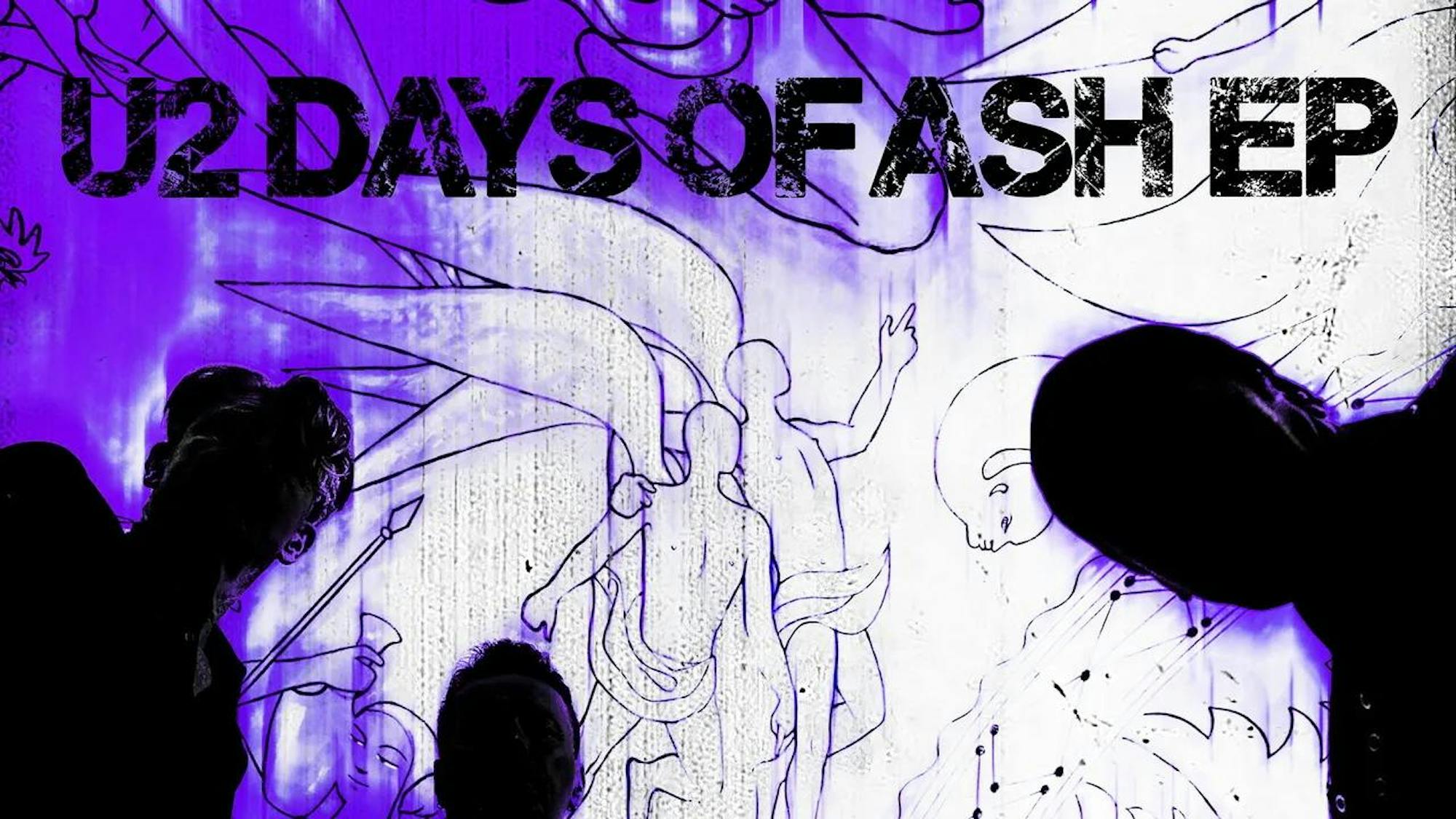
As Springsteen represents the American protest tradition, international artists are also beginning to chime in, introducing a stranger possibility: the United States itself becoming the subject of protest music written across the ocean. U2’s latest EP, Days of Ash, is dedicated to the political and military horror stories of the year 2026. The accompanying edition of Propaganda, the band’s long-running official magazine, describes the release as “six postcards from the present … wish we weren’t here.” One of the places the Irish band would rather not be is, in fact, the United States.
Among the EP’s subjects are Ukraine, Gaza and Iran — places where the language of crisis comes easily, especially as of late. The United States now appears on the list of battlegrounds as well, as “American Obituary” sits as the opening track of the release. When a country that once exported protest music to the world begins to receive it in return, like a postcard wishing it well, the cultural order starts to look tilted.
Protest songs have always been a global cultural correspondence. Messages sent from moments of tension, grief and resistance, arrived in the outstretched arms of people who needed them the most — but oftentimes could not speak up for themselves. For much of the past century, the United States was the country doing the writing. In 2026, the mail is beginning to return to sender, with some of it coming from American stages — and some bearing stamps from across the Atlantic. Either way, the message remains the same: The soundtrack of protest has turned its attention back toward the country that once taught the world how to sing it.

Arina Zadvornaya is a graduate student in the Duffield College of Engineering. She is a columnist for the Arts & Culture department and can be reached at az499@cornell.edu.