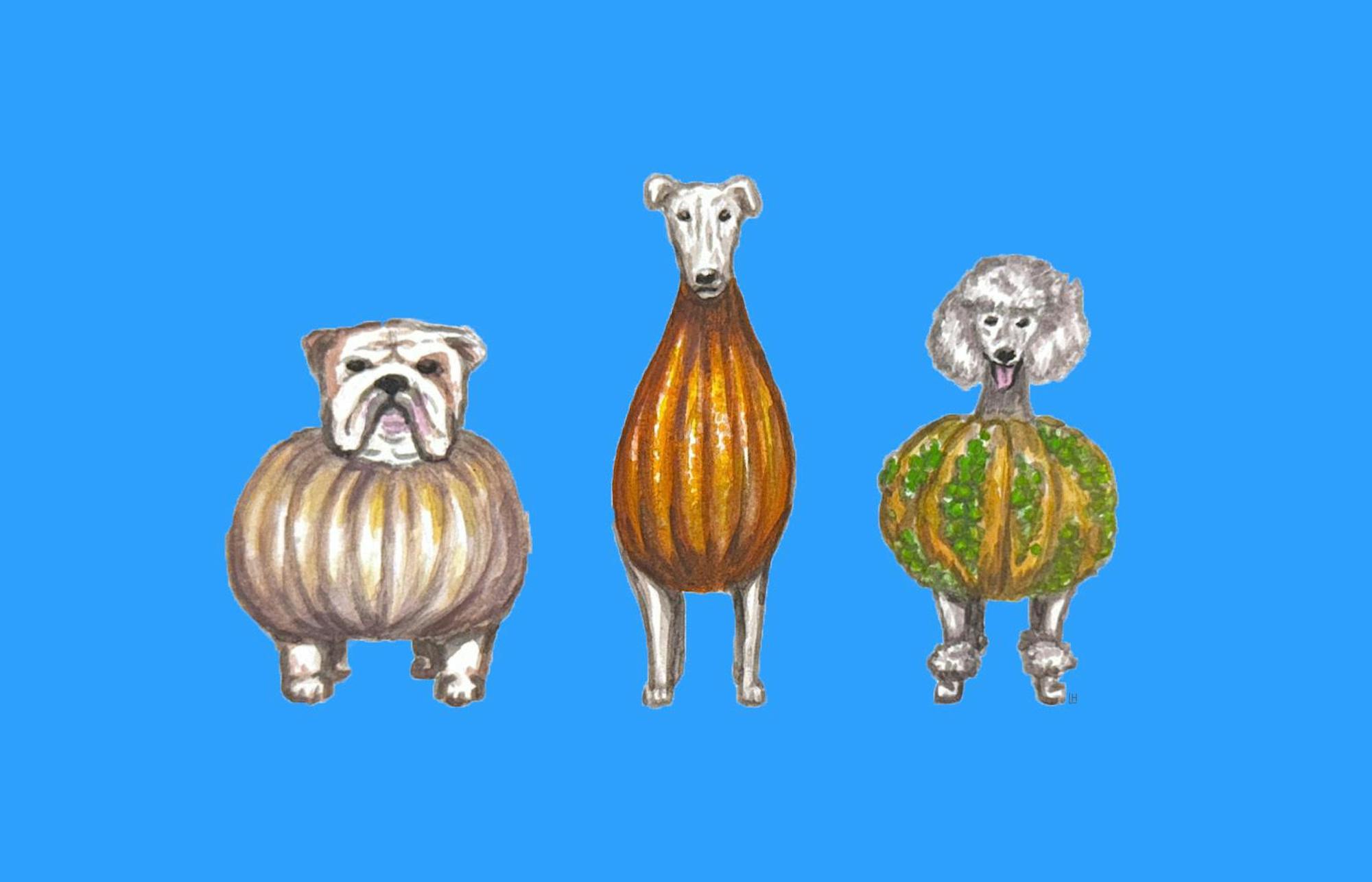
The pumpkin — an iconic porch decoration or tasty pie component. Some may suggest that the pumpkin defines fall, yet science fails to define the pumpkin.
Pumpkins have no scientific or botanical definition, according to Prof. Steven Reiners, horticulture.
“It gets a little confusing sometimes,” Reiners said. “Basically, pumpkins fall into what we categorize as squash. Pumpkins are what we grow as sort of an ornamental [crop].”
Ornamental plants are cultivated for their aesthetic appeal rather than qualities like nutrition or medicinal potential. While some pumpkins are grown as food, many are sold as seasonal decoration.
In the United States, “pumpkin” typically refers to a round, ribbed squash, according to Prof. Michael Mazourek, plant breeding. However, even this description does not apply to some fruit known as pumpkins, like the flatter Cinderella variety.
“It might be hard to define, but I think you know [pumpkins] when you see them,” Mazourek said in an Oct. 28 Instagram video.
Pumpkins, in their ambiguity, lie outside any single scientific classification level. Science classifies organisms based on criteria such as shared traits, evolutionary ancestors and mating potential. Various classification levels nest within one another, typically increasing in specificity to the species level, within which members can produce fertile offspring. Fruits known as pumpkins appear in several different squash species, such as Cucurbita pepo, Cucurbita maxima and Cucurbita moschata.
Aside from varying across species, the squash within a particular species also differ in shape, size, color and taste — just as the distinct chihuahua and great dane breeds are both dogs. For example, the species Cucurbita pepo contains the classic jack-o'-lantern pumpkin, which is large, orange, and thick for carving, as well as some of the sweeter, denser pumpkins used for pies. Cucurbita pepo also contains zucchini, a soft, small, green non-pumpkin squash.
Because they are the same species, pumpkins and zucchini can crossbreed to create “pumpkinis” or “zumpkins” — hybrids that take on both pumpkin and zucchini characteristics, according to Reiners. These hybrids may accidentally develop in compost piles after people discard jack-o'-lanterns near home gardens.
“I’ll get calls and they'll say, ‘I think I've got a brand new species,’” Reiners said. “No, it just crossed. It came out of your compost pile — there's nothing going on.”
Pumpkins have a long history of cultivation — researchers believe humans first domesticated Cucurbita pepo around 10,000 years ago in Mexico, selecting for more desirable traits over time. Today, plant breeders like Mazourek intentionally cross different pumpkin varieties to create hybrids with desirable traits, like size, shape, color, texture, taste and disease resistance.
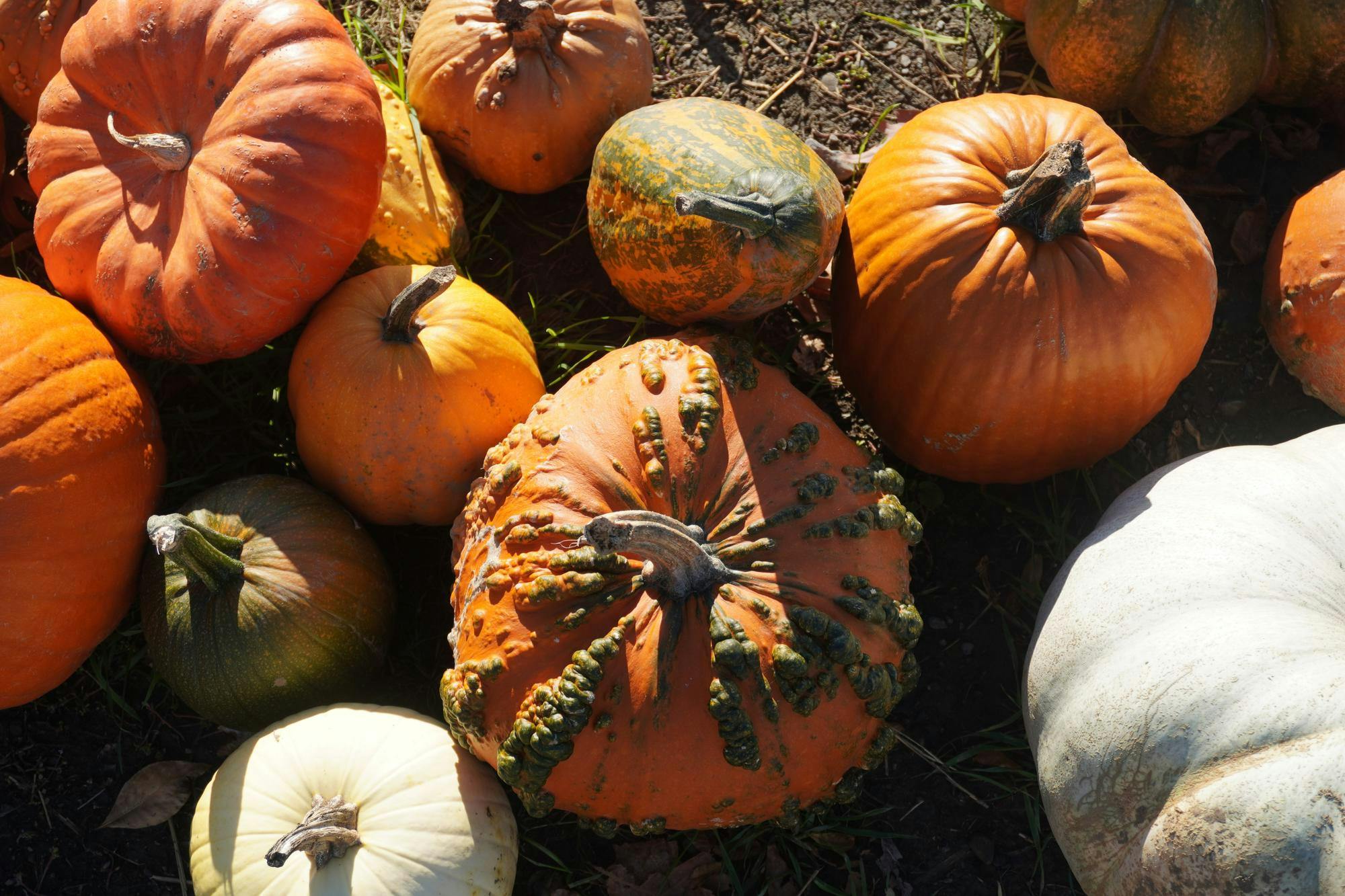
“If you want to add a new trait like disease resistance, it's easier to do that with a hybrid because you can have one parent you love and the other parent that brings in the resistance,” Mazourek said. “If you cross them together and you like the final result, you have something right away to provide to the growers and the public.”
Plant breeders can also extract genetic information from seedlings to identify their traits. This information, along with predictive mathematical models, helps them decide which plants to breed with one another, according to Mazourek.
Today, more than 200 pumpkin varieties grow in the United States, many of which are hybrids. However, the numerous options are new, according to Reiners.
“When I became a professor was in the late 1980s, and typically at that time, pumpkins were an afterthought for a lot of farms. Then, Halloween [became] much bigger,” Reiners said. “At that point, people [started] to get interested in the varieties that they [were] using.”
Local pumpkin growers Carrie and Jason Moore ’01, B.S. ’02, M.P.S. ’08 take advantage of the modern selection for their pumpkin patch. This year, the Moore Family Farm planted 22 different pumpkin varieties, including a red and white Cucurbita maxima resembling a bloodshot eye — known as the One Too Many — and a round, bright yellow Cucurbita pepo — known as the Mellow Yellow.
“We've got stripes and bumps and yellows and tans and warts,” Carrie said. “We want something different. We don't want just the orange pumpkin.”
Although growers like the Moores now cultivate warty pumpkins, 20 years ago, breeders disregarded them as unmarketable, according to Reiners. Shifting trends continue to influence pumpkin varieties. In recent years, thicker stems — which are less likely to break — have become more common, according to Reiners and Mazourek.
So, if pumpkins lack a scientific definition and their traits often change, why retain the term?
Modern pumpkins do have a definition — a cultural one — tied to fall festivities and aesthetic appeal. Rather than a specific designation of traits, breedability or ancestry, the term pumpkin carries tradition and memories.
“[Pumpkins] just bring so much joy to people,” said Reiners. “People don't get that excited about zucchini.”