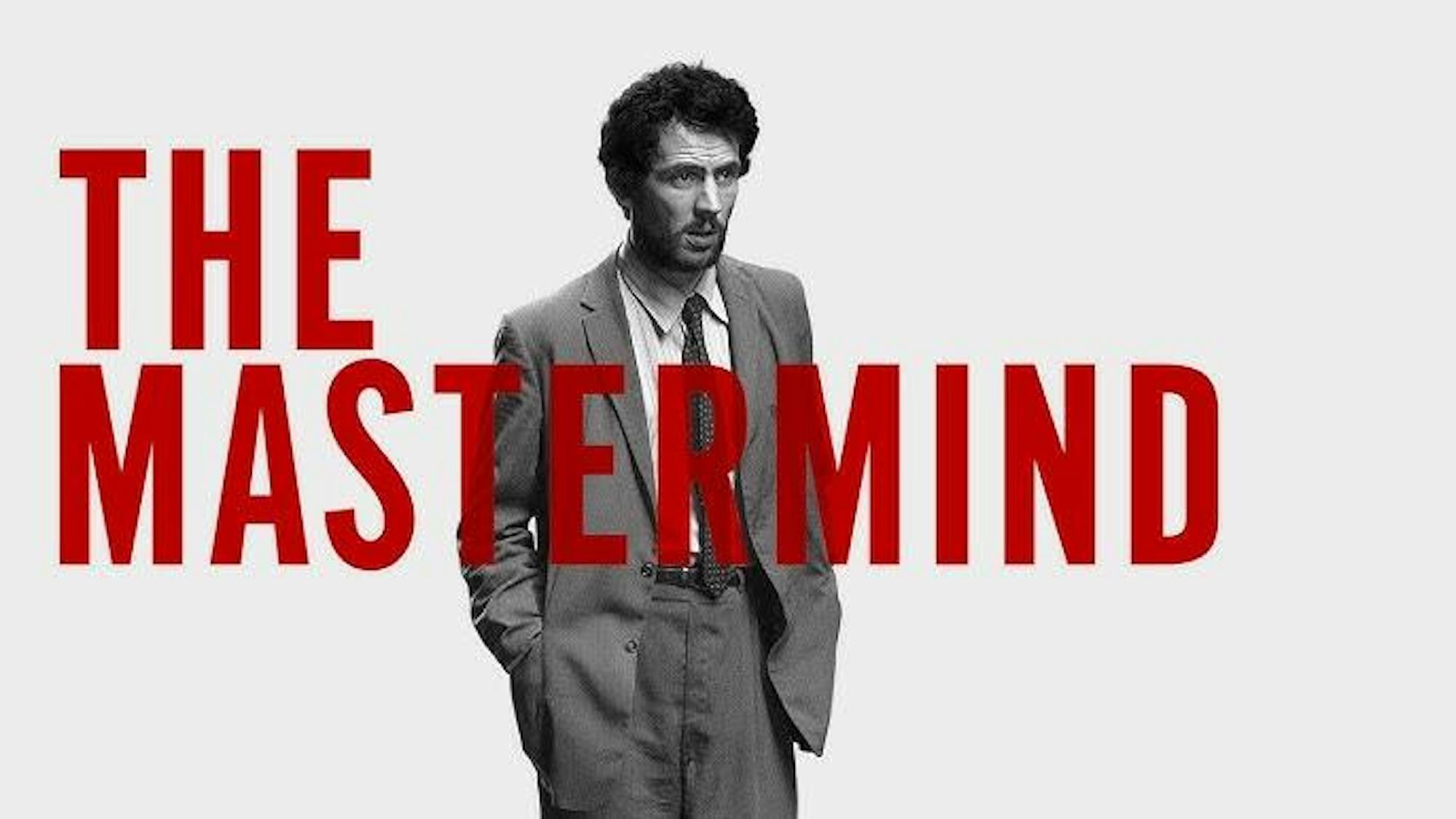
No film this year has received promotion quite as perfect as The Mastermind; a film about an art heist carried out in broad daylight, released less than a week after the Louvre art theft, setting the world ablaze. Audiences in the mood for a classic heist film à la Ocean's Eleven won’t find the thrills they’re looking for in The Mastermind. What Kelly Reichardt offers is much deeper — the portrait of an aimless man, certain he’s destined for something greater, but unable to find a way out.
The Mastermind follows James Blaine (Josh O’Connor), an unemployed husband and father of two. The story set up for him is nothing new — James’s parents nag him to find work, encouraging to find a position as a manager, but James believes he is destined for something more. He spends hours sitting in the Framingham Museum of Art, planning the perfect crime.
What makes The Mastermind great is that James hardly lives up to his titular accolade. He’s an out-of-work carpenter, not a master thief, and the team he puts together is hardly a collection of experts, but an inept group of amateurs. James imagines that the heist will be simple and boasts of having thought of everything. Sure enough, within the first 30 minutes, James successfully collects the paintings, albeit with a few stumbles along the way. It’s the next part of the plan that James hasn’t thought through: what comes next? As his heist hits the news and the police begin searching for the culprit, James’s life begins to crumble.
The Mastermind is based on a real art heist that occurred in my hometown, Worcester, Massachusetts, in 1972. Despite this being the first art theft committed at gunpoint, the Worcester Art Museum heist is little remembered, for good reason: the next month, all the paintings were returned. This subdued heist makes perfect material for writer-director Kelly Reichardt, known for her contributions to minimalist, slow cinema and also endeared me to the film immediately. There’s nothing I love more than New England in autumn, and Christopher Blauvelt’s cinematography captures the quiet splendor of a Massachusetts fall gorgeously. Much of the film is made up of shots of Josh O’Connor walking through picturesque landscapes, backed by Rob Mazurek’s jazzy score. These elements perfectly set the languid pace that James follows, bringing the audience along not on a high-speed chase, but a contemplative walk through his past.
Even as James’s life unravels around him, he ambles through the film with no sense of urgency. He continues to believe that he’ll find a way out of every situation, without putting any energy into planning these escapes. His blind confidence is somehow never as frustrating as it might be if played by another actor, but Josh O’Connor’s charisma and likeability makes his missteps amusing, not agitating. Reichardt certainly doesn’t look down on her protagonist, even as she writes him into one bad situation after another. The film’s humor keeps the tone lighthearted, allowing viewers to understand James’s faults without casting judgement on him. The characters in the film all have their own opinions on his heist — some scorn him, some welcome the excitement he’s brought to their lives and others are simply baffled at how little he thought his theft through — but the film itself never tells you how to feel about James. Is he really so far removed from our own experiences? Aren’t we all guilty of watching a heist film and imagining how we would commit the crime ourselves? James’s arrogance comes from a place familiar to us all, making each step of his journey harrowing to watch.
The Mastermind is really a character study more than a heist movie, and one that is reluctant to let us inside our protagonist’s head. By the end of the film, it’s still unclear why James stole the paintings in the first place. But his story remains a familiar one, as he trades his life of domestic comfort for uncertainty and danger in the attempt to rise above his station. Like much of Reichardt’s filmography, The Mastermind is a fascinating study of the effects of capitalism and toxic masculinity on society. It’s slow and reflective, but never loses its sense of humor. It certainly may not be as exciting as the heist we’re all talking about in real life, but The Mastermind offers an interesting perspective on why these crimes are committed, and why, decades after the theft of the Worcester Art Museum, an art heist still has the power to capture our cultural imagination.
Nicholas York is a junior in the School of Arts and Sciences. He can be reached at nay22@cornell.edu.
‘Projections’ is a column focused on reviewing recent film releases.
Nicholas York is a member of the Class of 2027 in the College of Arts and Sciences. He is a columnist for the Arts & Culture department and can be reached at nyork@cornellsun.com.