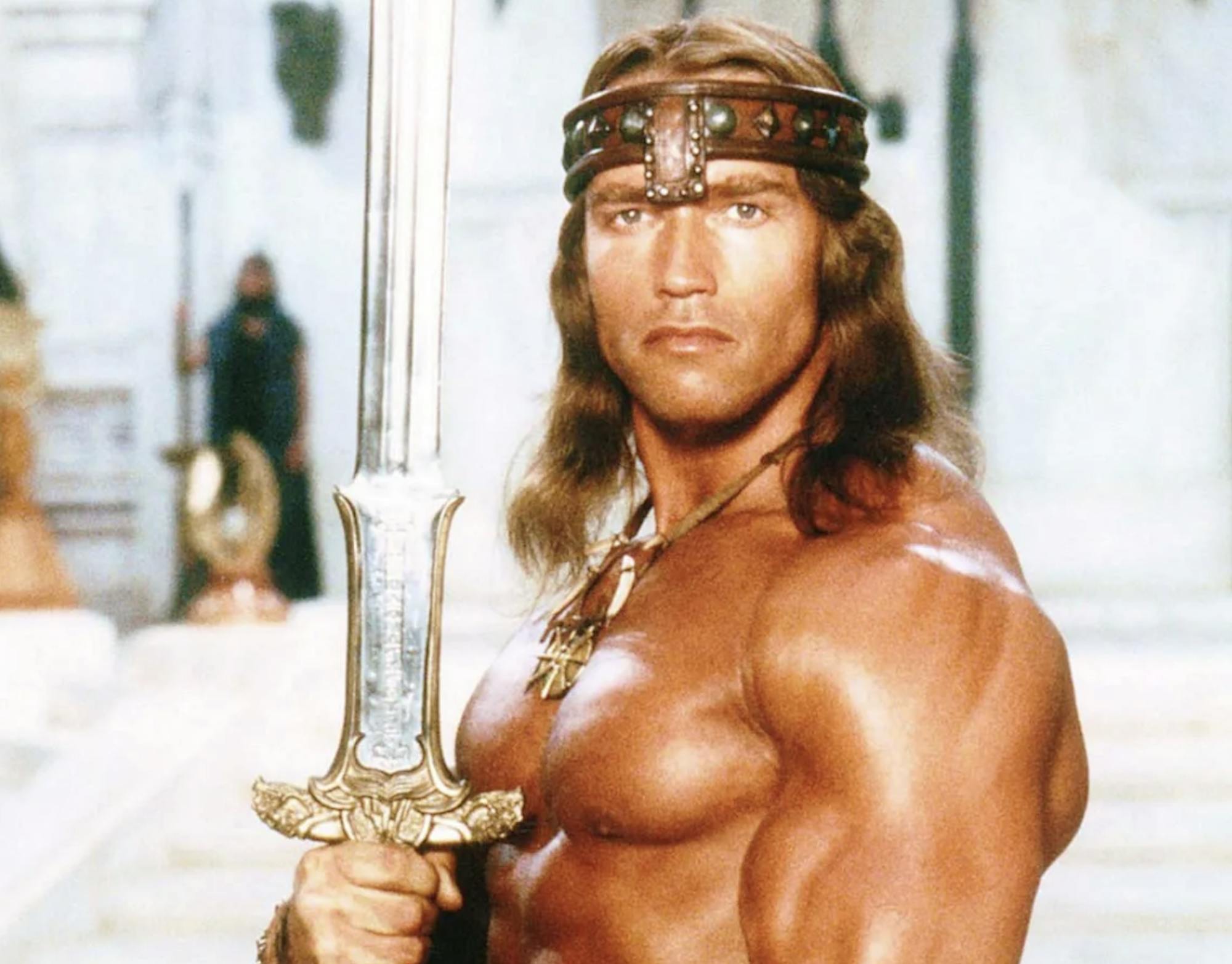
Filmmaking has changed dramatically since the 1980s. Advancements in technology, from visual effects to production equipment to home media, have altered how audiences see films and how creators market to audiences. However, perhaps no movie genre has been transformed as much as sword and sorcery. Often said to be birthed with Robert E. Howard's Conan the Barbarian stories, sword and sorcery is a realm of epic heroes, dark forces, battles of steel, magic and struggles for the fate of the world. As a movie genre, sword and sorcery saw its golden age in the ’80s, but has since petered out, restricted to low-budget movies with sub-par actors and garish effects. Today, with the film industry’s heavy reliance on computer-generated imagery and the spread of artificial intelligence, we have to wonder if the magic has faded forever, taking sword and sorcery with it.
In 1982, Conan the Barbarian came to the big screen with the release of director John Milius’s take on Robert E. Howard’s legendary story of the same name. With a budget of $20 million, the movie ended with a worldwide box office performance of almost $80 million, bringing in four times the cost of creating the movie. It was this movie, and its success, that served as the standard for most forthcoming sword and sorcery films, until the release of The Fellowship of the Ring in 2001. Conan the Barbarian remains a cult classic today, and it owes much of its longevity to the nature of the production. Production designer Ron Cobb set the film in real locations across Spain while also blending in meticulously-crafted sets in studios. An animatronic puppet was used for the scene where the villainous mage Thulsa Doom transforms into a snake. Everything about the movie feels real, because it is, in a sense. The human element of the movie’s design makes a stark contrast to today’s computer element. When Conan’s story was recreated in 2011, this time with Jason Momoa instead of Arnold Schwarzenegger, all the human quirks of the old movie — the elaborate sets, the mildly-cheesy snake animatronic — were gone. Creators relied more on CGI than artisanship.
This is why sword and sorcery, as a movie genre, might be over. The methods used to bring these types of films alive are now themselves almost dead. Today, watching fantasy or science-fiction movies in theaters often leads to trying to become emotionally invested in watching two CGI monsters fight each other. While there are some arguments that computer-generated imagery takes some measure of imagination, it still comes off as fake and untouchable to audiences, and that imagination could better be spent in utilizing tactile resources in set design and costume creation. One of the best examples of costume design as a feat of human ingenuity is the appearance of the Lord of Darkness in the 1985 film Legend. The Lord of Darkness, played by Tim Curry, is the main villain of the story. The character has massive horns, a satan-like appearance and extensive makeup. Tim Curry spent upwards of five and a half hours becoming the Lord of Darkness. Everything was done to an actual person by actual people. If the Lord of Darkness were to be recreated in a movie today, chances are the actor would have green dots on their face and CGI plastered on top.
Another aspect of sword and sorcery movies from the 1980s that lends to their appeal has been smoothed out by technology: fuzzy picture quality. It may seem counterintuitive to argue that blurry is better, but the picture-perfect visual look of today’s films makes movies too clear. When audiences sit down to view an older film, the fuzzier quality feels more real and more human. Sword and sorcery movies that are too clear become artificial, while simultaneously attempting to persuade audiences that heroes and magic truly exist. Sword and sorcery movies from the 1980s that retain a less-than-perfect aspect look just imperfect enough to make us believe.
With the introduction of artificial intelligence to major parts of filmmaking, like scriptwriting and visual effects, we get further and further away from the spirit and art of sword and sorcery movies. Instead of set designers laying out scenes by hand, artificial intelligence and CGI can buffer out the background. Instead of hours of work put into doing makeup and putting together the perfect look for a character, CGI can paste appearances onto actors. The sword and sorcery genre has always been about the power of humanity to conquer all, to create something beautiful and to come together for human connection. Now, it could be the first genre to fizzle out under the burgeoning surge of computer gadgets that erase the potential for human imagination.
Jane Locke is a sophomore in the College of Arts and Sciences. She can be reached at jal562@cornell.edu.
Jane Locke is a member of the Class of 2028 in the College of Arts and Sciences. She is a staff writer for the Arts & Culture department and can be reached at jlocke@cornellsun.com.