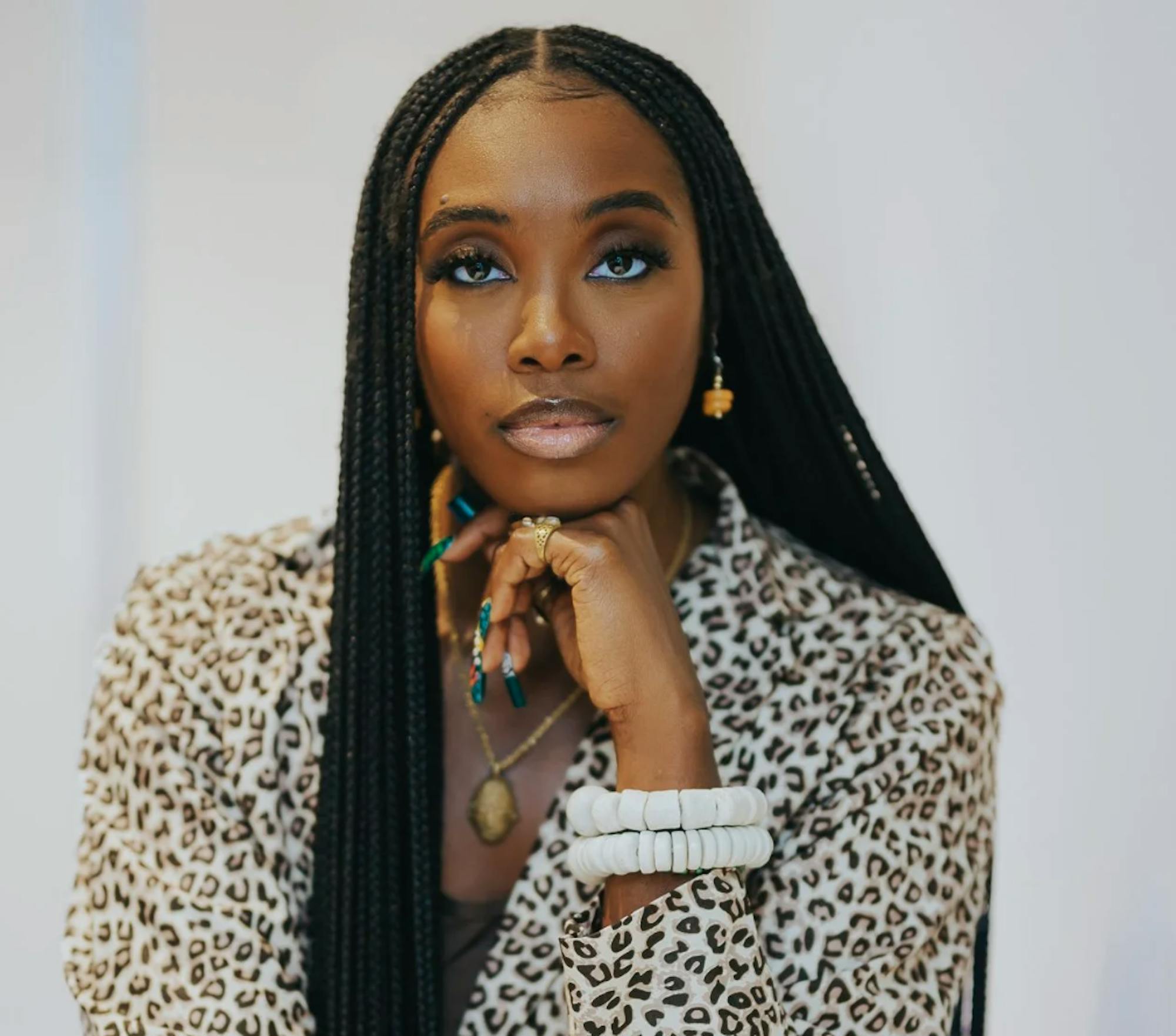
Despite having lived my entire life in the U.S., I know disappointingly little about Black history, culture and media. So, as a freshman with both the time and inclination to expand my perspective— as well as a strong love of literature — this semester, I enrolled in ENGL 2650: “Introduction to African American Literature.” Within the past month, Professor Chelsea Mikael Frazier, a scholar in Black feminist literature and ecocriticism, has already taken the course beyond the bounds of my expectations and managed to do so with texts as entertaining as they are informative.
My revelations began on the very first day of class when Prof. Frazier pointed out that Black, and particularly African American, narratives most often begin with slavery. This framing creates the false implication that the story of Black people in the U.S. also begins with slavery, propagating the decontextualization of Blackness from its African roots. In addition, it transforms every Black story into one of uplift, advancement or catching-up to Western standards of progress and knowledge. ENGL 2650: “Introduction to African American Literature” engages this issue by expanding the bounds of the African American narrative to include novels that portray Black characters, culture and conflicts preceding the transatlantic slave trade.
In my subsequent interview with Prof. Frazier, she explained that she inherited the course from her colleague Professor Derrick Spires, so the course texts have gone through many iterations, previously including those by Black authors such as Phillis Wheatley, Harriet Jacobs, Zora Neale Hurston and Toni Cade Bambara. The current version of the course is partly the result of Prof. Frazier’s past experience with Columbia University’s core curriculum. The core curriculum is based on the premise that one needs an understanding of the ancient sources of Western thought (e.g., Greek philosophy) to understand the Western world. By extrapolating this logic to her own area of expertise, Prof. Frazier realized that “you can’t understand Blackness in America, and thus Americanness, without understanding West Africa,” and designed the current version of the course to reflect this broader understanding of the African American narrative.
The first novel for the course, O.O. Sangoyomi’s Masquerade (2024), is set in a fictional 15th century West Africa almost entirely independent from the influences of Western colonialism. Masquerade follows a young woman born on the fringes of society who is kidnapped by the warrior king of the powerful Yorubaland and whisked into a world of political intrigue, dark love and calculated self-empowerment. With thunderingly resonant echoes to Western fairytale romances, Sangoyomi toys with this established canon and uses her novel’s unabashedly African cultural backdrop to refute Western exceptionalism — the belief that the West and its people possess unique traits that assert their superior position in the world — in everything from narrative form to societal conquest to sexual allure.
The course’s second text, The Healers (1979) by Ayi Kwei Armah, continues the more expansive Black narrative initiated by Masquerade. Like Masquerade, The Healers follows a young protagonist pursuing their dreams as they are thrust into the center of a tumultuous political world. However, in The Healers, Western colonialism has arrived to stand opposed to the protagonist’s efforts as it expands and exploits the divisions running rife through the African kingdoms.
It is only after these first two books that the course indulges the traditional narrative of Black American enslavement with Octavia E. Butler’s Kindred (1984) and, even then, only intermittently as the novel’s protagonist, Dana, time travels between 1976 and the pre-Civil War South. As a Black woman, Dana’s journeys into the past present a significant threat to her freedom and life; however these trips lie not within her own control, but are instead instigated by Dana’s distant ancestor: the white son of the owner of a small plantation. With Kindred, Butler examines the power of family ties and questions what it means to be moral in a world where slavery ultimately deprives everyone, Black and white, of a sense of community and of their humanity.
February is Black History Month, with 2026 marking Black History Month’s 50th anniversary and the centennial anniversary of its forerunner, Black History Week. As an Asian American without a single bit of Black lineage, I’ve found myself questioning my role within this time of commemoration. The Introduction to African American Literature class has taught me, however, that Black history reaches far beyond Black people. For example, the narrative expansion of Prof. Frazier’s course echoes the historical and contemporary connection of the Gayogo̱hó:nǫˀ people to the land of and around Cornell University. Similarly, there is an interesting parallel between the divisions that slavery spawned and exploited within the Black community and those raised within the Japanese American community during WWII internment. Black literature, culture and history can provide an entry point and lens through which to examine other questions of racialized dynamics in the U.S. and the world at large. In the end, Black history is American history, and as American history, it is our history.
With Black History Month drawing to a close, I look forward to continuing my own journey into this history with the final two texts of the course, If Beale Street Could Talk (1974) and How Long ’Til Black Future Month? (2018). And, I trust that you, too, will find your own ways to observe Black history, not just during Black History Month, but all year round.
Wyatt Tamamoto is a member of the Class of 2029 in the College of Arts and Sciences. He is a staff writer for the Arts & Culture department and can be reached at wkt22@cornell.edu.