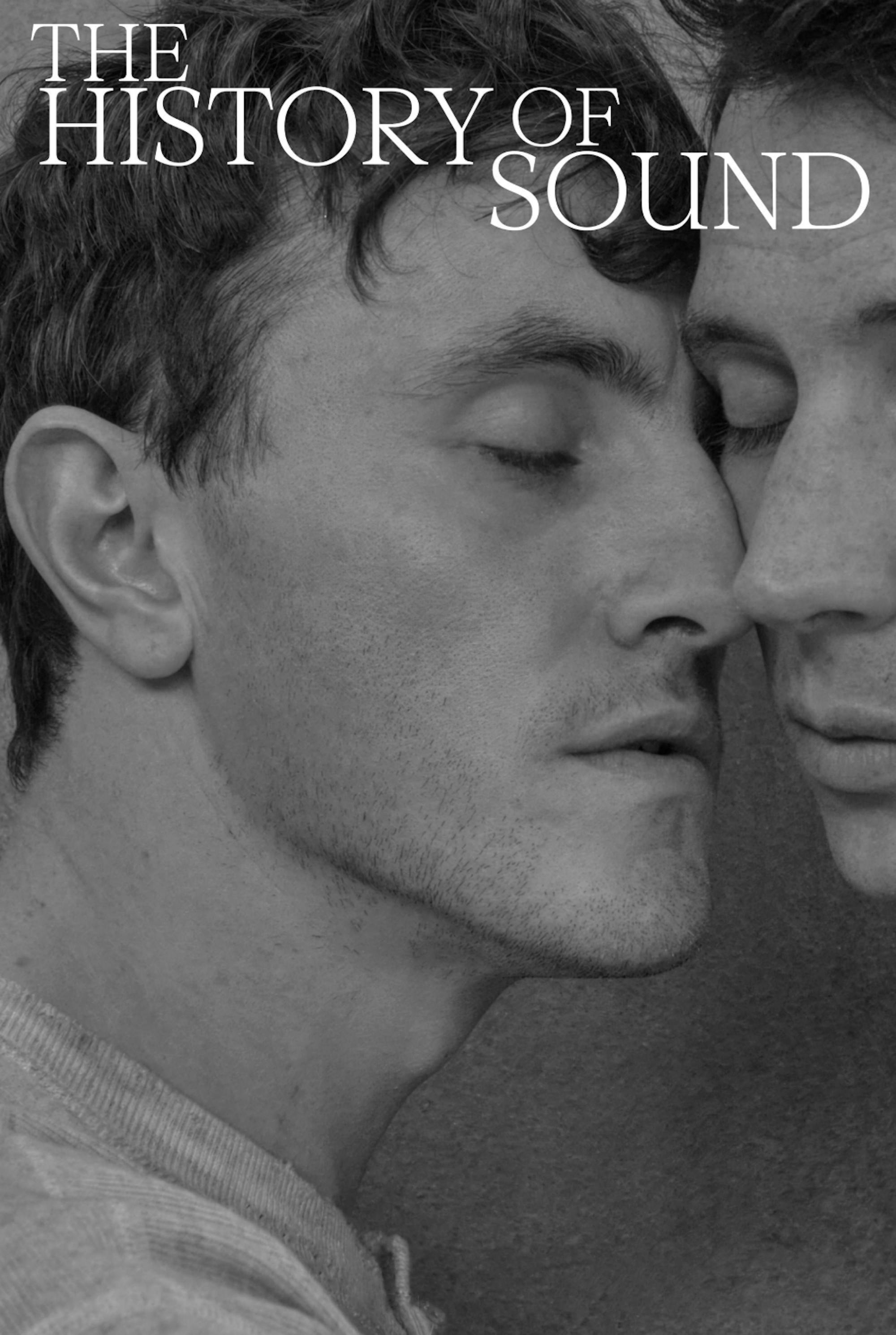
Just before World War I, two music students meet in a bar. Both lovers of folk music, though studying at a classical conservatory, they fall in love almost immediately. After the war, the two men travel to Maine together on a trip to capture and record the folk songs of the area, ensuring that the music and stories often forgotten are given a place in history. Years later, one of the men travels the world, attempting to recreate the happiness he only felt on that trip. The plot of The History of Sound, written by the author of the original short story collection, Ben Shattuck, and directed by Oliver Hermanus, is relatively simple. It’s slow-paced and deliberate, using much of its runtime to portray small moments in the life of Lionel Worthing (Paul Mescal), the protagonist and memories of his time with David White (Josh O’Connor). Despite this, The History of Sound is never boring, and in fact tells a story that has left me reflecting on the connection between music and memory days after.
Where The History of Sound might seem to fall out of step is in pacing. The film spends very little time fleshing out the relationship between Lionel and David. While this speaks to the tragically short time the two men spend together, it also makes it difficult for the audience to feel connected to the relationship that makes up the film’s emotional core. It also might make it feel like Hermanus and Shattuck are more concerned with making sure viewers come away heartbroken than with telling a compelling story.
Despite this, The History of Sound still manages to work. The central relationship still managed to connect with me, in large part to Paul Mescal and Josh O’Connor’s performances. Both actors expertly portray the nuances of their characters and are able to clearly show how they view the other without dialogue. Mescal’s Lionel is an inexperienced farmboy who, refreshingly, feels no shame over his feelings for David. He is fully committed to the other man, which Mescal shows in the loving way he gazes at O’Connor’s David. David, meanwhile, has seen more of the world, but struggles to commit to a relationship. His guilt is evident in his more restrained love for Lionel, and especially in the way Josh O’Connor only looks back at Lionel when he isn’t looking. His acts of love are only executed in private, requiring a level of acting prowess, for a fairly limited amount of screentime, that O’Connor is able to execute.
While it was the relationship that drew me to The History of Sound, I ended up being most interested in the role of music to the film. For Lionel, music is an essential part of life. He has a kind of synesthesia that allows him to see music and grew up seeing the folk songs of his hometown in Kentucky. David’s unconventional upbringing led him to travel Europe, where he and his uncle fell in love with “song-collecting” and recording local folk songs. The men connect over their love for the songs that are so often forgotten among their fellow conservatory students. As Lionel grows up, he finds himself unfulfilled pursuing a prestigious music career, and realizes that the only time he felt true happiness was on that trip to Maine in 1919. Was it because of the time he spent with David, walking through forests, isolated from the world around them and spending each night together? Was it because of the people he met, who shared songs that told their histories and family stories with him? The film never answers this question. In some ways, the relationship between Lionel and David is music. The two elements cannot be untangled.
On first watch, I was disappointed with the pacing of the film. I wanted to spend more time with Lionel and David, and less time with the grief of a missed connection. However, The History of Sound has not left my mind. Compared to Lionel, who is so ready to commit to David for life, David is frustratingly private. He refuses to share more than necessary about his childhood, or even his brief time in the war, with Lionel, or with us. The time Lionel spent with him is, in the grand scheme of life, so fleeting, and despite their connection, he never knew much about the man he loved. It’s only music that allows Lionel to find a deeper connection with David, and so music becomes more integral to the plot than anything else. The History of Sound isn’t a perfect film, but it’s a beautiful one, with an important story to tell, and that alone makes it worth watching.
Nicholas York is a junior in the School of Arts and Sciences. He can be reached at nay22@cornell.edu.
‘Projections’ is a column focused on reviewing recent film releases. It runs every other Monday.
Nicholas York is a member of the Class of 2027 in the College of Arts and Sciences. He is a columnist for the Arts & Culture department and can be reached at nyork@cornellsun.com.