What started out as a dream to recreate the decadence of the ’20s turned tangibly into a failure of musical standards. What tanked The Great Gatsby as a musical was not its lack of extravagance but to the turn away from what makes the essence of a musical in the first place. But while some parts of it deserve praise, I think it fails as a musical production.
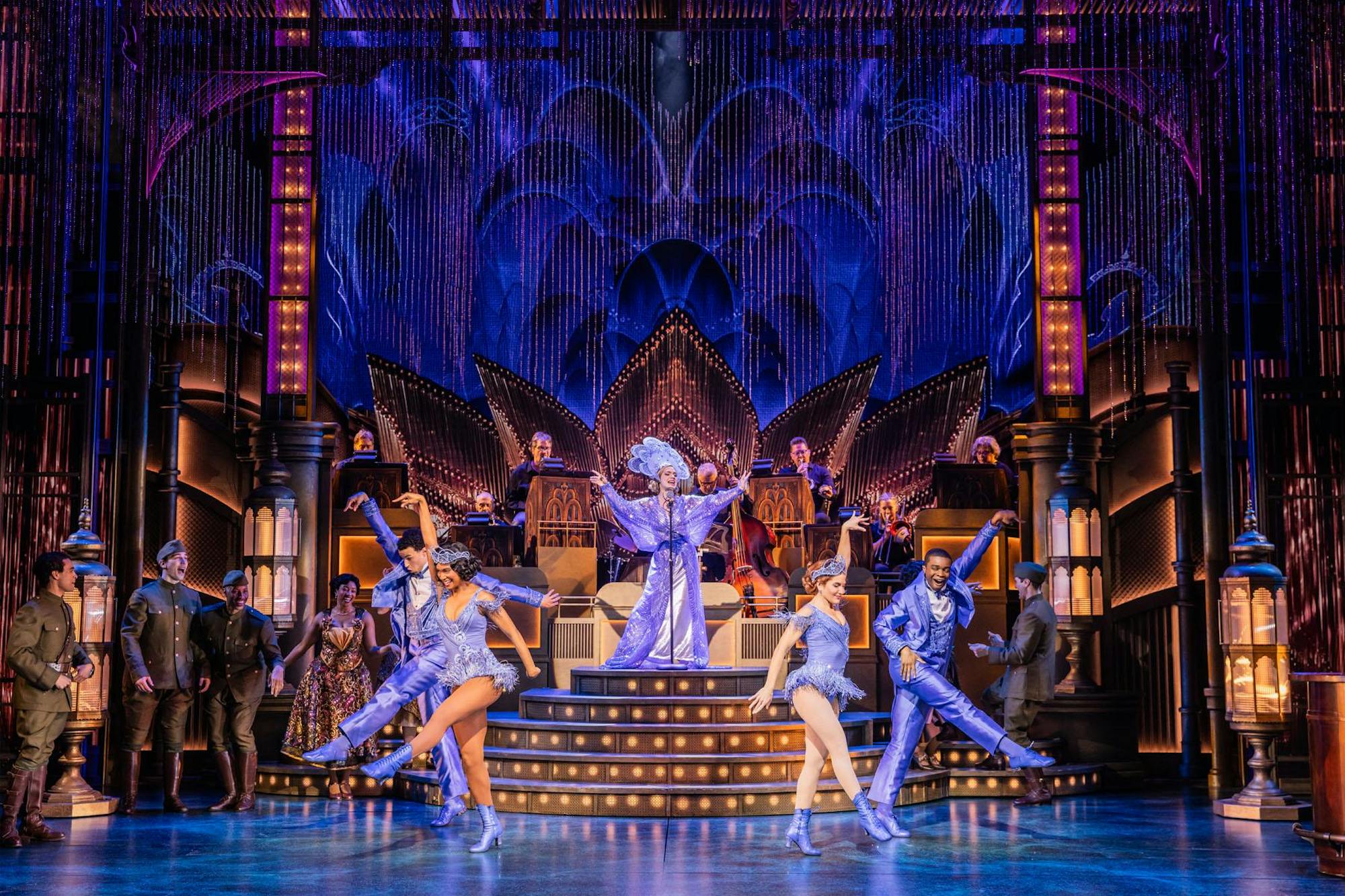
The sets were impeccably designed by Paul Tate dePoo III, matching the extravagance of not just F. Scott Fitzgerald’s original book but also all of the earlier movie productions of the story. The brilliant yellow car, the sparkling performance stage, and the small but cozy cabin of Nick Carroway are just a few of the wonderful aspects of the set design. Moving from one to the other seamlessly under the ever-watchful gaze of Dr. Eckleburg felt like we were transported into the novel.
The choreographer, Cedric Dodd, perfectly captured the excitement of the Jazz age through eclectic dances, seamlessly switching between both the actual styles that would have been performed during that time period and more modern and club-like dance forms. Given the importance of dance and social excitement to the characters of Gatsby, they definitely showed how everyone flocked to feel the exhilaration of attending one of Gatsby’s parties. The most memorable dance number was, of course, when the guests begin to show up for Gatsby’s party during the song “New Money”, where Jordan Baker (Linedy Genao) and Nick Carroway (Michael Maliakel) first attend one of Gatsby’s parties.
The costumes were amazing, especially from the opening number “Roaring On,” where everyone was covered in a mix of black and shining gold. Throughout the show, costume designer Linda Cho combined both the reserved elegance and gaudiness of the 1920s. Going from the soft and flowy, classically reserved day looks to the outrageous party looks had the whole crowd enamored. One of the more interesting outfit choices was to put Jordan Baker (Linedy Genao) in a glitter-covered green off-the-shoulder top, but to pair it with a more conservative pair of pants. It felt like blending both the decadent and conservative aspects of 20s society. Though, putting a woman in pants was already an object of scandal for that time period.
Neither of the main leads was particularly memorable. Ryan McCartan felt like he was overplaying Gatsby. Yes, Jay Gatsby was a very dramatic character, but it felt like McCartan was showing Gatsby as losing his composure and reticence too easily. As for the fair and isolated Daisy Buchanan, played by Aisha Jackson, it felt as though she lacked the sort of innocence and lightness that Daisy has in the book as well as in other adaptations. Daisy is supposed to have a somewhat unserious tone about her, like she at once knows what she is doing but is having so much fun with it. Jackson simply did not capture that. She felt too serious and brooding at times, which destroyed the illusion of the young and foolish wife trying to escape her husband’s affairs and have a bit of her own fun.
In my mind, Michael Maliakel, who played Nick Carroway, had by far the most memorable performance. He captured all of the ruminating, awkward, and quirky aspects of Nick Carroway. Though the tallest in the group by height, he often seemed like a little kid at the start of the story, always being pushed around by the views of the people around him. Maliakel perfectly portrayed Nick as both an immature narrator who was yet undecided as to his perceptions of the people around him, a rather comedic, nervous love interest, but then a man who is convinced in his views of the world.
Nick’s romantic partner (in an interesting deviation from the original story), Jordan Baker, was played to perfection by Linedy Genao. Genao managed to capture both the rebellious nature of Jordan, while also reminding us that she, too, is part of their awfully ostracizing upper-class society. Something that drives Nick Carroway away from her, and makes him realize the true nature of the wealthy people of East Egg.
In the end, much like the light on Daisy’s dock that Gatsby had been reaching for but was never quite able to get to, the creatives behind Gatsby also failed to fulfill their aspirations and give the original story a worthy musical edition. Though the sets, actors, and choreographies were incredible, Gatsby really fails as a musical because of, well, the music. None of the songs were memorable. None of them really lasted from the moment you left the theater. The only memorable musical moment I can remember is when Ryan McCartan (Jay Gatsby) belts “Daisy…”, and that I only remember because of the sheer number of times this occurred. The musical failed at the most essential part of theater, to produce music or even one song that you would hum walking out of the theater. What differentiates a musical from a regular play or show is exactly that, the music. In this sense, no amount of decadence and gaudy glitter could compensate for a poorly composed soundtrack.
Lusine Boyadzhyan is a sophomore in the College of Arts and Sciences. She can be reached at lboyadzhyan@cornellsun.com.

Lusine Boyadzhyan is a member of the Class of 2027 in the College of Arts and Sciences. She is a staff writer for the Arts & Culture department and can be reached at lboyadzhyan@cornellsun.com.