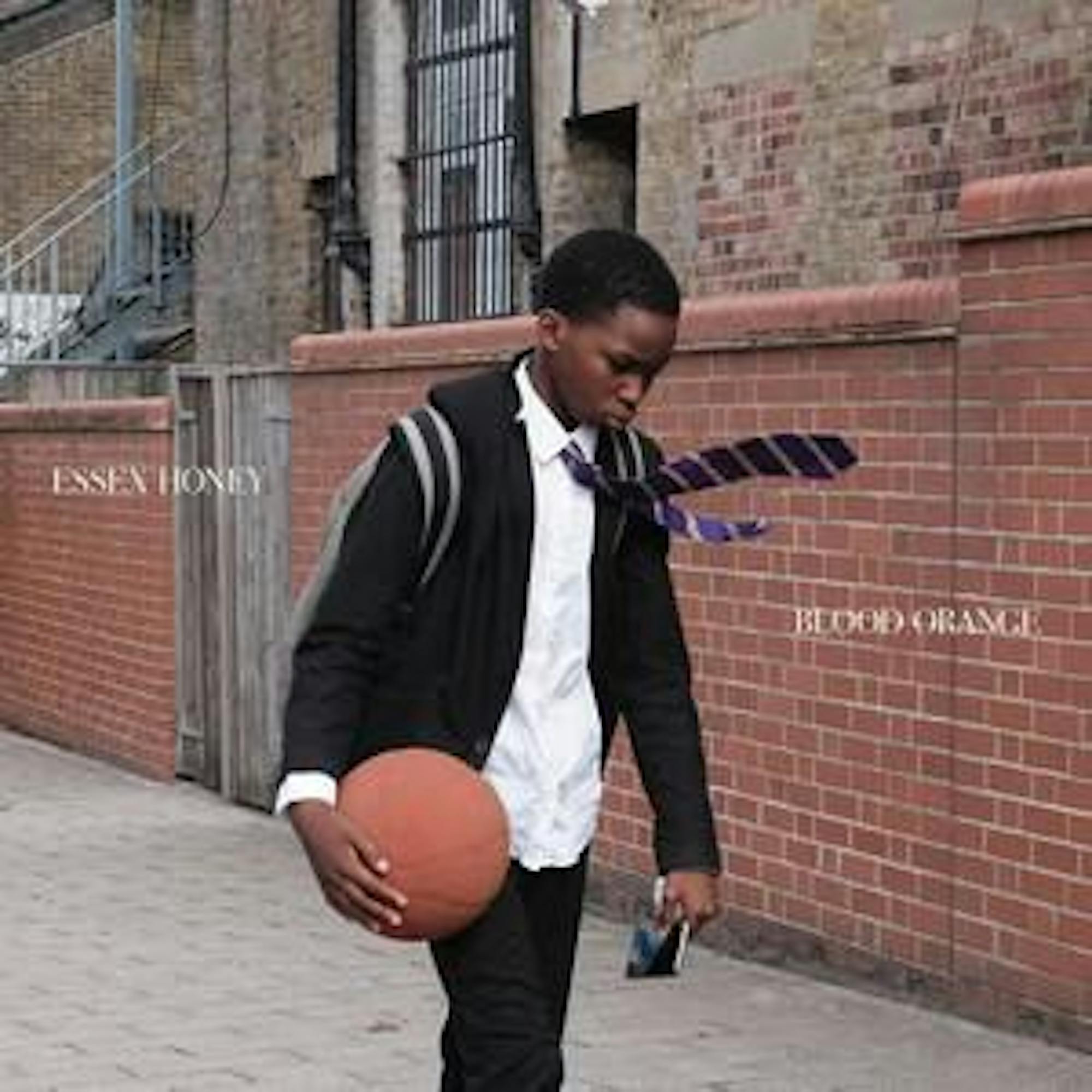
Dubbed as one of 2024’s “songs of the summer,” Blood Orange’s 2011 track “Champagne Coast” made an unexpected rise to TikTok superstardom last year, hitting platinum over a decade after its original release. In the following months, Blood Orange’s online catalogue has sparked mass engagement from a newer, younger generation of listeners who quickly latched on to tracks like “Best to You” (2016), “You're Not Good Enough” (2013), “The Complete Knock” (2011) and “Charcoal Baby” (2018). Blood Orange as a musical entity is best described as a one-man project headed by singer-songwriter, instrumentalist and producer Devonté Hynes. In each of his four, now five, studio albums, Hynes fashions Blood Orange into a sound collection of the myriad artists he brings into the studio, sometimes featuring up to four people in the creation of a singular song. Making an art form out of vibe curation, Hynes is a master of suspending his listeners in the enormity of feeling without tying his narration neatly in a bow. Melding layers of instrumentation with alt-R&B, jazz, pop and ’80s new wave, Blood Orange’s discography blurs the lines of intimacy and vastness, creating an atmosphere that is deeply personal yet universally understood by its listeners.
As a longtime lover of Hynes’ production work for artists like Solange, Mac Miller, FKA Twigs and Tinashe, the release of his fifth studio album was a welcome surprise. After all, Blood Orange hasn’t dropped new music since his August 2018 masterpiece, Negro Swan. The album’s three pre-releases, “The Field,” “Somewhere in Between” and “Mind Loaded,” immediately set my expectations high going into my first listen. Even with a small taste of Essex Honey in my mouth, the stark musical variations between each of the songs paled in comparison to the ebbing sensation of grief threading through them. “The Field,” the first of the album’s songs to be released, employs the talents of Tariq Al-Sabir, Caroline Polachek, Daniel Caesar and The Durutti Column to introduce a closer look into the personal life of Dev Hynes. The lyrics, “Hard to let you go / See you when I know / why it’s always grey,” though shrouded by dreamy musical textures and nostalgic images of the English countryside, evoke a grief that is soft yet unforgettable. Hynes delves further into the loss of his mother in “The Last of England,” which includes a 45-second audio clip of the two having a conversation during their last Christmas together.
The album isn’t overtly explicit in its exploration of Hynes’ English upbringing, nor does it directly detail the passing of his mother in much depth. Whether bouncing from airy cohesion in “Countryside” to disorienting fractals of guitar and saxophone in “Scared of It,” Essex Honey stays true to the nebulous heart of Blood Orange albums past and present. A far cry from the sleek urban style of Coastal Grooves, whose tracks flow seamlessly from one to the next, Essex Honey finds its sound in a disjointed journey through the life and loss of Dev Hynes. Wistful, grounded and fiery all at once, Essex Honey is in its entirety a portrait of grief, how it can suffocate you one day and remain neatly tucked into the corner of your pocket the next. The unpredictability of Hynes’ loss is only detectable when you listen to the album as a singular entity rather than a jumble of songs, allowing currents of wordless harmony in “Westerberg” and “Vivid Light” to linger in your mind like half-forgotten memories. Instead of a continuous arc that ends in Hynes’ resolve to grow past his grief, Essex Honey is a gentle yet painful reminder that loss is both inevitable and nonlinear.
My favorite songs from Essex Honey, a tie between “Vivid Light” and “Mind Loaded,” perfectly encapsulate the essence of the album in vastly different ways. “Vivid Light” is a seamless collaboration between lyricism, trailing flute and steady piano throughout. Minimalist instrumentation allows Hynes’ vocals to breathe, giving way to the emotional weight of lyrics like “It’s like you’ve never seen / Your anger at large / And the more you hide / The smaller you are.” Reflecting on creative blocks (“It’s like you’ve never touched / A six-string guitar / And the more you write / You never get far”) and a desperate desire to run from pain (“I don’t wanna be here alone / Oh, I wanna run away”), “Vivid Light” is a meditation on the fear of losing your identity to memories you can’t escape. Conversely, “Mind Loaded” is dominated by the overlapping harmonies of Caroline Polachek, Lorde and Mustafa, whose voices serve less to clarify the lyrics than to blur their edges. One with the song’s jazzy inflections, the vocals of “Mind Loaded” add a nuanced, almost communal element to the grief that embodies Essex Honey.
Ultimately, Essex Honey stands alone in its defiance of fluidity. It’s an album that rewards the patience and complete surrender of its listeners. To skip around and fragment its storyline would be a disservice to your experience, and I urge you to enjoy each song in order. As the fleeting softness of one song swells into the reverberating darkness of another, the record transforms into a lived story of emotion and memory. To me, Essex Honey is more than an album; it’s a passage of grief and resilience best enjoyed by allowing every note to play in the order that Hynes intended.
Charlotte Feehan is a sophomore in the College of Arts and Sciences. She can be reached at cgf47@cornell.edu.
Charlotte Feehan is a member of the Class of 2028 in the College of Arts and Sciences. She is a staff writer for the Arts & Culture department and can be reached at cgf47@cornell.edu.