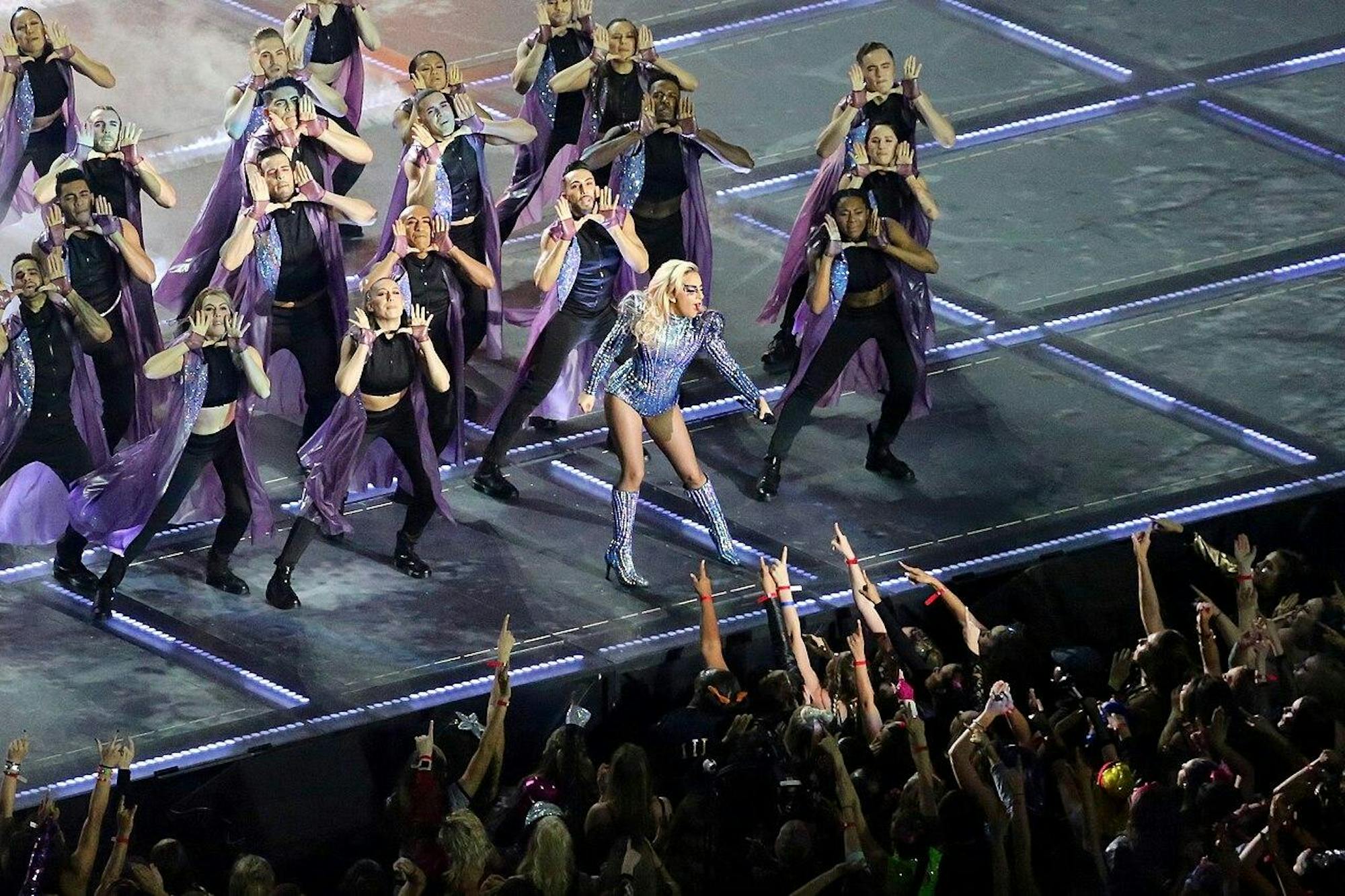
As someone who can’t even pretend to care about football, I’ve always consumed the Super Bowl as an extravagant 15-minute concert bookended by wacky commercials and sweaty men tackling each other. My Super Bowl memories from childhood feature the iconic performances of Bruno Mars, Beyonce and Left Shark (I mean, Katy Perry). It's the live music acts, impressive set design and creative costuming of the halftime show that solidify the Super Bowl into the subconscious of the country — not the football game itself.
What was halftime like in its emergence, before it boasted celebrities invoking awe and creating controversy? Hold on to your hats, because we’re heading back to 1967 — a rambunctious year for our country, to say the least. But as a preamble to the birth of Sgt. Pepper, the Summer Of Love, the monumental civil rights protests and outcries for peace in Vietnam, we kicked off the year in true American fashion. It was January ’67, and fans had paid up to $12 dollars to pack the stands of the Los Angeles Coliseum for the first ever AFL-NFL World Championship Game. The country had just finished watching the beginnings of a (dare I say it) heated rivalry play out between the NFL’s Green Bay Packers and the AFL’s Kansas City Chiefs. The air was abuzz with tension and excited chatter as the field cleared of players and was repopulated with strapping young lads in shako hats and stiff jackets, an array of shiny instruments in tow. It was the nationally-renowned University of Arizona Symphonic Marching Band, and the crowd could not have anticipated the spectacle these boys were about to put on for them.
“We had a big sound,” said Jerry Gay, a trumpet player in the Arizona Marching Band that year, “when we played, you could feel it.” The band, which was known then as “The Best Band in the West,” had the honor of playing halftime alongside members of the Grambling State Marching Band and famous trumpet player Al Hirt. Familiar tunes like “The Sound of Music” and “William Tell Overture” resonated out from the perfect formation of uniformed players marching around the two giant footballs that served as the set design. Suddenly, a futuristic rumbling echoed through the stands and almost overtook the music. To the crowd’s surprise and delight, two men flaunting jet packs took flight from the wings and came to hover above the instrumentalists. “Nobody had ever seen anything like that,” Gay recalled about the historic performance. The football game eventually resumed, with the Packers beating the Chiefs 35-10, but the Arizona and Grambling State Marching Bands’ spectacle reverberated in the eyes and ears of the awestruck crowd (and the 51 million people watching on live TV).
Grambling State was invited to play again in ’68, and for the ’69 game (when the term “Super Bowl” was coined) Florida A&M University band was featured alongside bands from Miami high schools. Soon the San Diego State, USC and Florida State bands joined the ranks. The shows began to have themes, often tributes to jazz greats like Ella Fitzgerald, Louis Armstrong and Duke Ellington. High schoolers were invited to join the collegiate bands, which I imagine must have incited a feeling of nationwide pride and connectivity. The games back then probably felt like supersized, televised versions of local football matches. Naturally, there must have been a turning point — a performance that turned marching band jazz medleys into the hullabaloo of halftime today. And thus we zoom into the year 1993: Super Bowl XXVII. Michael. Jackson. The show that rocked the Rose Bowl as the producers tried to fight against the counterprogramming of the game. That was the beginning of the end: Every Super Bowl since has spotlighted a star bigger than the last, and the viewership has never faltered.
One Sunday. One game. One performance. The anticipation of the tournament as two teams climb the ranks. The collective breaths being held as the artist is announced. Most notably, the gift of a platform that grows in size every year to an artist that may stand as a symbol for something bigger. This year, for Superbowl LX, Bad Bunny paid tribute to his Puerto Rican heritage through his colorful and animated performance. Although not his Super Bowl debut, as the Puerto-Rican rapper made a cameo with Shakira in 2020, the announcement of Bad Bunny as halftime headliner caused such backlash among the increasingly divided U.S. population that some on the more conservative side felt the need to host an alternative. This outcry likely has to do with the star’s previous public statements against ICE and the immigration injustice taking place throughout the country. Even though Bad Bunny displayed no overt political activism in his performance — and in fact spread a message of love, unity and American pride — an “All-American Halftime Show” hosted by Turning Point USA still brought in Kid Rock to serve up some hearty country music with a side of religiously-charged propaganda.
The halftime show has been so amplified that small-minded people (our President included) would go out of their way to sponsor and air a separate performance, one that has nothing to do with the football game, just so they won’t have to watch an artist they don’t agree with announce truths they don’t want to hear. So I can’t understand a word of what Bad Bunny says; I’d rather watch a world-famous rapper sing in Spanish than hear America’s most mediocre band boast about sleeping with underage women. But I digress, and now I’ll bring my actual point home (or, to a touchdown?). These recent antics prove that the Super Bowl football game has long been dominated by the chaos and drama, the glitz and glam, the 15-minute madness that its halftime show has become.

Maya Blanchard is a member of the Class of 2026 in the College of Agriculture and Life Sciences. She is a staff writer for the Arts & Culture department and can be reached at mblanchard@cornellsun.com.