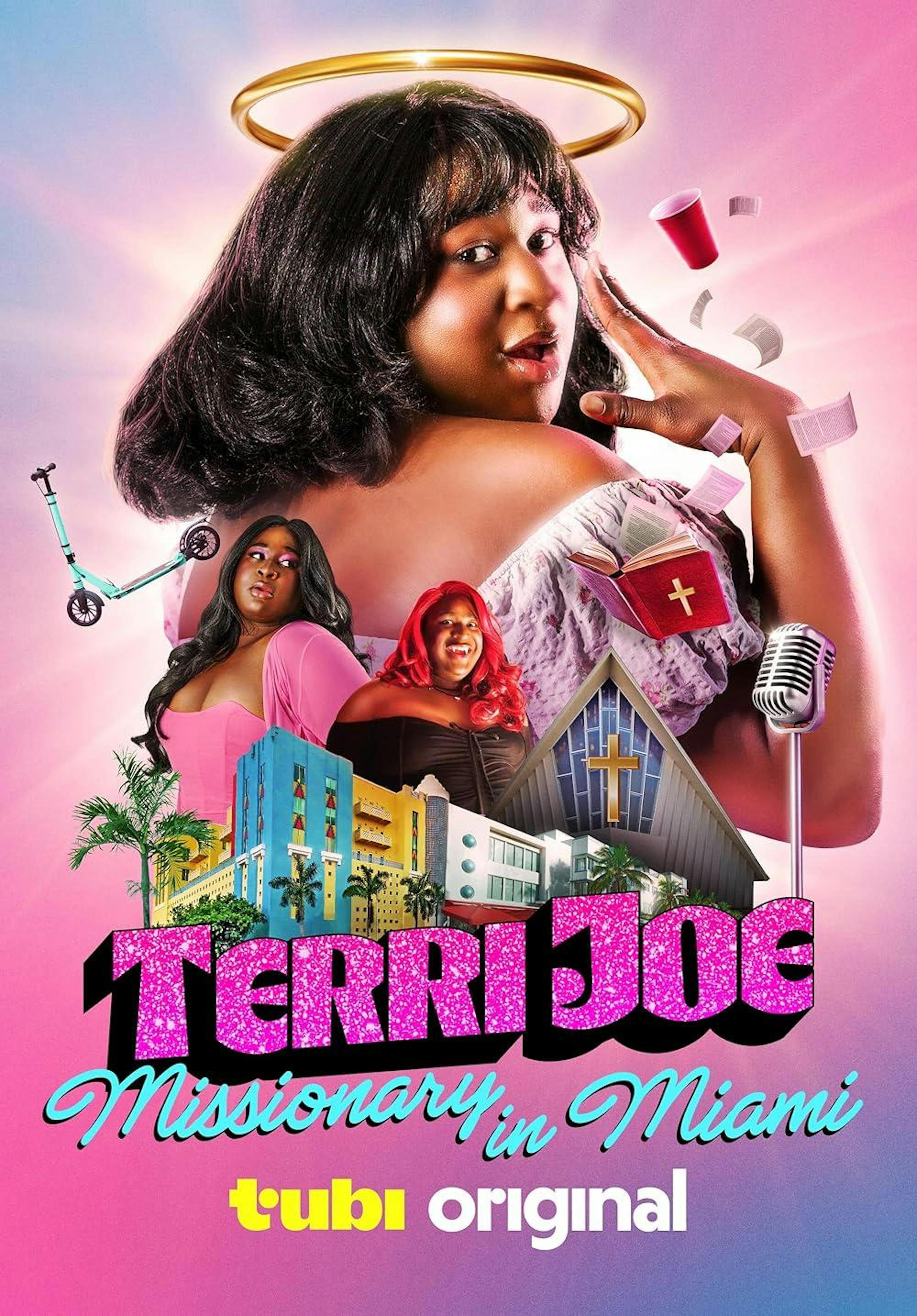
If you’re anything like me, someone who has admittedly accrued an ample amount of screen time during lulls over the semester (perhaps slumped over in a couch in cocktail lounge with a computer propped open but a phone in hand, scrolling through the depths of TikTok), then you’re probably familiar with Psyiconic. Known for his shock-value livestreams portraying the character of Terrie Joe, Kelon Campbell quickly surged to fame in 2022. He managed to captivate millions of viewers by wielding nothing but a black wig, a milkmaid dress, a cross necklace and his signature brand of jarring satirical humor.
The character of Terrie Joe, ingeniously portrayed by a Black man, hyperbolizes the homophobic and racist hostility often associated with a Southern Christian white woman. His quick-wittedness — perfectly evident when he cut off Trisha Payta’s “I love bacon” with a sharp, “Isn’t that cannibalism?” — has viewers describing his back-and-forth satire as somewhat akin to watching a tennis match. From snickering at his “culturally significant moments I still think about in history” compilations, I grew to enjoy watching Psyiconic’s livestreams, paying no mind to where the evolution of his character might be headed.
Imagine my surprise when my For You Page abruptly revealed the trailer for his new film, Terrie Joe: Missionary in Miami. I was taken aback, and rightfully so, by the fact that he was able to garner enough attention with his unconventional humor to attract actual filmmakers, albeit Tubi filmmakers. I quickly texted my friend, eager yet skeptical to watch the film with her, expecting a culmination of Terrie Joe’s promising tropes and an unpredictable script. I mean, surely the TikTok edits knew exactly what they were hyping up?
Yikes. It only took my friend and I about 20 minutes of watching before we traded a side-eye that said, “Ah … I see why this is a Tubi production.” The script, the plot, the characters and most critically, the humor, all fell completely flat. Yes, the vulgarity was there, but it promptly fizzled out within the first few minutes. The very humor that once felt like a spontaneous stroke of genius now felt strained and poorly executed, as if the character’s sharp edge had been blunted by a clunky, over-rehearsed script.
Even the vibrant backdrop of Miami couldn’t save the thin storyline of a Southern Belle on the run for the Lord, as the stakes felt non-existent and the ‘wacky’ criminals were more grating than funny. I’m all for protecting queer art, but is it wrong to suggest that this project should never have strayed further from the livestreams? There is a specific, chaotic spontaneity in a TikTok Live that simply cannot be scripted or storyboarded.
The real problem is that the movie builds a wall where there used to be a window. When I’m watching a livestream, I feel like I’m actually in the room — or at least in the pews — waiting to see who’ll be the next ‘sinner’ that Terrie Joe decides to pounce on. Without that digital friction and the immediate feedback of a scrolling chat, the character feels oddly isolated, and the humor loses the communal energy that made it a phenomenon.
At the end of the day, Kelon Campbell’s talent is undeniable, but Missionary in Miami serves as a reminder that some lightning isn’t meant to be bottled. There is a reason we all spent our semester lulls glued to his lives instead of watching a sitcom; the thrill of the ‘Terrie Joe’ experience is the high-wire act of seeing how far he can go without a safety net. While the film was a disappointing detour, it doesn't take away from the cultural shift he managed to create with a wig and a ring light. It just proves that for a character as chaotic and subversive as this one, the best seat in the house will always be on the other side of a smartphone screen.
Aima Raza is a member of the Class of 2027 in the School of Industrial and Labor Relations. She is a staff writer for the Arts & Culture department and can be reached at araza@cornellsun.com.