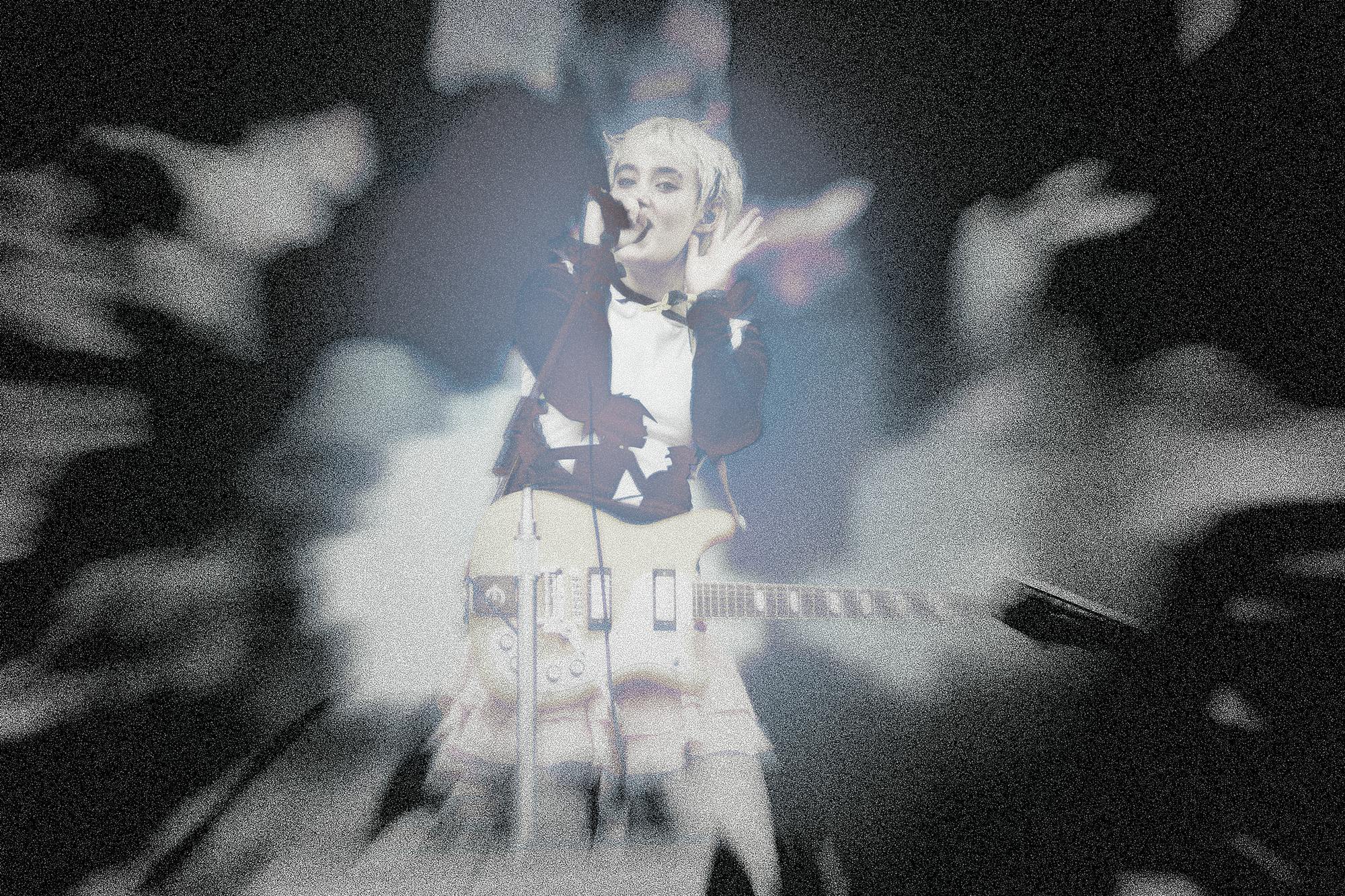
In the six years of their existence as a band, NewDad have reached milestones that even established acts would envy. Having grown out of a secondary school collaboration, the Irish collective released an array of singles that merged the ring of bedroom pop sentimentality with hazy guitar soundscapes, as if simultaneously nodding towards both Clairo and Slowdive. Mature in their sound while simultaneously evolving as poets, NewDad iterated through shades of teenage melancholy in compact packaging until 2024 — the year when MADRA arrived.
The band’s first full-length record remained loyal to their signature sound but gained in lyrical complexity. Despite reading as a youthful album, it did not shy away from heavier admissions. The narrator, both the victim and the perpetrator, is not prettifying their own experiences for the sake of shallow likeability — but Julie Dawson (guitar, vocals) finds a way to transmute gloom into glow. Through punchy metaphors and shimmering synth chords, the collective delivered a record that felt in equal measure reflective and confessional, laying bare the embodied contradiction that is the cusp of one’s early adulthood.
In the same year, the band landed a track on Life is Strange: Double Exposure. A part of a series that has become a rite of passage for the giants of sad indie, the game exposed NewDad’s music to a completely different audience — not alternative connoisseurs, but video game enthusiasts. Just a few months later, in 2025, the band crossed the Atlantic, appearing at some of the summer’s most significant festival stops, including Lollapalooza and Outside Lands. It’s never easy to bring bedroom-born gloom out into the August heat without losing impact, but NewDad embraced their midday slot, powering through a cohesive set that blended older favorites with singles from their upcoming album. Set to release on Sept. 19, Altar marks a new chapter in the band’s emerging history.
What will Altar sound like, and how do we even classify a band like NewDad — at once unique yet familiar to listeners steeped in the lineage of synthwave and shoegaze? It’s 3 p.m. on a foggy San Francisco afternoon, and the band is perched around a round media tent table overlooking the main stage. Fiachra Parslow (drums) and Sean O’Dowd (lead guitar) explain in unison, still buzzing with stage energy after their Outside Lands set: “We’re definitely inspired by The Cure, Pixies. We’re inspired by everything we listen to… and we don’t try to fit into something. It’s kind of detrimental, because it means you’re trying to sound like something.”
“When we were making the record, I was not listening to anything because I didn’t want to feel like I would be copying anything. But things do inevitably come into your subconscious and they filter their way into the songwriting – even stuff on the radio, like Chappell Roan,” Julie Dawson chimes in. An inevitable discussion on genre definition occurs: “I heard a funny… what was that? Sci-fi rock,” she announces theatrically before clarifying: “It’s actually not what we are.”
“Dubstep hardcore grunge,” Parslow adds helpfully. They’re not concerned with categorizations; it doesn’t change the process of writing, they explain, “so if someone who knows how genres work tells us that’s how it is, then we’ll be like – yeah, fine.”
“I think every time we do a new project, we want it to be different from the last. We don’t want to be one thing.”
Five years in, what’s changed? Julie Dawson explains: “We were 18 when we started and now we’re in our 20s — still young, but we’ve learned a lot in those five years: how to stand up for ourselves, what we want to be, how we want to be represented.”
“Even in our musicality, we’ve just progressed a little from playing together more,” Parslow adds. “The songs have gotten better because we’ve gotten a little better.”
“But we’re still kind of the same. We have the same things that we love,” O’Dowd concludes.
But change is inevitable, especially in a period of personal growth as loaded as one’s twenties. When asked about topics they naturally gravitate towards as compared to their earlier years, Dawson muses: “All the first music was about our teenage years, growing pains or whatever. Now it feels less insular — more about looking at the world, trying to find your feet. Moving from a small town in Ireland to London, figuring out where you fit in. You can’t always just write about being a sad teenager,” she says, eyes glinting with humor. “I can write about it forever, but now I’m like… get over it. Grow up.”
So what are NewDad most excited about offering to the world, now that their new record is almost here? “Our next song, Misery. This one we’ve been playing in this set through the past few months. It’s been getting such a good crowd reaction, more so than any song – the ones that people know, the other new ones.”
“We enjoy playing that one a lot as well, O’Dowd adds as Dawson nods enthusiastically.
“Even though today I had the wrong guitar on! I just wasn’t playing. It was still a great time,” she laughs.
But even while conquering new heights, every band always has a song they wish they had written. What is this song for NewDad?
“Big Empty Heart by The Cardinals”, Dawson drops immediately. “They’re another Irish band. Sam Shrink who produced our record just produced their record as well, and when I heard the song, I was like – I wish we’d done that. The Cardinals are amazing.”
“I Got Heaven by Mannequin Pussy. So beautiful”, O’Dowd offers his take.
“Pink Pony Club”, counters Parslow. The three burst out laughing.
“Everyone wishes they wrote every Chappell Roan song ever,” Dawson underlines solemnly. The laughter lingers, but beneath it shimmers a band deeply attuned to their own trajectory. With Altar, NewDad are no longer just tracing the contours of their melancholy — they’re pulling the world into their gaze, and the world keeps opening wider in front of them.
Arina Zadvornaya is a graduate student in the College of Engineering. She can be reached at az499@cornell.edu
Arina Zadvornaya is a graduate student in the Duffield College of Engineering. She is a columnist for the Arts & Culture department and can be reached at az499@cornell.edu.