

One of my favorite moments in all the Superman corpus takes place at a dinner table. The episode is “Comfort and Joy,” the bottle episode of the original Justice League animated series, where Clark Kent invites Martian Manhunter to spend Christmastime at the Kents’ to experience this staple of human culture. It is an unashamedly wholesome scene, painting a warm picture of the excitement Clark Kent feels at that time of year. This Superman, born outside Earth, with power beyond the imagination of the average human in this world, throws himself completely into the simple joys of this human holiday. It may seem meaningless within the grander scheme of superheroes and supervillains, yet these moments of comfort and joy mean everything to Superman, a man who still believes in Santa Claus.
This version of Superman has been missing for quite a while now. The Superman of Christopher Reeves and the original Justice League animated series has given way to all manner of darker reimaginings of the archetypical superhero. While an evil Superman has existed for as long as Superman comics have been in print, we now see more depictions of a Superman who seeks to rule over others as an all-powerful dictator. The evil Supermen of the past were usually either unwillingly influenced by an outside force or simply part of an alternate universe where all the good guys were bad. Yet, with the rise of newer depictions such as Injustice and Superman: Red Son, we see a Superman who turns authoritarian. In these stories, Superman does not simply become evil, he and his values become foundationally corrupt.
There is a good case for the works of Alan Moore, particularly with Watchmen, as responsible for this psychological turn within the superhero genre. Watchmen came as a shock within the previously clean and sanitized world of comic books. Here is a story that places these larger-than-life superheroes within our real world — filled with darkness, moral ambiguity, politics and philosophy. It is a comic that, for the first time, asks the audience, brought up to love the superhero: "Who will watch the Watchmen themselves?"
It felt as though comic book writers could no longer go back to the uncritical optimism and spandex of the Silver Age. Comic books needed to be grittier and darker, filled with all the grimness and complexity of real life. This cynical image in Watchmen misses the sense of empathy within the comic, a sensitivity for the internal lives of all the characters, superhero or not. Watchmen features these little narratives of human kindness and connection, of friendships formed even within a world that, on the surface, rejects these notions. Alan Moore did not write these characters for the sake of being edgy or to simply dunk on the superhero genre. His ambition was to uphold the humanity and sensitivity inherent to stories like Superman, not to tear it apart.
Unfortunately, Zack Snyder may have missed that point entirely. He grew up highly influenced by the revolution in comic books brought on in part by Watchmen. He admired films like The Dark Knight, which followed up on this deconstructionist project of Alan Moore, yet he seemed to learn the wrong lessons from these writers. “[The success of The Dark Knight] means that deconstruction of the superhero is something you can do,” Zack Snyder says to The Los Angeles Times as he promotes his Watchmen adaptation. “All those movies have led to a point where we can finally have ‘Watchmen’ with a Superman character who doesn’t want to save the world and a Batman who has trouble in bed.” Zack Snyder fell in love with the thematic and stylistic possibilities of Watchmen, yet he missed the human elements which made it so resonant to readers.
What he thus creates in his DC films featuring the Man of Steel is a Superman without Clark Kent, a god-like feature hovering over the masses instead of a regular man who happens to be Superman. There are no scenes in any of Zack Snyder's adaptations where Superman actually talks to regular people, where he shows any kind of interest in the lives of people weaker than him. These films lack the element that made Superman universally appealing, turning him into a colder, distant and frankly uninteresting figure. It removes the most important character in the Superman universe: Clark Kent.
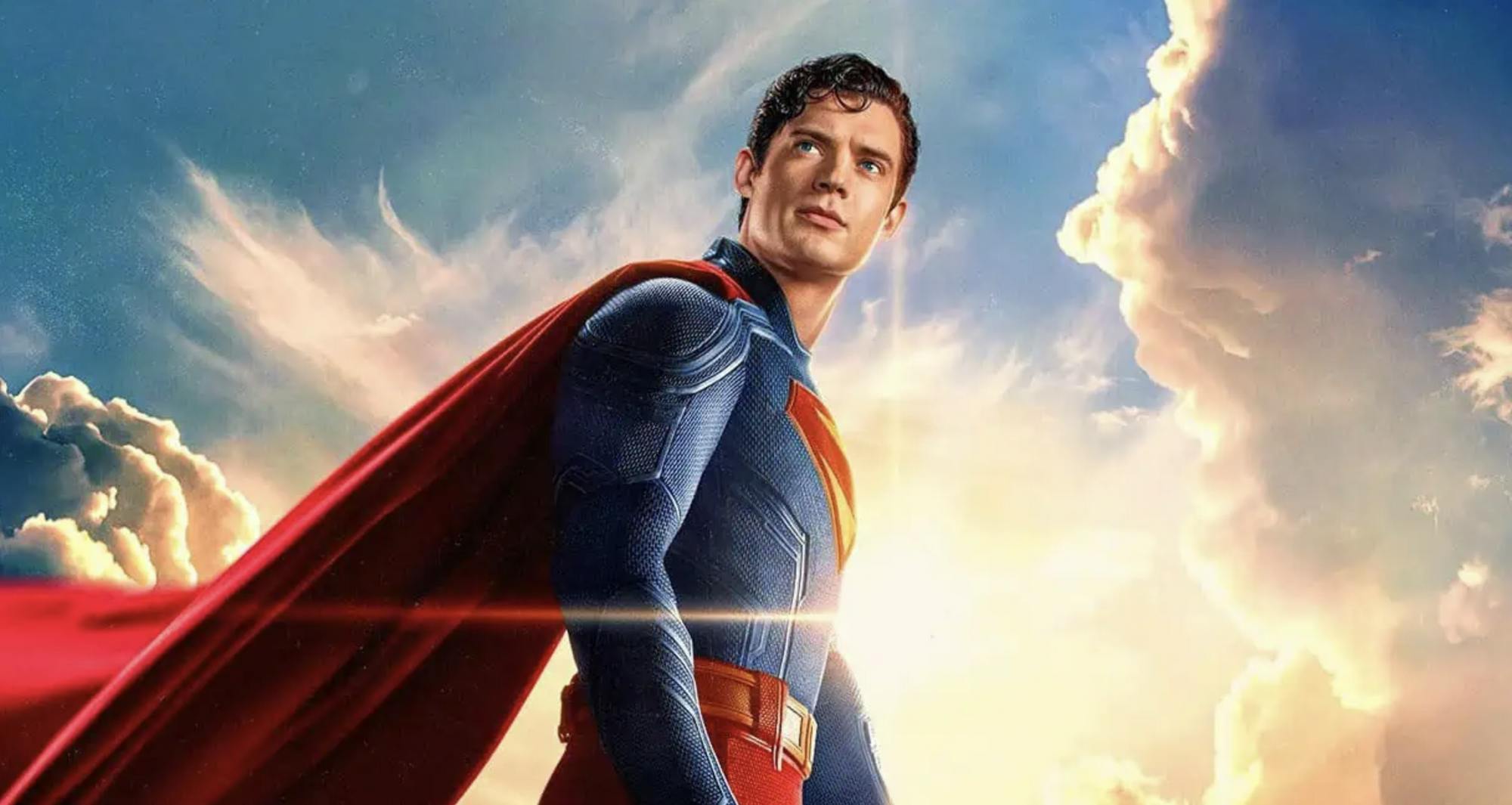
Clark Kent has finally returned to the big screen with Superman (2025), directed by James Gunn. This new Superman still contains remnants of the Watchmen turn towards greater complexity in superhero narratives. The Superman of Christopher Reeves was a thoroughly uncontroversial hero of Metropolis. Most people loved Superman, with his only real problem being his unpopularity with supervillains. Superman’s parents, Jor-El and Kara, were unquestionably noble in their intentions to send their son to Earth, telling their son that their home planet was set for destruction: “It is forbidden for you to interfere with human history, rather, let your leadership stir others.” The Jor-El and Kara figures of this new film are a lot more sinister with their intentions, ones that seriously damage his reputation. Clark Kent learns that his parents wanted him to take over Earth due to the weakness of humans, and that revelation acts as a key narrative thread in the entire movie. What’s truly refreshing about this adaptation is that it is a return to the genuinely empathetic Superman. One who is wildly imperfect, who frequently makes mistakes, yet never abandons his care and concern for others.
This new Superman movie is by no means perfect. It has that ugly, stale superhero movie look, and the dialogue often feels forced and clunky — full of scenes where the old adage “show, don’t tell” really does apply. Despite this, Superman (2025) has an engaging narrative and character building that, at its core, stays true to the humanity of Clark Kent. It is a step in the right direction for the superhero genre, a return to the sincerity that made Superman great to begin with.
Basil Bob is a junior in the College of Arts and Sciences. He can be reached at bob27@cornell.edu.

Basil Bob is a member of the Class of 2027 in the College of Arts and Sciences. He is a staff writer for the Arts & Culture department and can be reached at bbob@cornellsun.com.


