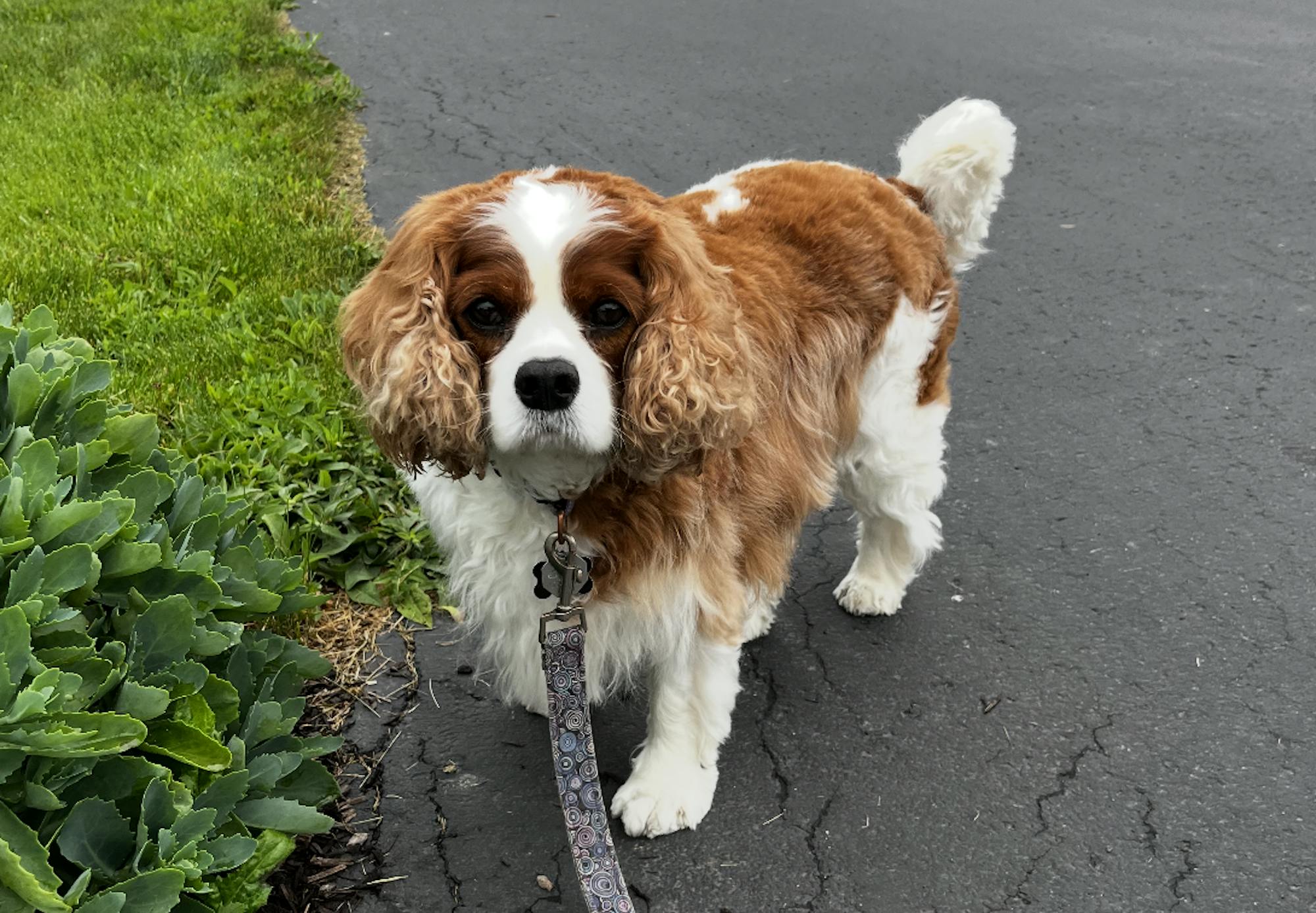
When a dog owner has a question or concern about their pet, they usually choose to consult with a veterinarian — a process that is reliable but can typically take days or even weeks. Now, pet owners can utilize a new and trusted resource that can be used any time and anywhere.
The Cornell Richard P. Riney Canine Health Center launched Big Red Bark Chat, an artificial intelligence chatbot designed to answer questions about canine health and safety. Users simply input a question and Big Red Bark Chat provides an answer backed by resources trusted by veterinary professionals.
Built With Amazon and Backed by Cornell
Prof. Rory Todhunter Ph.D. ’92, clinical sciences, who is the director of RCHC, explained that his team has been working for years to “fill a gap” in the articles and information online about canine health and wellbeing.
“The Big Red Bark Chat is a great use of new kinds of technology to fill that gap and do good for the dog lovers around the country,” said Scott Ross MILR ’13, the assistant director of application development and integration at the College of Veterinary Medicine and a software engineer.
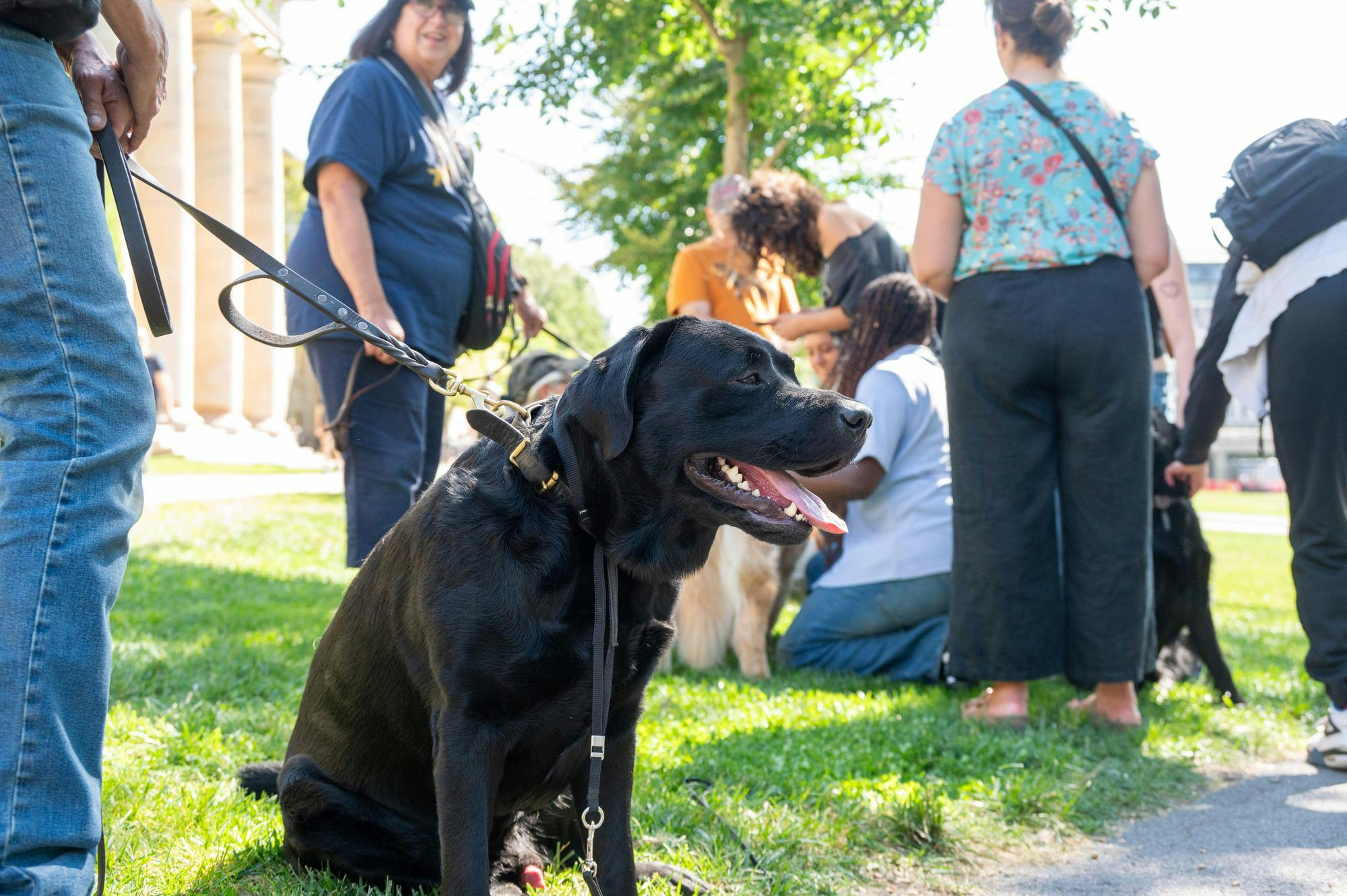
Todhunter and Ross explained that the current shortage in veterinarians also inspired them to create the Big Red Bark Chat. The demand for veterinarians is only expected to increase as a report by MARS Veterinary Health anticipates that “55,000 additional veterinarians will be needed to meet the needs of companion animal healthcare in the U.S. by 2030.”
“We hoped that people could use Big Red Bark Chat as a way of getting quick access to reliable health information,” Todhunter explained.
Big Red Bark Chat was also developed with the help of Amazon and uses a retrieval-augmented generation, known as RAG, which is a type of generative AI model that uses both an “authoritative knowledge base” and “its training data sources” before responding to a question according to Ross.
Ross and Todhunter explained that they began working with Amazon in August 2024 and launched the site in May. The Chat became live to students and faculty who helped “test run” the website according to Todhunter.
According to Ross, the Chat was trained on “various Cornell specific sources” including Consultant, a system that veterinarians across the country use to diagnosis disease and source scholarly articles, Health Topics, a public website that provides information to both veterinarians and pet caretakers, eClinPath, a database of symptoms and pathologies of diseases and “over ten gigabytes of faculty generated PowerPoints, notes and information.”
“We wanted the Chatbot to have a large pool of information to reference,” Ross said. “So we compiled a large database of information for it to cross reference in order to increase accuracy and still get the feel of going to the vet because of that expertise.”
Launching Big Red Bark Chat
Big Red Bark Chat is now available to the general public at no cost. Ross and Todhunter say that it has been trained to answer a wide variety of questions which include but are not limited to nutrition, disease and overall wellbeing.
Ross also explained that while the Chatbot does not provide diagnosis, it does help provide information to the general public while emphasizing the “need to visit the veterinarian.” He explained that Big Red Bark Chat serves as an informational source rather than a diagnostic one.
“Not everyone is able to access their veterinarian 24/7 and not everyone has one nearby so the hope of the Big Red Bark Chat is to make it to where parts of your query can be answered appropriately and then what it can’t answer it will redirect you to a veterinarian that can,” Todhunter said.

Two students walking a dog along the arts quad. (Julia Nagel/Sun File Photo)
The two also explained that the Chat can be utilized in numerous languages — Todhunter pointed out that he saw the Chat receive a question in Mandarin Chinese. In addition, some veterinarians have used the tool to help improve the safety protocol of their practices.
“We’ve seen questions in all sorts of languages,” Todhunter said. “Some of the questions are also about hospital protocols, for example, I saw one that asked ‘How can I reduce cross contamination in my practice.’”
Ross explained that Big Red Bark also has “certain guardrails” on it to help preserve the accuracy of the information while still being understandable to the general public.
“Big Red Bark [Chat] is set to give responses back at a tenth grade reading level,” Ross said. “We chose this level because we did not want people to be overwhelmed by science jargon and we also list some of the sources that the responses were generated from.”
In the future, Todhunter and Ross hope to create an app for the website for their veterinary partners. They also plan on adapting an Agentic AI model — which Ross explained is a model that can “somewhat autonomously perform tasks” and can assist in streamlining some administrative tasks for veterinarians and pet-owners like filling out health forms.
“You can think of Agentic AI as the doer because it can execute a task and do it while consulting with other resources,” Ross said. “The hope is that by automating some of the tasks that veterinarians do we can address the shortage of them.”
The two hope that the tool can help provide reliable information to dog-owners and remove some anxiety around trusting certain resources.
“We really hope that we can disseminate information for the general public by leveraging this new technology to meet our goals,” Ross said. “We are using AI to move the needle in a sensible way that our users can trust.”
Zeinab Faraj is a member of the Class of 2028 in the College of Arts and Sciences. She is a senior editor for the 144th Editorial Board. She was a features editor and an assistant sports editor on the 143rd Editorial Board and can be reached at zfaraj@cornellsun.com.