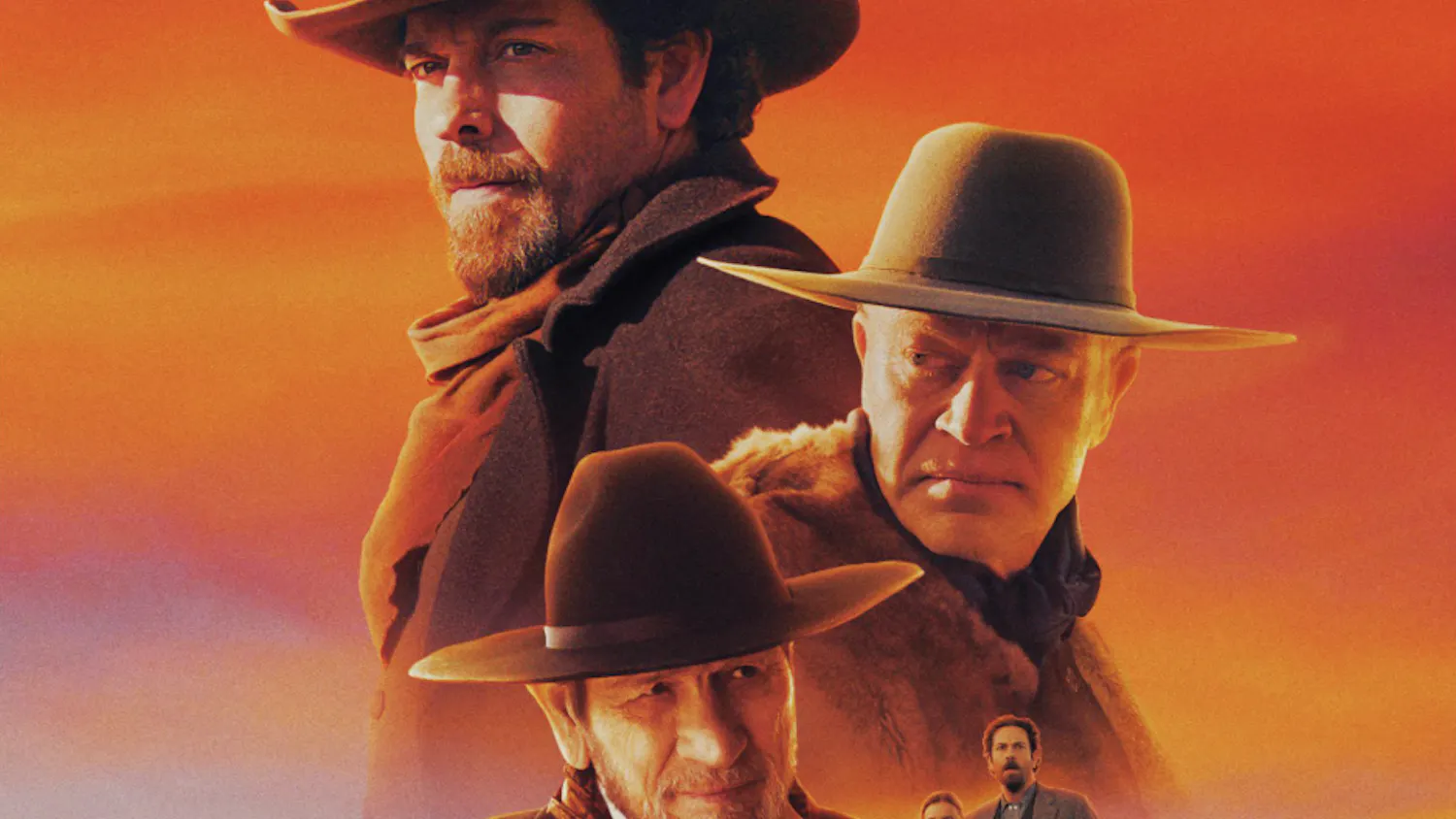
Digger is not what I expected. The latest from Alejandro González Iñárritu, whose recent films (notably Birdman and The Revenant) have been Oscar players, advertised itself accordingly. When the marketing campaign kicked off with a teaser that felt more like an ode to its lead actor’s filmography, it seemed obvious that this film was a Tom Cruise vehicle meant to earn him his first competitive Academy Award. I expected another film like 2021’s Don’t Look Up, which did well at the Oscars, but fell a little short for me. This false advertising was intentional: What Digger is doing is much more interesting and part of what makes the film work is its subversion of expectations. All of this makes it feel nearly impossible to review Digger, which is better experienced with no background knowledge at all, but it feels equally important to write about what might just be the most important film of the year.
Digger follows Tom Cruise’s Digger Rockwell, the cartoonishly evil owner of an oil company whose rig explodes, creating an environmental disaster. As an ice shelf dislodged by the explosion hurtles towards Europe, threatening to flood Norway, Digger must work with environmental expert Dr. Nirav Ganesh (Riz Ahmed) and U.S. President Compson (John Goodman) to decide what comes next. The film isn’t really about an environmental crisis, though climate change is clearly on Iñárritu’s mind. What Digger gets at is the power of storytelling and the different ways it can be utilized. After hearing of the explosion, Digger is fairly uninterested in stopping the ice shelf from colliding. He has no control over nature, as Dr. Ganesh constantly reminds him. What he can control, however, is the narrative, and in the age of modern technology, Digger finds it easy to shape the story that the public begins to tell.
Some might scoff at Iñárritu’s hyper-contemporary setting: Like Ari Aster’s controversial Eddington from last year, Digger directly addresses the effects of social media, short form content and even AI chatbots on our culture. I find this extremely effective — when Digger and Compson discuss deploying a firewall to track and prevent any mention of the incoming ice shelf on social media, rather than warning Norway ahead of time, the audience becomes aware of how our own internet activity can easily be monitored and censored. Even more strikingly, when Iñárritu abruptly cuts from a 10-minute long take to an insert shot of someone’s Instagram live footage, he pulls the audience out of the massive aspect ratio to the vertical smartphone screen. This juxtaposition takes viewers out of the flow of the film, making it suddenly seem much more personal. Digger constantly reminds you that this is not something to watch from a distance, it is a story that must be taken seriously and acted upon: or else the same thing will happen in our own world.
Digger is not just criticizing the rich and powerful, but forces all of us to look within ourselves. In this moment, when Iñárritu switches from VistaVision camera to phone, he also exposes how the audience uses their technology as a shield. In the scene, Digger is monologuing to an audience of politicians and representatives, turning their attacks back onto them. As they blame him for environmental collapse, Digger reminds his audience that the very phones they use to film him require the oil he digs up for energy. Still, his audience watches him only through their screens. Throughout the film, Iñárritu constantly turns his critique back onto the audience, and even onto himself. No one is guiltless in the collapse of our planet and to watch a film like Digger, or any of its predecessors mentioned above, laugh at the antics of the out-of-touch elite, and return to our normal lives without another thought is not a neutral act.
Some have said that Digger seems to hate its own existence, but I see something much more hopeful in its message. There’s a power in storytelling that can be harnessed by all, whether its by the rich and powerful, who use it to censor and control us, by satirists, who find no other choice in times such as these but to laugh, or by audiences, who find comfort in worlds far from our own that make us forget our own problems. Digger questions what it means to create art when it feels like the world is falling apart, probing at the ethics of accepting funding from corrupt corporations, the interplay between artmaking and activism and, ultimately, the communal experiences that art makes possible. Ultimately, while Digger doesn’t pretend to have any answers to the questions it presents, it makes it impossible to watch idly without thinking deeply about the film’s narrative. While some audiences may not connect with the film, I still think it’s worth seeing Digger in the theatre and letting yourself sit in the discomfort.
‘Projections’ is a column focused on reviewing recent film releases.
Nicholas York is a member of the Class of 2027 in the College of Arts and Sciences. He is a columnist for the Arts & Culture department and can be reached at nyork@cornellsun.com.