

Artificial intelligence has a branding problem. Apparently, the solution is to make it cute.
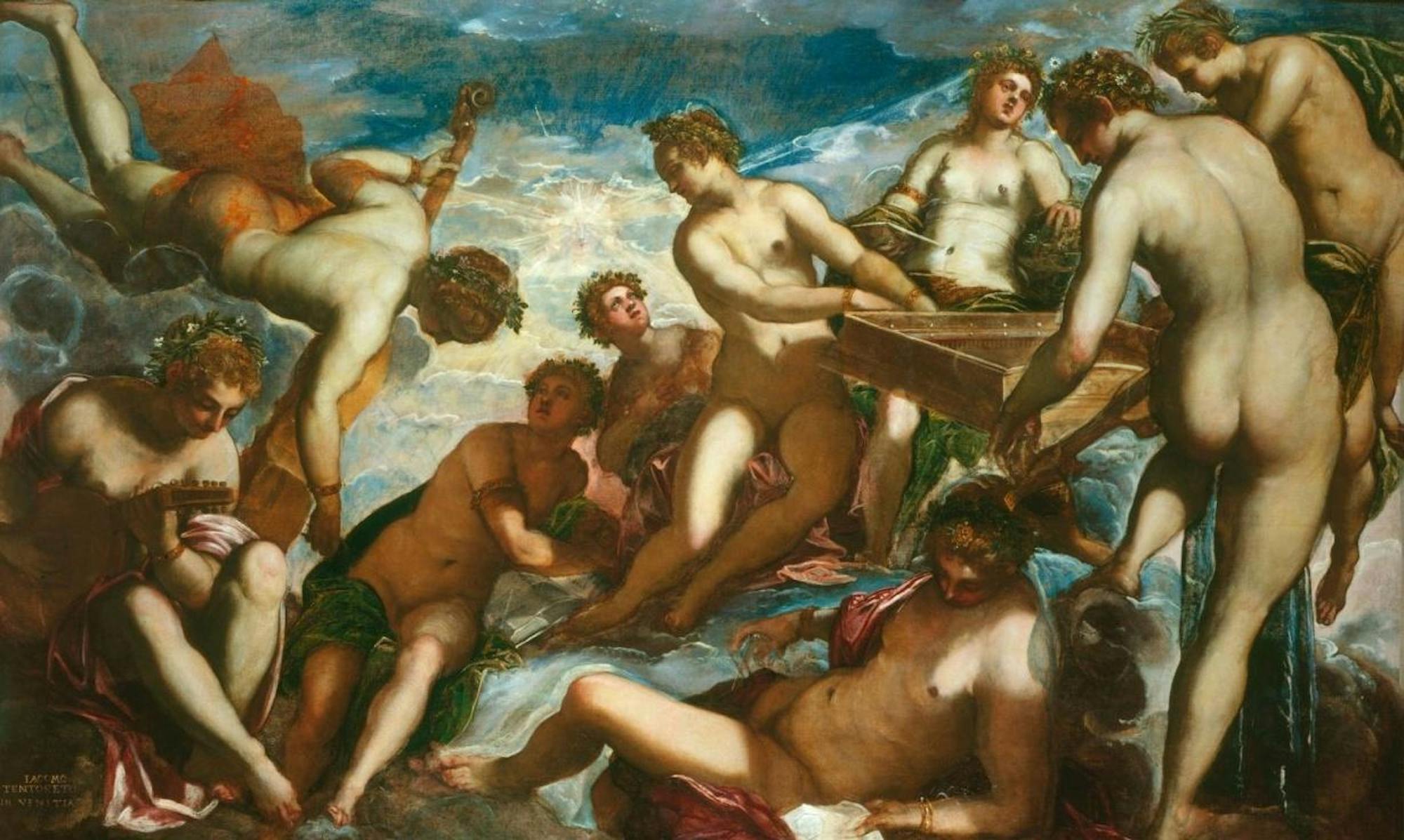
There is something ironically touching about the decision to name a work-bot after a muse. For centuries, the muse has represented the mysterious, almost incandescent force behind human creativity: the ineffable spark that inspires a poet to write or a college student to begin an essay at 10:58 p.m. In classical antiquity, the Muses were not simply convenient sources of inspiration; they were divinities invoked at the threshold of human creation, mediating mortal intellect and the knowledge that exceeded it. The poet might petition Calliope, but he still had to compose the epic. Inspiration did not abolish the intellectual vitality required to author, instead, it rendered that labor possible.
Now, in the age of artificial intelligence, Meta has given that ancient symbol a technological makeover. Enter Muse, a personal AI agent designed to help users accomplish tasks and pursue their goals: calling businesses, searching the web and writing reports. OpenAI, unwilling to let its competitor monopolize the divine, has answered with Dots: little, customizable digital agents that promise to take work off our hands.
These new innovations represent more than just advanced intelligence; they also mark its aesthetic domestication.
Call it the ‘cute-ification’ of cognitive surrender. The machine that once appeared as an inscrutable interface, an uncanny chatbot or some words on a screen now arrives dressed in a very appealing visual language. Dots are colorful, rounded cartoon figures, sporting accessories that make them look like collectible characters. Muse, meanwhile, trades in an adorable fuzziness. This visual language has changed the game. We are not surrendering our intellectual vitality to software anymore. We are introducing a little friend into our lives.
Cuteness has long been a technology of disarmament — not because every cartoon has some deep conspiracy behind it, but because the aesthetic of harmlessness can make power easier to approach and harder to perceive. In The Power of Cute, Professor Simon May examines cuteness as an aesthetic that entangles tenderness with uncertainty about vulnerability and control. Professor Sianne Ngai discusses the cute object’s peculiar relationship to power: It solicits affection partly through its apparent smallness, weakness and availability to our care. The observer occupies a position of mastery over an object that seems to invite handling, possession and protection.
Dots offers an almost comically literal subversion of this dynamic. They appear small, soft and subordinate, yet their proposed function is to operate continuously and in complete union with our software and required tasks. We are invited to nurture the appearance of a subordinate while delegating to it the work of an increasingly capable assistant.
Now, the question is what this friendliness permits us not to notice.
Aristotle understood virtue as something cultivated through habituation. We become just by performing just actions, courageous by practicing courage and intellectually capable through the repeated exercise of judgement. The capacity cannot be wholly separated from its exercise. One cannot acquire practical wisdom merely by possessing a device that produces prudent-sounding recommendations, any more than one can acquire eloquence by delegating every sentence.
This is why the promise of frictionless intelligence is philosophically suspect. Generative AI does not simply offer to accelerate the work of thinking. In its current formulation, it removes the need to think at all. The student need not endure the confusion necessary for an original interpretation to emerge. The employee need not cultivate the judgement required to navigate ambiguity. The individual need not remember, organize or deliberate when an AI agent can perform all these activities in the background. Every inconvenience becomes a candidate for elimination, including those inconveniences through which competence is acquired.
Naturally, not all friction is formative. Administrative drudgery is not an Aristotelian virtue, and we aren’t exactly becoming morally enriched by plugging a million different links into a citation generator. AI can serve as an extraordinarily useful instrument of inquiry, provided that its assistance enlarges rather than substitutes human understanding. I find the distinction not between the use or rejection of technology, but between technologies that extend our capacities and technologies that gradually render those capacities optional.
Yet the aesthetic of the adorable agent obscures this distinction. When automation is presented as companionship, we are encouraged to understand structural dependence as an intimate relationship. We anthropomorphize an interface that strips away the agency and ingenuity that makes us human. The machine thus becomes more human in appearance, conduct and relationship while the human becomes less necessary to the task.
There is an older philosophical vocabulary for this predicament: akrasia, the weakness of will by which we act against what we recognize to be good. We know that intellectual discipline requires effort, that putting the phone down helps and that creativity deteriorates when it is never exercised. We also know that convenience is extraordinarily difficult to refuse. The cleverest AI companies thus pivot; they only think that thinking can always be postponed.
At least the ancient muse demanded something of the poet. This current “muse” promises to take something off his hands. Between these two conceptions of assistance lies a question that no new product announcement can resolve — whether the purpose of this technology is to relieve us of the burdens of human agency, or to make us more worthy of exercising it.
Perhaps the tragedy is that we are perfecting our instruments of intelligence while gradually losing our appetite for the activity itself. I find agreement with Aristotle in that the journey matters far more than the destination; wisdom is not the possession of answers, but the slow transformation of the soul through the pursuit of them. And if we succeed in abolishing the struggle through which we become intelligent, what, precisely, will remain of the intelligence we sought to cultivate?
Ali AlSaif is a member of the Class of 2029 in the College of Arts and Sciences. He is a staff writer for the Arts & Culture department and can be reached at aea252@cornell.edu.


