Editor’s Note: This article contains references to rape and sexual assault.
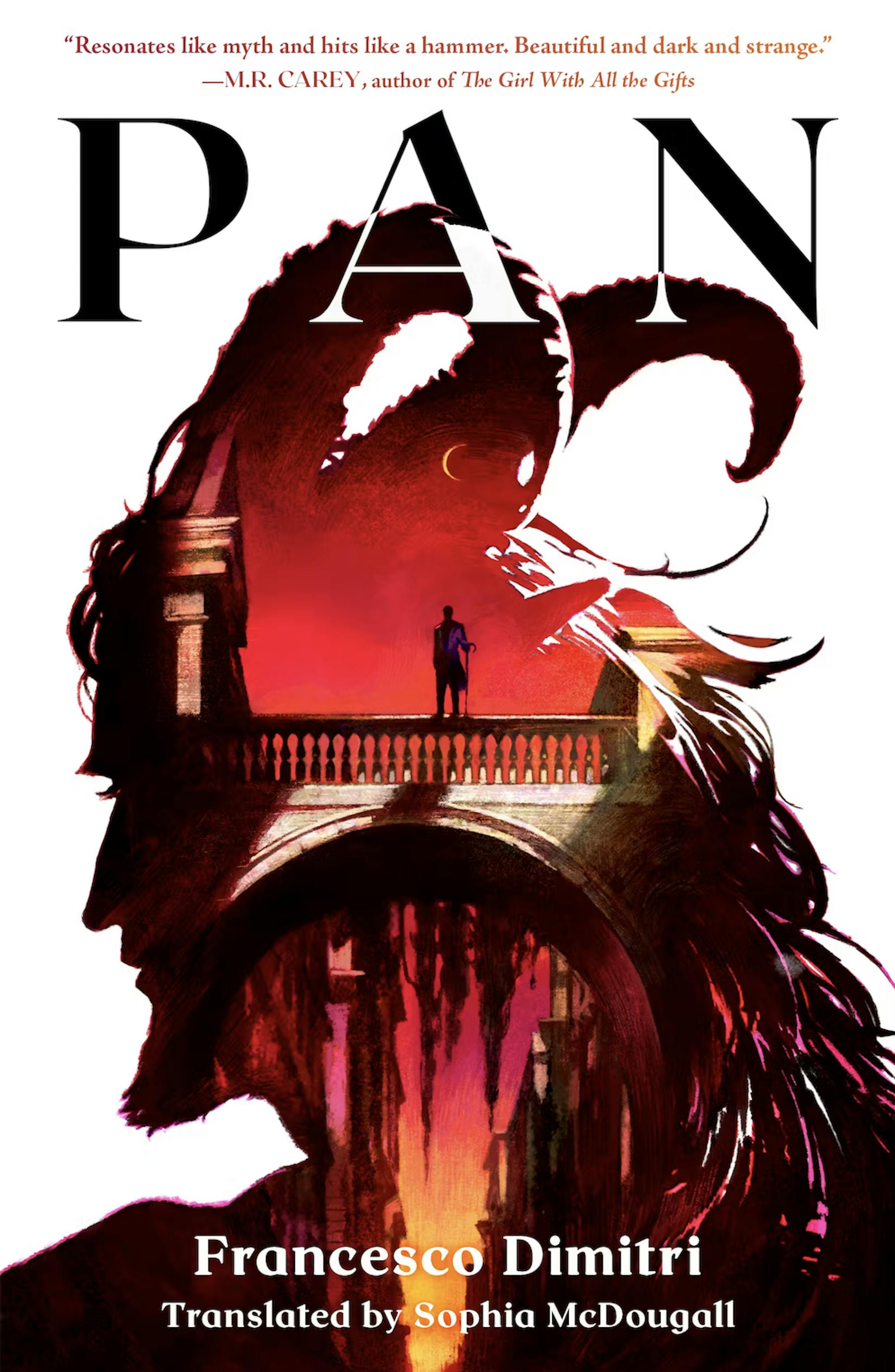
Pan, written in 2008 by Italian author Francesco Dimitri and translated into English this year by Sophia McDougall, is not a proper book, but it’s not trying to be one. Overtly political and unapologetically contemporary, Pan artfully amalgamates a classic child’s tale to include every disillusioning thing such a tale should omit. In twisting a tale of innocence, Dimitri questions forces at work in maturity and wonder in modern society.
Set in an early 2000s version of Rome, Pan begins with the dreams of the children on the city's streets. To these children, the grit of the concrete and the darkness of the night are a harsh reality, but in their dreams, they can escape to an island born of myth and magic. Here, boundaries are defined as fleeting whims. Here, the children are free as they please to soar in the sky and spar with sticks, stones or sharpened steel. Here, there is no threat but adventure and no grown-ups but the pirates. The more sensible in society deny its existence, but to the children, the island is every bit as real as the concrete, steel and shadows of Rome. The island, the dream, is Neverland.
Over the course of the novel, Dimitri slowly reveals his take on the world of James M. Barrie’s 1911 Peter Pan, the story of “the boy who never grew up.” The main characters — a trio of siblings named Giovanni Cavaterra, Wondrous Wendy (her real name, Angela Cavaterra) and Michele Cavaterra — naturally reflect their Darling family counterparts in Barrie’s story, John, Wendy and Michael. Other similar fixtures include Pan himself, the infamous Captain Hook, Tinkerbell and a horde of Lost Children. The plot, too, is a reflection of Barrie’s tale, revolving around the siblings’ attempts to navigate the unending conflict between the transgressive Pan and the calculating Hook. However, past the basic framework and a cast of familiar characters, the similarities end as Dimitri twists the stories of the past to suit the needs and themes of the present.
The most natural of these changes was the relocation of the tale to modern Italy. In this setting, Giovanni is a university student struggling with his thesis, Wendy is an aspiring magician trying to catch a break in a soul-sucking artistic industry and Michele is a high schooler obsessed with superhero comics. As the Cavaterras struggle to grapple with the magic swiftly suffusing their everyday problems, the boundary between reality and fantasy grows more permeable and the two begin to blur together. This uncertainty manifests the limbo between childhood and adulthood that is explored in Peter Pan’s original tale but puts it in terms of contemporary academia, arts and culture.
Also transmuted are the mystical characters, Pan and Hook, who take on more ominous incarnations. The boy who never grew up, enchanting and ageless, is remade into the Greek god and Lord of Arcadia, Pan, an ancient and inherently unpredictable power. Hook becomes the Discordian entity Greyface, a force of authoritarian order standing in opposition to Pan’s chaos. In these characters, Dimitri depicts libertarian and conservative ideologies in their extremes with a haunting combination of empathy and condemnation. It’s easy, initially, to side with Pan, the font of freedom, inspiration and expression, in his pursuit of art and revelry. However, in scene after scene, Dimitri demonstrates that also within Pan’s sphere of influence are other unbridled acts of passion like vandalism, murder and rape in which one is given free-reign, if not urged, to force themselves upon others. Greyface, Hook, is the one who would check these impulses and protect the community, with the twin powers of omnipresent surveillance and omnipotent regulation. To Greyface, the world cannot achieve the peace it claims to seek until people commit to surrendering the personality of society in its entirety — craven impulses and beautiful individuality alike. Pan’s gods are forces every bit as primal and formidable as thunder or the sun, but despite personifying human attributes, they remain as numb as nature to the collateral damage inflicted by their pursuits.
Fortunately, there is a third god dreaming with the children, growing alongside the Cavaterras and struggling to hold itself together as Pan and Greyface rip it apart: the city of Rome. As its people live in its buildings, on its streets, under its bridges, so too does the city live. As they bustle about their business, so too does the city move. As they whisper, hawk, cry and scream, so too does the city speak. The city’s spirit beats in tandem with the hearts of its people, and without them, it would be nothing. It is brought to consciousness by their thoughts as surely as Pan and Greyface are, in the end, merely embodied concepts. Ultimately, this is not the gods’ world, it is humanity’s. The story centers Giovanni, Wendy and Michele because it is their decision, and, by extension, the decisions of everyone in Rome that will determine the outcome of the conflict.
My greatest criticism of the novel would be the valiant attempt it makes at explaining the arcane mechanics of its magic, a decision which I would normally support. However, in trying to hold onto a sense of mysticism, the final result falls short of both, stranding the reader in the ether between awe and understanding.
Dimitri draws on powerful forces to create the story of Pan, bringing them together in a terrific cautionary tale for the modern era. Blending together magic, technology, contemporary culture and pantheons old and new, Dimitri orders the pieces into a work that will delight fans of urban fantasy and certainly invoke contemplation in any who pick up its pages. There is so much more I could say about this book, including its army of viewpoint characters, the development of Tinkerbell’s character and explorations of sexuality. However, I will have to leave these, along with the ending, to you.
Thank you to Tor for an ARC of Pan!
Wyatt Tamamoto is a member of the Class of 2029 in the College of Arts and Sciences. He is a staff writer for the Arts & Culture department and can be reached at wkt22@cornell.edu.