


I’ve always been a firm believer in separating the art from the artist.
Michael Jackson and Kanye West have probably tested that belief more than anyone. It can be difficult to hear a “hee hee” in public without thinking of Jackson, and it can be difficult to hear an “I’ma let you finish” during a conversation without thinking of West. Still, I can acknowledge the allegations surrounding Jackson while recognizing how profoundly his music transformed pop, and I can condemn West’s antisemitism and misogyny while simultaneously appreciating the musical ambition and cultural significance of his work. Simply put, I don’t have to admire the person to appreciate what the person created.
I’ve spent years being comfortable with this distinction. But now I’m dealing with a different internal conflict: What happens when a song becomes so closely associated with a particular message — not necessarily with the artist — that hearing it starts to communicate that message on its own?
Such accumulated associations render it quite easy for me to absolutely despise Paris Paloma’s “Labour.”
Released in March 2023, the song offers a searing indictment of the domestic, emotional and reproductive labor women shoulder within relationships. It quickly resonated as a rallying cry for women who saw their own experiences reflected in Paloma’s portrayal of love becoming indistinguishable from labor. Throughout the song, Paloma depicts a woman as expected to cook, clean, nurture, listen and become a “24/7 baby machine” while her husband gets to “live out his picket-fence dreams.”
Though I, of course, have no quarrel with the song’s argument itself, I’ve developed an intense hatred for what social media has made the song mean.
In particular, as the case surrounding Lindsay Clancy and the deaths of her three children attracted online attention, “Labour” emerged as a recurring soundtrack to the surrounding social media discourse. Influencer sleuths began stringing together isolated details of the case to construct theories about what had actually occurred, such as questioning Patrick Clancy’s role in the deaths. Regardless of whether one finds these theories compelling, it’s undeniably concerning that the same ecosystem of videos advancing these theories about the case increasingly featured “Labour” as their soundtrack. Through this repetition, the song became attached to a progressive, feminist worldview that frames women as victims of patriarchal oppression and scrutinizes men’s roles in perpetuating it. Whether or not every creator explicitly articulated those ideas, perpetually pairing the same soundtrack with content advancing them provided the audio with an ideological valence of its own.
Despite the Clancy case beginning to cycle out of the algorithm, the ideological associations attached to “Labour” remained. Those associations subsequently followed the audio into the controversy at Cornell — Jane Doe alleged being drugged and gang raped at the Chi Phi fraternity house in 2024 — and the lawsuit became another subject of visceral social media attention. Videos about Jane Doe began using “Labour” within posts focusing on Cornell’s disciplinary response to the accused and within posts circulating screen shots from the men’s Snapchat conversations alongside their names and photographs. While the inclusion of “Labour” in these may seem innocuous, it most certainly isn’t. After the Clancy discourse, the audio already carried a set of accusations on gender, victimhood and political ideals.
Understandably, the creators intended to galvanize support for victims of sexual violence and demand accountability. However, there is a dangerous irony in trying to unite people around an issue while characterizing it through an ideological soundtrack. Since “Labour” situates the seriousness of the allegations within a broader political narrative about gender and power, the audio inherently divides the audience into people who identify with that narrative and people who are positioned against it. Serious allegations and institutional controversies are being compressed into politically charged TikToks with the audio itself carrying too much emotional significance and encouraging viewers to interpret the situation through a predetermined ideological lens. Allegations of rape are unequivocally concerning and shouldn’t require a political identity to render them worthy of condemnation, so attaching “Labour” to videos about sexual violence is counterproductive.
Of course, this phenomenon is hardly unique to “Labour.” Music has always garnered meaning through association; a soundtrack can evoke any number of emotions. Consider the Village People’s “Y.M.C.A.” Before President Donald Trump solidified it as a staple in his rallies, the song was a ubiquitous disco hit recognized for campy choreography and longstanding associations with gay culture. After Trump repeatedly used it during his rallies and incorporated it into his signature dance, however, the song became increasingly intertwined with his political image. Yes, the song still retains much of its meaning, but try hearing those opening notes now without at least briefly envisioning Trump swaying on a rally stage. “Labour” has undergone a similar process, albeit through a much less centralized and far more organic mechanism. Instead of a sole politician, thousands of creators have repeatedly placed the same audio with content engendering ideological dichotomies. While scrolling through TikTok and Instagram videos (as one normally does), I now hear the song and brace myself for whatever sermon my algorithm has decided to attach to it.
As I reckon with how to separate art from its accumulated associations — akin to how I’ve long separated art from the artist — let’s stop using “Labour” as the soundtrack for social media videos about every controversy and political grievance imaginable. Doing so distorts the song’s original meaning, reducing a nuanced portrayal of gendered labor into a generic anthem for ideological outrage, while simultaneously changing the message of the videos using the audio. “Labour” was supposed to be — and still can be — an empowering song for women who recognize themselves in its message. It deserves better than becoming a shortcut for telling audiences who to blame and what to believe.
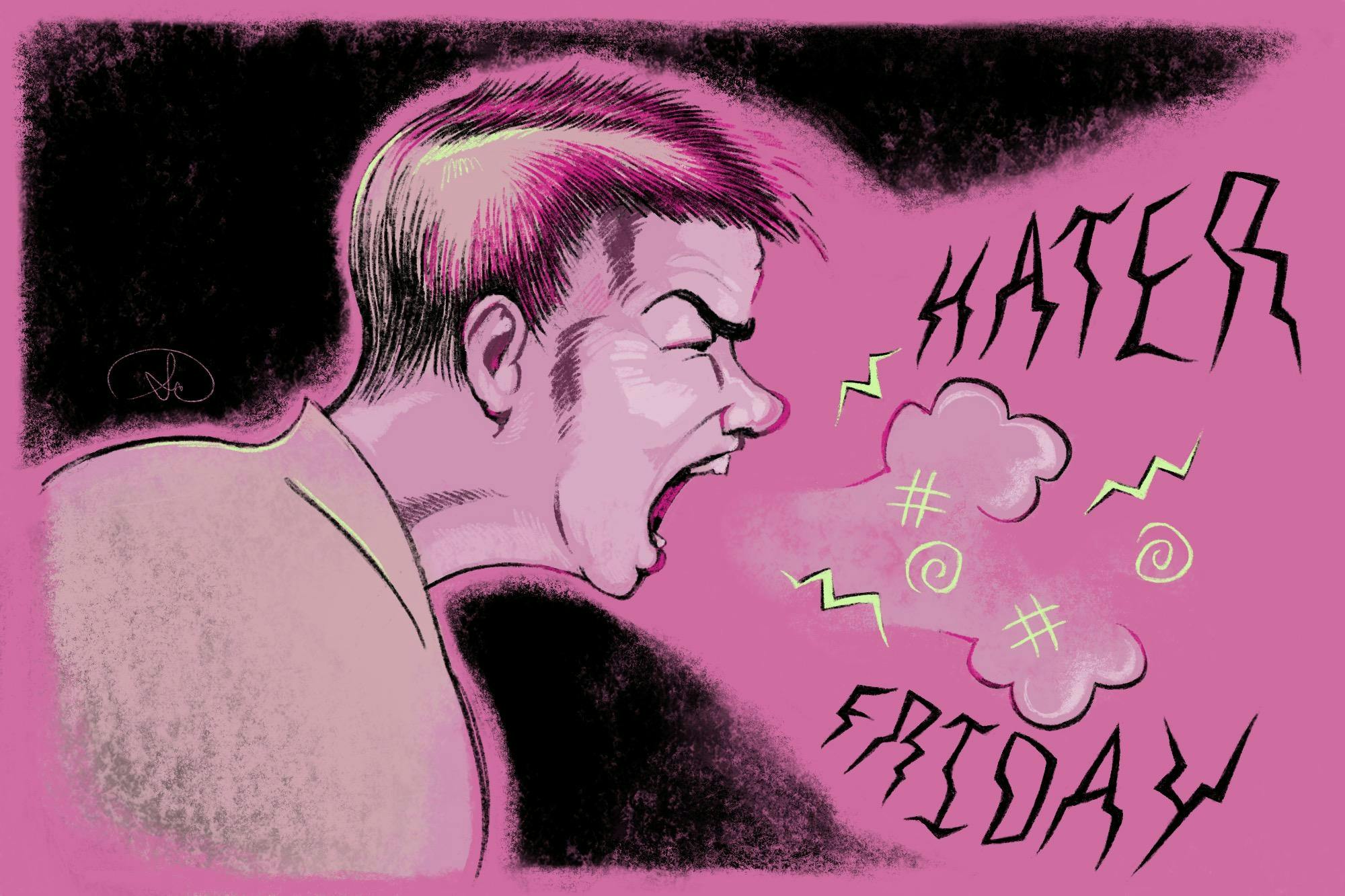
‘Hater Friday’ runs on Fridays and centers around critiquing media or culture.
Landon Schuster is a member of the Class of 2030 in the College of Arts and Sciences. He is a contributor for the Arts & Culture department and can be reached at ljs355@cornell.edu.


