This article could not have been made possible without Theodora Curtin ’28.
What do an ex-Bernie Sanders campaign staffer and a campy interior design critic have in common? On Interior Motives, a social media guessing-game series, host Ben Mora is one and the same.
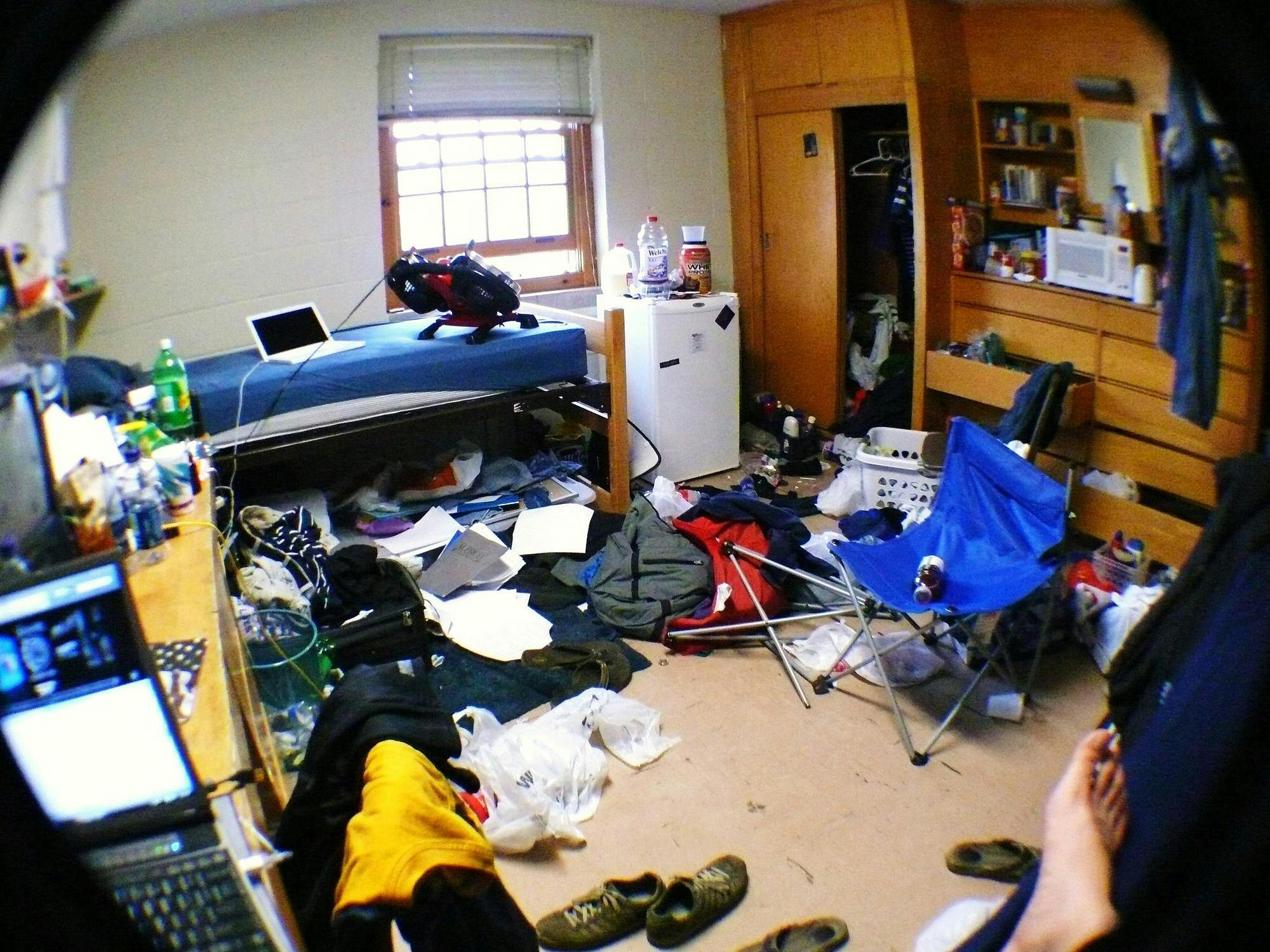
As for describing Interior Motives, there’s not much to say beyond its tagline: “You show us your bed and we guess who’s been in it.” Viewers anonymously submit two photos of their bedroom, one extra photo and a hint for Mora and his rotating cadre of specially selected, (typically) micro-celebrity co-hosts to try and guess the inhabitant’s age, gender, sexuality and location. What ensues is a clocky typification of queer lifestyles.
That’s not to say all submissions are from queer people — most of them are, but there are some exceptions. In scrolling through the “Sunday Reveal” posts put up every week, the last submission from a cisgender, heterosexual person featured was the week of Aug. 16, when a bedroom photo was analyzed that featured a pink leatherbound Bible, a mounted camo-cap collection and a Trump 2020 flag.
As one might expect of gay people dissecting design choices, a shocked gasp erupted from the hosts. Immediately, they muttered some combination of identity tropes including heterosexual, cisgender woman, mid-20s and Southern or Midwestern — which, according to Mora, “is where you get gendered, boy and girl Bibles.” In an attempt to keep guesses from jumping to stereotypical conclusions, guest host Amber Later offered: “Well, in 2018 I did know this trans girl that lived in Ridgewood and had an ISIS flag in her bedroom.”
The instinct to not draw generalizations about a person based on exterior belongings or appearances is a good one; since we were kids, we’ve all been told not to judge a book by its cover. People have levels, and whatnot. Interior Motives puts that to the test.
After drawing their preliminary conclusions about the bedroom’s inhabitant from the photos, they revealed the accompanying hint, written by the inhabitant, which explained that they have mental health issues and that the “Trump shit” was their brother’s before he died. It threw me for a loop as much as it did the hosts. Nevertheless, the hosts stuck by their intuited guess of a heterosexual, cisgender woman in her mid-20s living in the South or Midwest — and were right. The submission was revealed to be from a 19-year old cisgender, heterosexual woman from Germantown, Ohio. The host himself, Mora, scored the highest, getting all but location correct (he guessed Lincoln, Nebraska).
What makes this guessing game so fun is its playfulness in assigning stereotypes to otherwise mundane objects on the fly. Before seeing that clip, I’d never thought about the predominance of colored Bibles region-by-region. When Mora is able to recruit the likes of Ivy Wolk, Courtney Love and Hasan Piker to weigh in, there’s no guessing where the typification might go.
The show’s campiness generally attracts a queer crowd. Its outrageous, matter-of-fact identity associations and consistently emotive hosts tend to appeal to that demographic (myself included). There’s also much to be said for the flippancy with which Interior Motives invents and propagates incredibly niche stereotypes within the queer community.
In last week’s episode, featuring guest hosts Edy Modica and Rachel Kaly, a lush bedroom decked to the nines in dark shades of red was featured. One of the images submitted was of the bed itself (a canopy, naturally), and hanging above the headboard in place of a crucifix was an abstract painting of two men having sex. The debate erupted around whether having gay pornographic art as interior design is more trans woman or gay cis man. “When gay, cis men have pornographic imagery on the wall, especially when it’s artistic, it’s never really abstract because they want it to be more graphic,” began Mora to oohs and aahs from his co-hosts. “And because this is so kind of Picasso-abstract, that to me is more trans woman.”
As absurd as that likely sounds to any straight people that haven’t seen Interior Motives and are for some reason still reading this, it tracks. Some people say that self-deprecating humor is the funniest of all; perhaps the innate self-awareness within queer people that comes from an asymmetrical (or atypical) development of identity makes the advent of intracommunity stereotypes so funny. Or, maybe we just live for the gag.
Alexander Walters is a member of the Class of 2028 in the College of Arts and Sciences. He is a staff writer for the Arts & Culture department and can be reached at apw65@cornell.edu.